Long March 3C/YZ-1
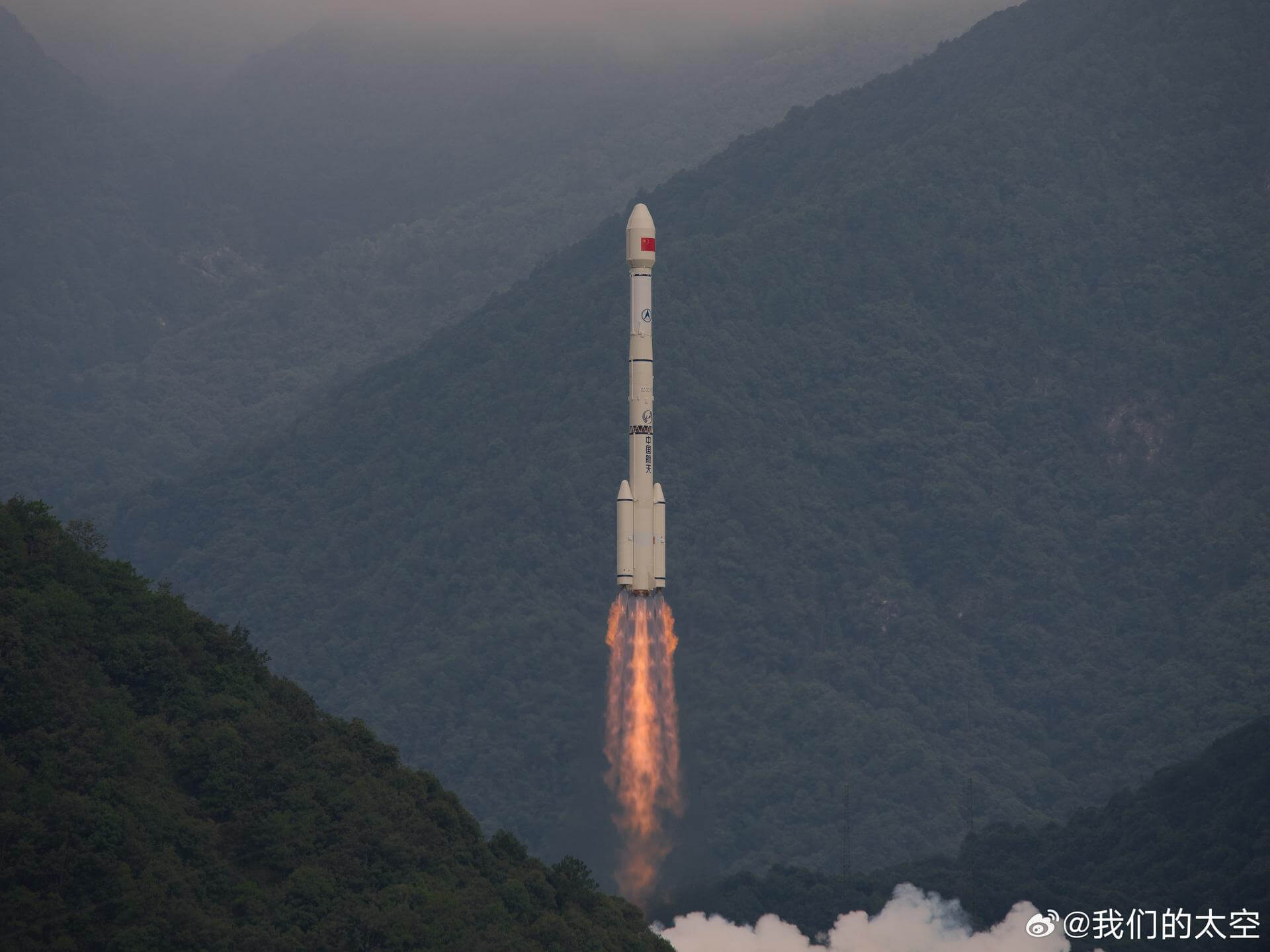
About the Long March 3C/YZ-1
Long March 3C/YZ-1
The Long March 3C/YZ-1 is a Chinese orbital launch vehicle operated by the China Aerospace Science and Technology Corporation (CASC), combining the three-stage Long March 3C rocket with the Yuanzheng-1 (YZ-1) upper stage to form an extended-capability configuration. Developed and manufactured by the China Academy of Launch Vehicle Technology (CALT), it represents one of the more specialized variants within China's Long March family, designed to deliver payloads directly to precise orbital regimes without relying on a spacecraft's own propulsion system.
Vehicle Configuration
Standing 54.8 meters tall with a core diameter of 3.35 meters, the Long March 3C/YZ-1 shares its physical foundation with the broader Long March 3 family, which has served as a workhorse of Chinese space launch operations since the 1990s. The Long March 3C base vehicle is powered by cryogenic liquid hydrogen and liquid oxygen in its third stage, a technology that distinguishes the Long March 3 series as one of China's premier high-energy upper-stage platforms. The addition of the Yuanzheng-1 restartable upper stage provides the ability to perform multiple burns after third-stage separation, allowing highly flexible orbital insertion and enabling missions to geostationary transfer orbit (GTO), medium Earth orbit (MEO), and other specialized destinations. The vehicle is capable of delivering up to 4,800 kg to GTO.
Role and Operations
The Long March 3C/YZ-1 configuration is particularly well-suited to missions requiring precise final orbit placement, reducing the burden on satellite propulsion systems and thereby extending operational lifespans. Launches take place from the Xichang Satellite Launch Center in Sichuan Province, China's primary facility for high-energy missions targeting geostationary and medium Earth orbits.
Our flight record tracks three flights of this configuration, all successful, spanning 2015 to 2025. The missions conducted under this variant reflect its specialized role: the BDS I1-S and Beidou M3-S missions supported China's BeiDou Navigation Satellite System, the country's indigenous global navigation satellite network. The more recent Shiyan 29 mission served China's experimental satellite program. The perfect success record across all tracked flights underscores the maturity of both the Long March 3C platform and the Yuanzheng-1 upper stage.
Context Within the Long March Family
The Long March 3 series has been central to China's civilian and governmental space ambitions for decades, and the addition of restartable upper stages like the Yuanzheng-1 reflects a broader trend in Chinese launch vehicle development toward greater orbital flexibility. The YZ-1 upper stage, first introduced in the mid-2010s, brought Chinese launch capability in line with international competitors offering "last-mile" orbital delivery services.
With a focused mission profile, a consistent operational record, and a role tied directly to China's flagship navigation infrastructure, the Long March 3C/YZ-1 occupies a precise and well-defined niche within CASC's launch vehicle portfolio — prioritizing accuracy and reliability over high launch cadence.