Long March 2F/G
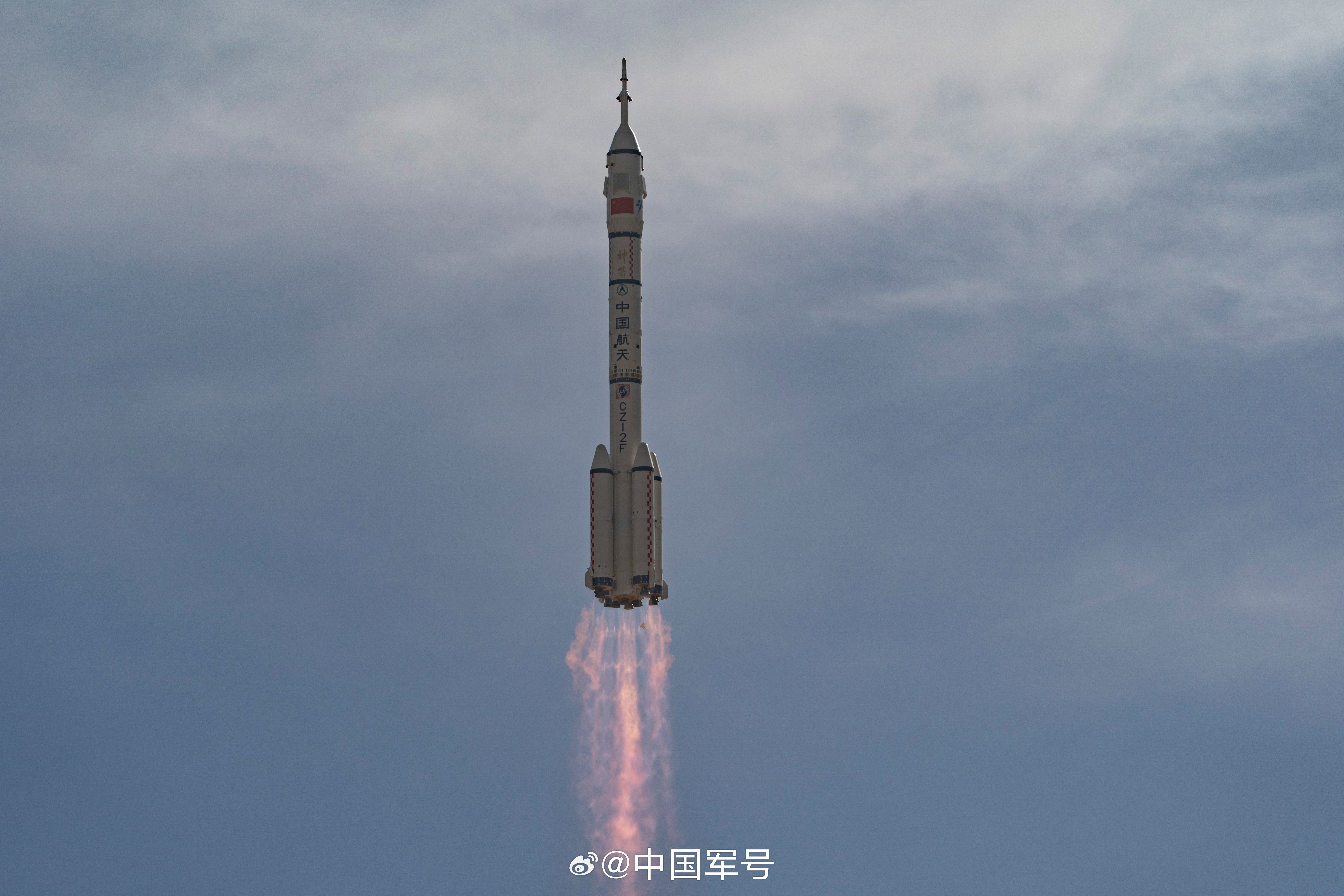
About the Long March 2F/G
Long March 2F/G
The Long March 2F/G is a Chinese orbital launch vehicle operated by the China Aerospace Science and Technology Corporation (CASC) and manufactured by the China Academy of Launch Vehicle Technology (CALT). A member of the Long March 2F family, it serves as the primary crewed and human-rated launch vehicle supporting China's space station program, lifting both crewed Shenzhou spacecraft and uncrewed payloads to low Earth orbit from the Jiuquan Satellite Launch Center in the Gobi Desert.
Design and Configuration
Standing 62 meters tall with a core diameter of 3.35 meters, the Long March 2F/G is a two-stage liquid-propellant rocket augmented by four liquid-fueled strap-on boosters. It is capable of delivering up to 8,399 kg to low Earth orbit. The vehicle inherits its human-rated pedigree from the Long March 2F, incorporating a launch escape system and redundant safety features designed to protect crew members in the event of an anomaly during ascent. The "/G" designation reflects an upgraded and refined configuration optimized for the demanding cadence of China's space station operations.
Role in China's Space Station Program
The Long March 2F/G has become the workhorse of China's Tiangong space station era. It routinely launches Shenzhou crewed missions carrying taikonauts to the station for long-duration stays, as well as periodic uncrewed missions supporting national space activities. Recent flights in our tracking record include Shenzhou 20, Shenzhou 21, Shenzhou 22, Shenzhou 23, and Shenzhou 24, illustrating the vehicle's sustained and regular operational tempo. The rocket has also carried the Chinese Reusable Space Vehicle, demonstrating its flexibility beyond purely crewed missions.
A notable feature of Tiangong operations is the practice of keeping a Long March 2F/G on standby at the launch pad as a rescue vehicle — a measure that underscores the mission-critical, crew-safety-focused philosophy embedded in the program. This approach ensures that a rescue launch can be executed rapidly if a Shenzhou spacecraft docked at the station were to become unable to return its crew safely.
Flight Record
Our tracking data covers 23 flights of the Long March 2F/G spanning the years 2011 through 2026, with 22 successes and no recorded failures or partial failures. This represents an exceptionally strong reliability record for any orbital launch vehicle, and is especially significant given the crewed nature of most of its missions. The vehicle's consistent performance has made it an indispensable asset in China's human spaceflight infrastructure.
Significance
The Long March 2F/G occupies a distinguished place in contemporary spaceflight as one of only a small number of operational human-rated launch vehicles in the world. Its reliable service record, regular launch cadence, and central role in sustaining a continuously crewed national space station reflect the maturity of China's launch vehicle industry. With recent missions continuing through 2026, the vehicle remains an active and essential element of China's broader human spaceflight ambitions.
- Dec 31, 2026Long March 2F/G | Shenzhou 24TBD
- May 24, 2026Long March 2F/G | Shenzhou 23Success
- Feb 07, 2026Long March 2F/G | Chinese Reusable Space VehicleSuccess
- Nov 25, 2025Long March 2F/G | Shenzhou 22Success
- Oct 31, 2025Long March 2F/G | Shenzhou 21Success
- Apr 24, 2025Long March 2F/G | Shenzhou 20Success
- Oct 29, 2024Long March 2F/G | Shenzhou 19Success
- Apr 25, 2024Long March 2F/G | Shenzhou 18Success
- Dec 14, 2023Long March 2F/G | Chinese Reusable Space VehicleSuccess
- Oct 26, 2023Long March 2F/G | Shenzhou 17Success
- May 30, 2023Long March 2F/G | Shenzhou 16Success
- Nov 29, 2022Long March 2F/G | Shenzhou 15Success
- Aug 04, 2022Long March 2F/G | Chinese Reusable Space VehicleSuccess
- Jun 05, 2022Long March 2F/G | Shenzhou 14Success
- Oct 15, 2021Long March 2F/G | Shenzhou 13Success
- Jun 17, 2021Long March 2F/G | Shenzhou 12Success
- Sep 04, 2020Long March 2F/G | Chinese Reusable Space VehicleSuccess
- Oct 16, 2016Long March 2F/G | Shenzhou-11Success
- Sep 15, 2016Long March 2F/G | Tiangong-2Success
- Jun 11, 2013Long March 2F/G | Shenzhou-10Success
- Jun 16, 2012Long March 2F/G | Shenzhou-9 & Shenzhou-9-GCSuccess
- Oct 31, 2011Long March 2F/G | Shenzhou-8 & Shenzhou-8-GCSuccess
- Sep 29, 2011Long March 2F/G | Tiangong-1Success