Long March 2F
About the Long March 2F
Long March 2F
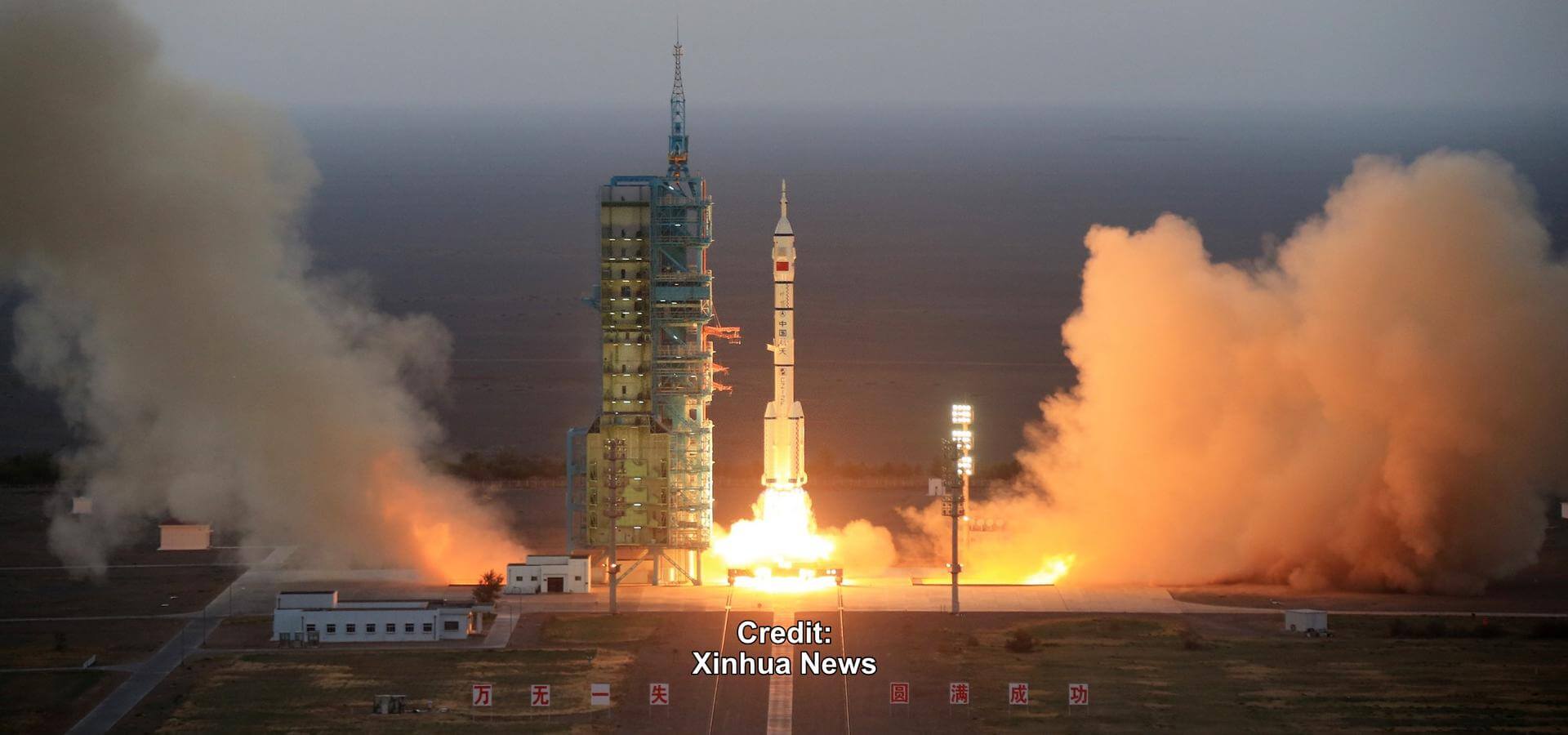
The Long March 2F (also written CZ-2F, and known in Chinese as *Changzheng 2F*) is a Chinese medium-lift orbital launch vehicle developed and operated by the China Aerospace Science and Technology Corporation (CASC). It is a member of the Long March rocket family, which forms the backbone of China's state space program. The Long March 2F was specifically designed and human-rated for crewed spaceflight missions, making it one of the most historically significant rockets in Chinese space history.
Design and Capabilities
Standing 62 metres tall with a core diameter of 3.35 metres, the Long March 2F is a two-stage liquid-propellant rocket augmented by four liquid-fuelled strap-on boosters at its base. It is capable of delivering up to 8,400 kg to low Earth orbit (LEO). The vehicle was derived from the earlier Long March 2E, with extensive modifications to meet the safety and reliability requirements associated with carrying human crew. These enhancements include a launch escape system mounted at the top of the vehicle, designed to pull a crewed capsule away from the rocket in the event of a critical failure during ascent.
All Long March 2F missions have launched from the Jiuquan Satellite Launch Center in the Gobi Desert, the historic home of China's human spaceflight program.
Flight History
Our tracking data covers seven flights of the Long March 2F between 1999 and 2008, all of which were fully successful — a remarkable record for a vehicle of its complexity and mission profile. The rocket's manifest during this period reads as a chronicle of China's rise as a human spaceflight power.
The vehicle first appeared in our records with the Shenzhou-2 mission, followed by Shenzhou-3 and Shenzhou-4 — uncrewed test flights that progressively validated the system ahead of a historic milestone. In 2003, the Long March 2F carried Shenzhou-5 to orbit, making Yang Liwei the first Chinese citizen to fly in space and marking China as only the third nation to independently achieve human orbital spaceflight. Subsequent missions continued to build on this achievement: Shenzhou-6 in 2005 carried China's first multi-person crew, and Shenzhou-7 in 2008 supported the country's first spacewalk.
Role and Legacy
The Long March 2F occupies a unique and celebrated position in spaceflight history as the sole launch vehicle to have carried Chinese taikonauts to orbit during the foundational years of the Shenzhou program. Its unblemished success record across the missions tracked here reflects both the maturity of the underlying rocket design and the rigorous engineering standards applied during its development.
CASC remains the primary customer for this vehicle, reflecting its role as an instrument of national prestige and strategic capability rather than a commercial product. The Long March 2F demonstrated that China could independently develop, certify, and operate a human-rated launch system — a milestone that reshaped the landscape of global space exploration in the early twenty-first century.
- Sep 25, 2008Long March 2F | Shenzhou-7Success
- Oct 12, 2005Long March 2F | Shenzhou-6Success
- Oct 15, 2003Long March 2F | Shenzhou-5Success
- Dec 29, 2002Long March 2F | Shenzhou-4Success
- Mar 25, 2002Long March 2F | Shenzhou-3Success
- Jan 09, 2001Long March 2F | Shenzhou-2Success
- Nov 19, 1999Long March 2F | Shenzhou-1Success