Long March 2D/YZ-3
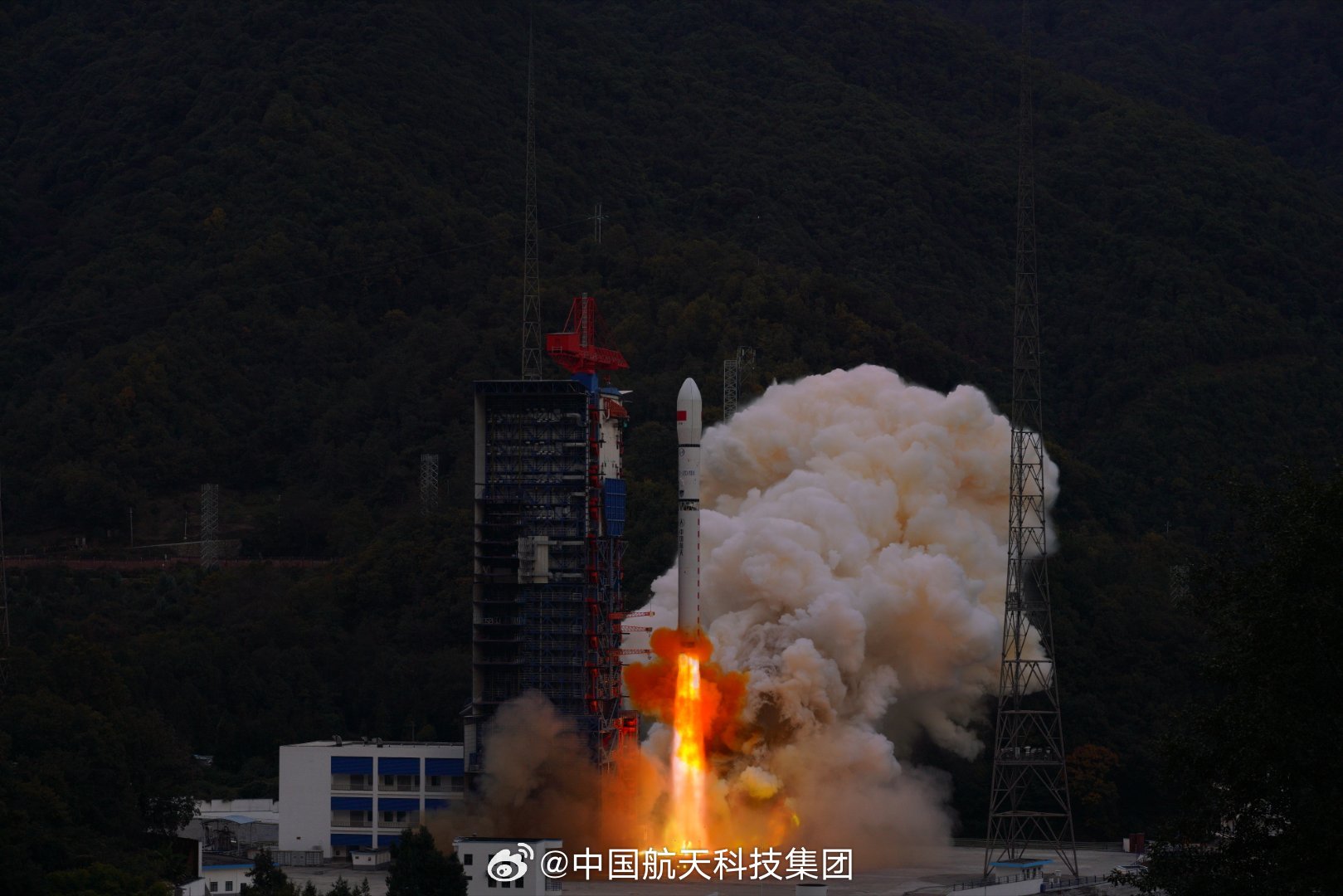
About the Long March 2D/YZ-3
Long March 2D/YZ-3
The Long March 2D/YZ-3 is a Chinese orbital launch vehicle configuration operated by the China Aerospace Science and Technology Corporation (CASC). It combines the well-established Long March 2D two-stage rocket with the Yuanzheng-3 (YZ-3) upper stage, a restartable kick stage that significantly extends the vehicle's mission flexibility. This configuration allows payloads to be deployed into multiple distinct orbital planes or altitudes within a single launch, making it particularly well-suited for the rapid build-out of satellite constellations.
Vehicle Background
The Long March 2D is a member of China's venerable Long March family, developed by the Shanghai Academy of Spaceflight Technology (SAST). It has a long operational history as a reliable medium-lift launcher, frequently used for Earth observation, scientific, and commercial satellites. The addition of the Yuanzheng-3 upper stage transforms it into a more versatile platform, capable of targeting orbital regimes that would otherwise require individual dedicated launches or complex propulsion from the satellites themselves.
The Yuanzheng series of upper stages represents a broader CASC strategy to increase the capability and commercial competitiveness of its existing rocket fleet without requiring entirely new vehicle development. The YZ-3 variant is designed specifically to support multi-satellite, multi-orbit deployment profiles.
Flight Record
According to tracked flight data, the Long March 2D/YZ-3 has completed 4 flights, all successful, with activity spanning 2018 to 2024. The vehicle has maintained a perfect record across all documented missions, reflecting both the maturity of the underlying Long March 2D booster and the reliable performance of the YZ-3 upper stage.
The missions tracked cover a notable range of payloads and programs. The Hongyan-1 & Yunhai-2 Group 01 mission, one of the earliest in the record, carried satellites associated with two separate programs simultaneously — the Hongyan broadband low Earth orbit communications constellation and the Yunhai-2 meteorological and environmental monitoring series. This dual-manifest approach exemplifies the multi-orbit deployment capability that defines the YZ-3 configuration.
The 3 x SatNet test satellites mission supported the development of China's satellite internet infrastructure, while the Yunhai-2 Group 02 flight continued the expansion of the meteorological monitoring constellation. The most recently tracked mission, the High Speed Laser Diamond Constellation Test System, reflects growing Chinese interest in laser inter-satellite link technology, a key enabling capability for next-generation broadband megaconstellations.
Customers and Role
The primary customer across all tracked flights has been China Aerospace Science and Technology Corporation itself, underscoring the vehicle's role as an internal workhorse for government-backed constellation programs. Its missions have consistently served strategic national priorities — communications infrastructure, Earth observation, and emerging technology demonstration.
The Long March 2D/YZ-3 occupies a practical niche in China's launch portfolio: a proven, dependable rocket augmented with a smart upper stage to tackle the logistical demands of modern multi-satellite deployment campaigns. With a clean operational record and missions tied to some of China's most significant space development programs, it stands as a quiet but consequential contributor to the country's expanding presence in orbit.