Long March 2D
About the Long March 2D
Long March 2D
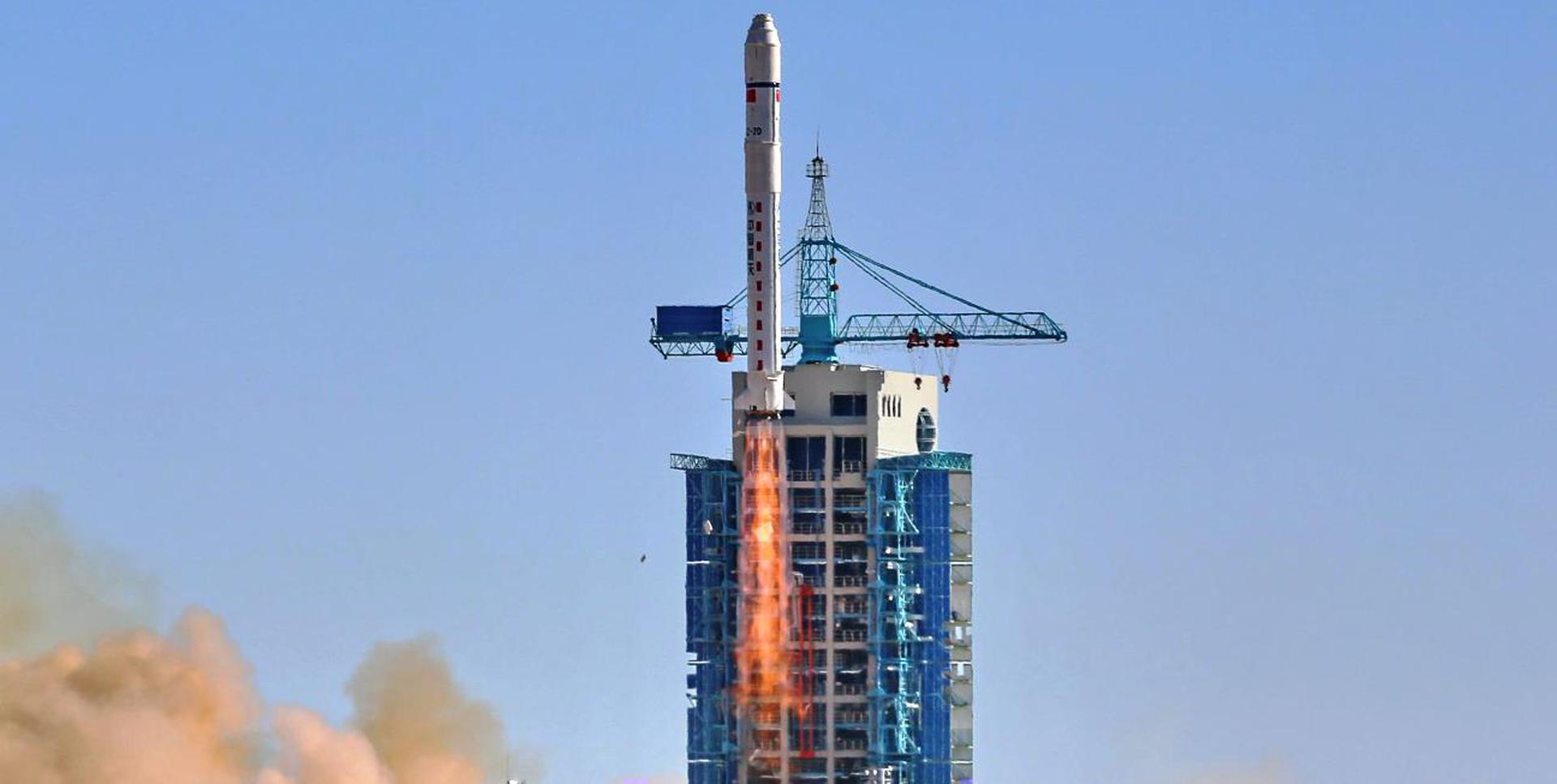
The Long March 2D (Chinese: 长征二号丁, abbreviated CZ-2D) is a Chinese orbital launch vehicle developed and operated by the Shanghai Academy of Spaceflight Technology (SAST), a subsidiary of the China Aerospace Science and Technology Corporation (CASC). A two-stage, liquid-propellant rocket, it serves as a reliable workhorse for low Earth orbit (LEO) missions, particularly those involving Earth observation, experimental, and small commercial satellites.
Design and Capability
The Long March 2D stands 38.3 metres tall with a core diameter of 3.35 metres, dimensions shared with several other members of the Long March 2 family. Both stages burn a combination of nitrogen tetroxide (NTO) as the oxidizer and unsymmetrical dimethylhydrazine (UDMH) as the fuel — a hypergolic propellant pairing that has been a cornerstone of Chinese launch vehicle design for decades. The vehicle is capable of delivering up to 3,500 kg to low Earth orbit, placing it in the medium-light lift category and making it well suited to smallsat and microsatellite constellation deployments.
Flight History
Our flight record tracks 100 launches of the Long March 2D between 1992 and 2026, of which 99 were successful and one resulted in a failure or partial failure — a reliability rate that ranks among the strongest of any operational rocket in its class. The vehicle conducted its first tracked flight in 1992 and has remained in continuous service across more than three decades, reflecting both the durability of its design and sustained demand from Chinese government and commercial customers.
Launch operations have taken place primarily from the Jiuquan Satellite Launch Center in Inner Mongolia, with the Taiyuan Satellite Launch Center also serving as a key site, particularly for Sun-synchronous orbit missions. This geographic flexibility has contributed to the vehicle's versatility across mission profiles.
Customers and Missions
The top customers in our data are the China Aerospace Science and Technology Corporation, the China Aerospace Corporation, and the Ministry of Aerospace Industry, reflecting the Long March 2D's predominantly state-affiliated manifest. In recent years, the vehicle has increasingly supported constellation-building efforts and experimental programs. Recent missions include the deployment of 4 × SatNet test satellites (flown on successive dedicated missions), the SuperView Neo 2-05 & 06 commercial imaging satellites, and several payloads in the Shiyan (experimental) series, including Shiyan 30 and Shiyan 31 missions.
Role and Significance
The Long March 2D occupies an important niche within China's broader launch architecture. While larger vehicles in the Long March family handle heavier geostationary and deep-space payloads, the 2D provides a dependable, frequently flown option for the growing volume of Chinese government and dual-use LEO missions. Its century-mark flight total is a meaningful milestone, underscoring how central this vehicle has become to China's national space program and its expanding commercial launch activity. With missions continuing into 2026, the Long March 2D shows no signs of retirement in the near term.
- Sep 19, 2026Long March 2D | PIESAT-2 13-16Success
- May 30, 2026Long March 2D | 4 x SatNet test satellitesSuccess
- Apr 24, 2026Long March 2D | 4 x SatNet test satellitesSuccess
- Mar 25, 2026Long March 2D | SuperView Neo 2-05 & 06Success
- Mar 12, 2026Long March 2D | Shiyan 30 03-04Success
- Oct 13, 2025Long March 2D | Shiyan 31Success
- Sep 29, 2025Long March 2D | Shiyan 30 01-02Success
- Jun 14, 2025Long March 2D | Zhangheng-1-02Success
- May 14, 2025Long March 2D | Space Computing ConstellationSuccess
- Apr 01, 2025Long March 2D | 4 x SatNet test satellitesSuccess
- Mar 15, 2025Long March 2D | SuperView Neo 3-02Success
- Jan 17, 2025Long March 2D | PRSC-EO1Success
- Dec 16, 2024Long March 2D | PIESAT-2 09-12Success
- Sep 27, 2024Long March 2D | Shijian 19Success
- Sep 20, 2024Long March 2D | Jilin-1 Wideband 02B-01 to 06Success
- May 20, 2024Long March 2D | Beijing 3CSuccess
- Apr 20, 2024Long March 2D | Yaogan 42-02Success
- Apr 15, 2024Long March 2D | SuperView Neo 3-01Success
- Apr 02, 2024Long March 2D | Yaogan 42-01Success
- Dec 10, 2023Long March 2D | Yaogan 39 Group 05Success
- Oct 23, 2023Long March 2D | Yaogan 39 Group 04Success
- Oct 15, 2023Long March 2D | Yunhai-1-04Success
- Oct 05, 2023Long March 2D | Yaogan 39 Group 03Success
- Sep 17, 2023Long March 2D | Yaogan 39 Group 02Success
- Aug 31, 2023Long March 2D | Yaogan 39 Group 01Success
- Jul 26, 2023Long March 2D | Yaogan 36 Group 05Success
- Jul 23, 2023Long March 2D | Skysight AS-01 to 03 & Lingxi-03Success
- Jun 15, 2023Long March 2D | 41 x Jilin-1Success
- Mar 30, 2023Long March 2D | PIESAT-1 x 4Success
- Jan 15, 2023Long March 2D | 6 x Jilin-1, Qilu-2/3 & othersSuccess
- Jan 13, 2023Long March 2D | Yaogan 37 & Shiyan 22A/BSuccess
- Dec 14, 2022Long March 2D | Yaogan 36 Group 04Success
- Dec 08, 2022Long March 2D | Gaofen-5-01ASuccess
- Nov 27, 2022Long March 2D | Yaogan 36 Group 03Success
- Oct 14, 2022Long March 2D | Yaogan 36 Group 02Success
- Oct 08, 2022Long March 2D | Advanced Space-borne Solar Observatory (ASO-S)Success
- Sep 26, 2022Long March 2D | Yaogan 36Success
- Sep 20, 2022Long March 2D | Yunhai-1-03Success
- Sep 06, 2022Long March 2D | Yaogan 35 Group 05Success
- Aug 24, 2022Long March 2D | Beijing-3BSuccess
- Aug 19, 2022Long March 2D | Yaogan 35 Group 04Success
- Jul 29, 2022Long March 2D | Yaogan 35 Group 03Success
- Jun 23, 2022Long March 2D | Yaogan 35 Group 02Success
- May 05, 2022Long March 2D | Jilin-1 Wideband-01C & High Resolution 03D-27 to 33Success
- Jan 17, 2022Long March 2D | Shiyan 13Success
- Dec 29, 2021Long March 2D | Tianhui 4Success
- Nov 06, 2021Long March 2D | Yaogan 35 A/B/CSuccess
- Oct 14, 2021Long March 2D | Xihe (CHASE)Success
- Jul 29, 2021Long March 2D | Tianhui-1-04Success
- Jul 03, 2021Long March 2D | Jilin-1 Wideband-01B & High Resolution 03DSuccess
- Jun 11, 2021Long March 2D | Beijing-3Success
- Aug 23, 2020Long March 2D | Gaofen-9-05Success
- Aug 06, 2020Long March 2D | Gaofen-9-04Success
- Jul 04, 2020Long March 2D | Chuangxin 3A (02)Success
- Jun 17, 2020Long March 2D | Gaofen-9-03Success
- May 31, 2020Long March 2D | Gaofen-9-02Success
- Feb 19, 2020Long March 2D | XJS-C, XJS-D, XJS-E, XJS-FSuccess
- Jan 15, 2020Long March 2D | Jilin-1 Wideband 01, Tianqi-4, NuSat-7 & 8Success
- Sep 25, 2019Long March 2D | Yunhai-1-02Success
- Dec 07, 2018Long March 2D | SaudiSat 5A & 5BSuccess
- Nov 19, 2018Long March 2D | Shiyan 6, Jiading-1 (OKW-1) & othersSuccess
- Jun 02, 2018Long March 2D | Gaofen 6 & Luojia-1Success
- Mar 17, 2018Long March 2D | LKW-4 (Land Survey Satellite-4)Success
- Feb 02, 2018Long March 2D | Zhangheng-1 (CSES)Success
- Jan 13, 2018Long March 2D | LKW-3 (Land Survey Satellite-3)Success
- Jan 09, 2018Long March 2D | SuperView-1 (Gaojing 1-03 & Gaojing 1-04)Success
- Dec 23, 2017Long March 2D | LKW-2 (Land Survey Satellite-2)Success
- Dec 03, 2017Long March 2D | LKW-1 (Land Survey Satellite-1)Success
- Oct 09, 2017Long March 2D | VRSS-2 (Antonio José de Sucre)Success
- Dec 28, 2016Long March 2D | SuperView-1 (Gaojing 1-01 & Gaojing 1-02)Partial Failure
- Dec 21, 2016Long March 2D | Tansat (CarbonSat)Success
- Nov 11, 2016Long March 2D | YunHai 1-01Success
- Aug 15, 2016Long March 2D | QUESS (Micius)Success
- May 15, 2016Long March 2D | Yaogan-30Success
- Apr 05, 2016Long March 2D | Shijian 10Success
- Dec 17, 2015Long March 2D | DAMPE ( Wukong/Monkey King )Success
- Oct 26, 2015Long March 2D | Tianhui-1CSuccess
- Oct 07, 2015Long March 2D | Jilin-1Success
- Sep 14, 2015Long March 2D | Gaofen 9Success
- Nov 20, 2014Long March 2D | Yaogan-24Success
- Sep 04, 2014Long March 2D | Chuangxin 1-04 & LingqiaoSuccess
- Nov 25, 2013Long March 2D | Shiyan Weixing 5Success
- Apr 26, 2013Long March 2D | Gaofen 1Success
- Dec 18, 2012Long March 2D | Göktürk-2Success
- Sep 29, 2012Long March 2D | VRSS-1Success
- May 06, 2012Long March 2D | Tianhui-1BSuccess
- Nov 20, 2011Long March 2D | Shiyan Weixing 4 & Chuang Xin 1CSuccess
- Sep 22, 2010Long March 2D | Yaogan-11, Zheda Pixing 1B & Zheda Pixing 1CSuccess
- Aug 24, 2010Long March 2D | TianHui-1Success
- Jun 15, 2010Long March 2D | Shijian 12Success
- Dec 09, 2009Long March 2D | Yaogan Weixing 7Success
- Dec 01, 2008Long March 2D | Yaogan Weixing 4Success
- Nov 05, 2008Long March 2D | Shiyan Weixing 3Success
- May 25, 2007Long March 2D | Yaogan Weixing 2Success
- Aug 29, 2005Long March 2D | Fanhui Shi Weixing (22)Success
- Jul 05, 2005Long March 2D | Shi Jian 7Success
- Sep 27, 2004Long March 2D | Fanhui Shi Weixing (20)Success
- Nov 03, 2003Long March 2D | Fanhui Shi Weixing (18)Success
- Oct 20, 1996Long March 2D | Fanhui Shi Weixing (17)Success
- Jul 03, 1994Long March 2D | Fanhui Shi Weixing (16)Success
- Aug 09, 1992Long March 2D | Fanhui Shi Weixing (13)Success