Long March 2C/YZ-1S
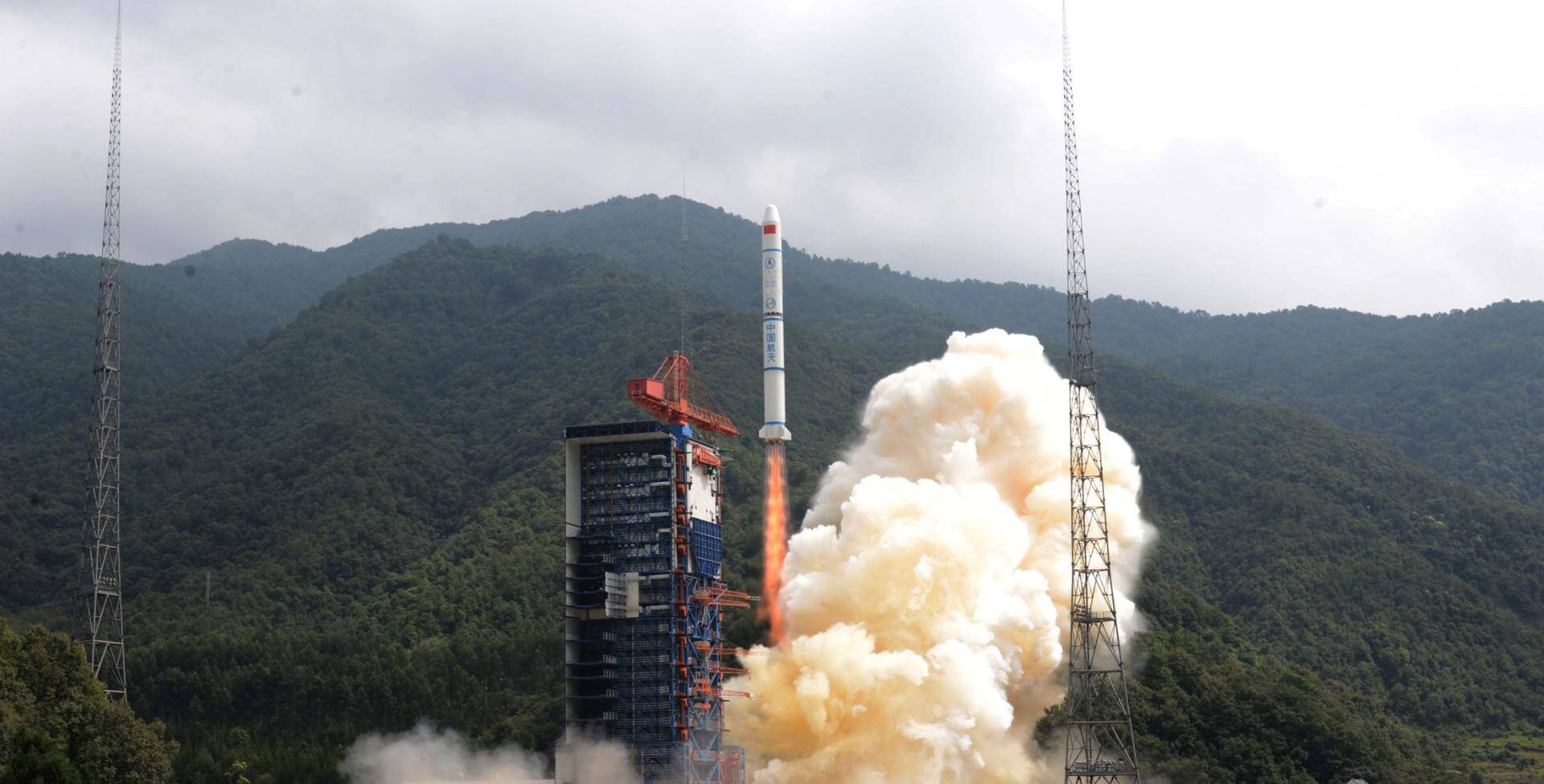
About the Long March 2C/YZ-1S
Long March 2C/YZ-1S
The Long March 2C/YZ-1S is a Chinese orbital launch vehicle operated by the China Aerospace Science and Technology Corporation (CASC), serving as a specialized variant of the long-established Long March 2C rocket family. It is distinguished by the addition of the Yuanzheng-1S (YZ-1S) upper stage, a restartable kick stage that significantly extends the vehicle's mission flexibility, allowing it to deploy payloads into precise or multiple orbital planes from a single launch.
Standing 42 meters tall with a core diameter of 3.35 meters, the Long March 2C/YZ-1S is a mid-size, two-stage liquid-propellant rocket topped by the YZ-1S upper stage. Its performance figures of 3,850 kg to low Earth orbit (LEO) and 1,250 kg to geostationary transfer orbit (GTO) place it in the medium-light category, well suited for government science missions, technology demonstrators, and constellation deployment. The vehicle launches from Chinese spaceports, with missions associated with this configuration conducted from Xichang Satellite Launch Center and Jiuquan Satellite Launch Center.
Operational History
According to our flight record, the Long March 2C/YZ-1S has been active from 2018 through 2026, accumulating 10 tracked flights with 9 successes and 1 failure or partial failure. This reliability record reflects the maturity of the underlying Long March 2C platform, which has been in service since the 1970s, combined with the added complexity introduced by the restartable upper stage.
The vehicle's mission manifest demonstrates a clear emphasis on Chinese government and institutional payloads. Recent missions have included the deployment of multiple SatNet test satellites — with separate launches carrying batches of two, three, and four spacecraft — indicating the rocket's suitability for small-constellation rideshare deployments. Other notable recent payloads include Haiyang 3-01, an ocean observation satellite; DRO-A/B, a pair of spacecraft placed into a distant retrograde orbit demonstrating the upper stage's capable trajectory management; and Shiyan 33, a technology demonstration mission. The diversity of these payloads underscores the YZ-1S variant's versatility across scientific, observational, and experimental mission profiles.
Role and Significance
The YZ-1S upper stage is central to this variant's identity. Its ability to restart multiple times in orbit allows mission planners to target orbital altitudes and inclinations that a standard two-stage vehicle could not reach as efficiently, making it particularly valuable for multi-satellite deployments requiring each spacecraft to be released into a distinct slot. This capability has made the Long March 2C/YZ-1S a recurring choice for China's expanding suite of operational and experimental satellite programs.
As a member of the broader Long March family — China's primary and most historically significant rocket lineage — the 2C/YZ-1S inherits decades of engineering heritage while incorporating modern upper-stage technology. Its continued operational cadence through the mid-2020s confirms its standing as a dependable workhorse for medium-priority Chinese space missions that demand orbital precision without the scale of China's heavier launch vehicles.
- Mar 27, 2026Long March 2C/YZ-1S | Shiyan 33Success
- Sep 16, 2025Long March 2C/YZ-1S | 4 x SatNet test satellitesSuccess
- Mar 13, 2024Long March 2C/YZ-1S | DRO-A/BPartial Failure
- Dec 30, 2023Long March 2C/YZ-1S | 3 x SatNet test satellitesSuccess
- Nov 16, 2023Long March 2C/YZ-1S | Haiyang 3-01Success
- Jul 09, 2023Long March 2C/YZ-1S | 2 x SatNet test satellitesSuccess
- May 20, 2022Long March 2C/YZ-1S | RSW-04 - 06Success
- Nov 03, 2021Long March 2C/YZ-1S | Yaogan-32-02Success
- Aug 24, 2021Long March 2C/YZ-1S | RSW-01 - 03Success
- Oct 09, 2018Long March 2C/YZ-1S | Yaogan-32-01Success