Long March 2C/SMA
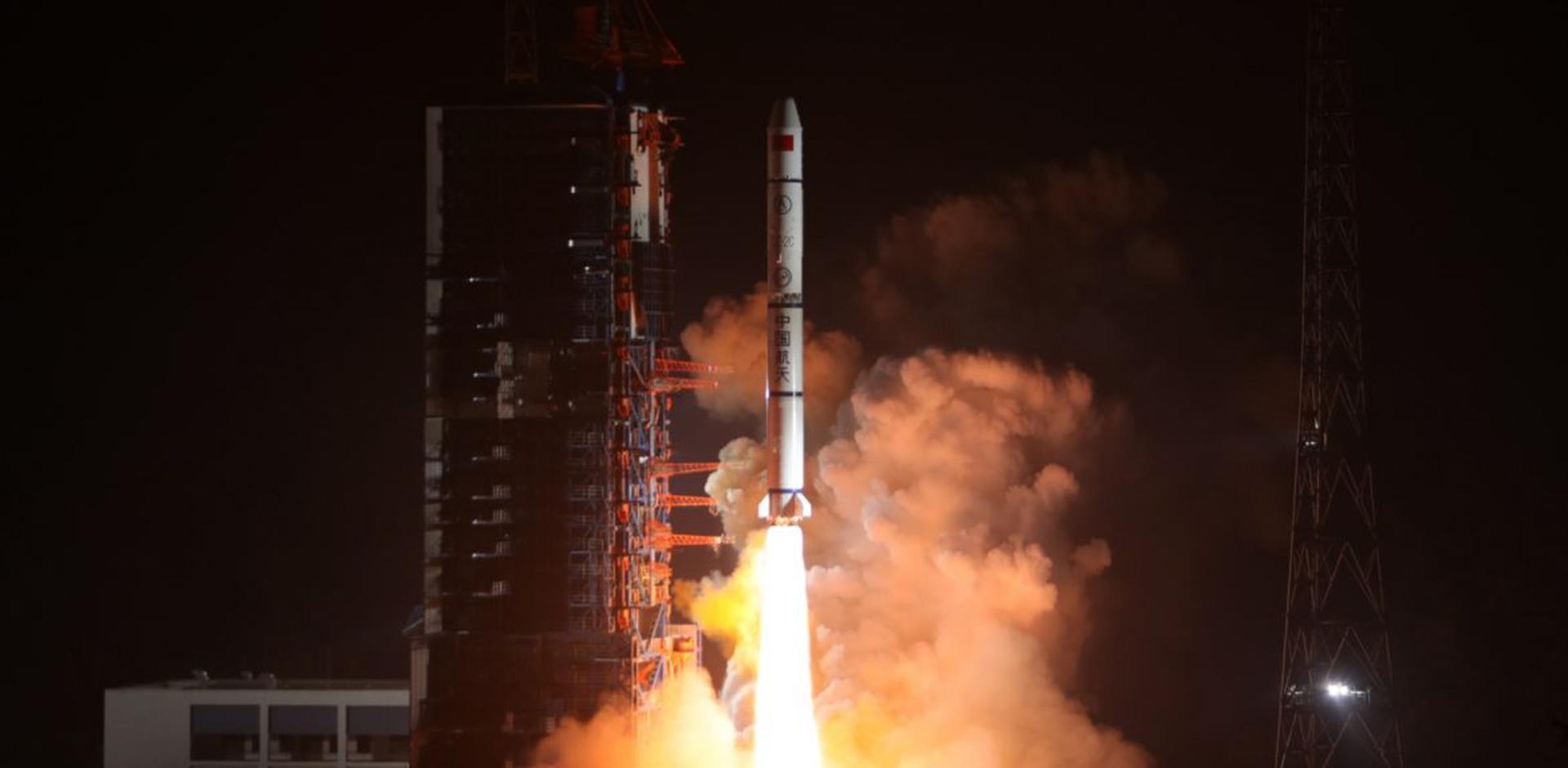
About the Long March 2C/SMA
Long March 2C/SMA
The Long March 2C/SMA is a Chinese orbital launch vehicle operated by the China Aerospace Science and Technology Corporation (CASC), representing a specialized configuration of the venerable Long March 2C rocket family. Developed and flown by China, it is distinguished by its use of an SMA (Solid Motor Apogee) upper stage, an additional solid-fueled kick stage that extends the vehicle's capability to reach higher or more precisely targeted orbits beyond what the baseline Long March 2C can achieve on its own.
Origins and Configuration
The Long March 2C is one of China's most mature and reliable medium-lift rockets, with roots stretching back to the early era of the country's space program. The addition of the SMA stage transforms it into a more versatile system suited to missions requiring orbital insertions — such as sun-synchronous or other non-standard orbits — that would otherwise be difficult or inefficient for a two-stage liquid-fueled rocket to achieve alone. This modular approach reflects a broader pattern in the Long March family of adapting proven hardware to meet evolving mission requirements without designing entirely new vehicles.
Flight Record
Our tracking data records three flights of the Long March 2C/SMA configuration, spanning the years 2008 to 2018, all of which were successful. This unblemished record, while based on a modest number of launches, speaks to the maturity of the underlying platform and the careful mission planning that characterizes CASC's approach to this variant.
The tracked missions highlight the vehicle's role as a capable carrier for Earth observation and scientific satellites. These include the Huan Jing 1A & 1B environmental monitoring satellites, the Shijian 9A & 9B technology demonstration spacecraft, and the PRSS-1 & PakTes-1A mission — the latter representing a significant international commercial flight, delivering Pakistan's first remote sensing satellite alongside a smaller companion spacecraft. This final mission, conducted in 2018, demonstrated the Long March 2C/SMA's relevance as a launch solution for international customers seeking affordable access to orbit.
Customers and Role
The China Aerospace Science and Technology Corporation stands as the primary customer across all tracked flights, consistent with the vehicle's role as a government and institutional launcher. However, the PRSS-1 mission illustrates CASC's growing ambition to compete in the international commercial launch market, offering the Long March 2C/SMA's dual-satellite delivery capability to foreign operators.
Legacy and Significance
The Long March 2C/SMA occupies a specialized niche within China's broader launch vehicle fleet. By pairing a well-proven liquid-fueled core with a solid kick stage, it offers a cost-effective route to a range of mission profiles without the complexity and expense of an entirely new rocket. Though the number of flights in this specific configuration remains small, each mission served a distinct purpose — environmental monitoring, technology validation, and international partnership — reflecting the breadth of demand that a flexible, reliable medium-lift vehicle can address. Its decade-long active span underscores its continued utility even as China's launch manifest expanded with newer, more capable vehicles.