Long March 2C/SM
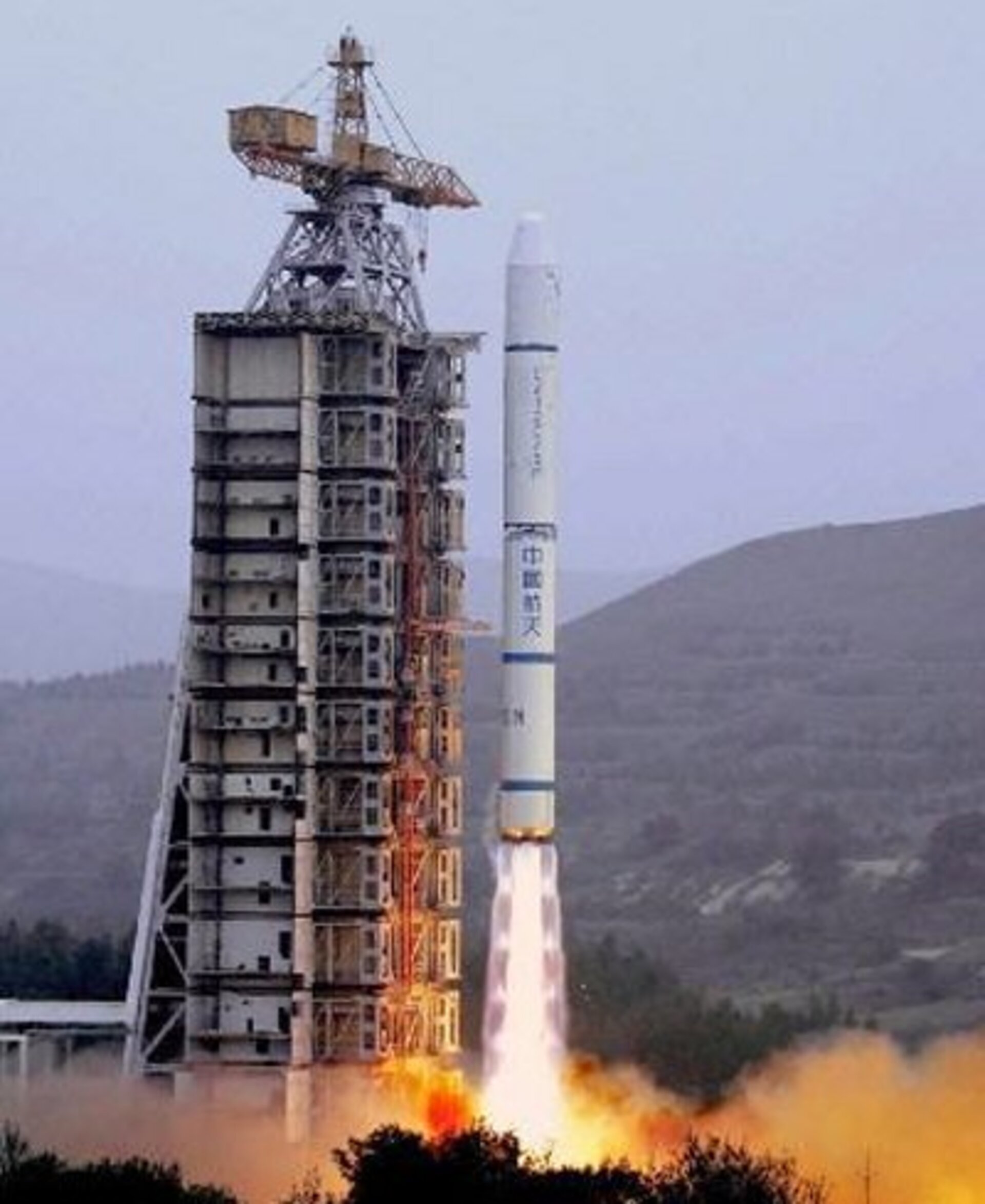
About the Long March 2C/SM
Long March 2C/SM
The Long March 2C/SM is a Chinese orbital launch vehicle operated by the China Aerospace Science and Technology Corporation (CASC), representing a specialized upper-stage variant of the well-established Long March 2C rocket family. Developed by the China Academy of Launch Vehicle Technology (CALT), the vehicle is part of China's Long March series, which has served as the backbone of the country's space launch program since the 1970s.
Design and Configuration
The Long March 2C/SM stands 42 meters tall with a core diameter of 3.35 meters, dimensions consistent with the broader Long March 2C lineage. The "SM" designation refers to the addition of a Smart Dispenser upper stage — a maneuverable apogee kick module designed to deploy payloads into precise orbits that the standard two-stage Long March 2C configuration could not easily achieve on its own. This upper stage gives the vehicle meaningful versatility, enabling it to deliver payloads to a range of orbital regimes. The vehicle is capable of lifting 3,850 kg to low Earth orbit and 1,440 kg to geostationary transfer orbit, making it a competent mid-class launcher suited to scientific and Earth observation missions.
Operational History
The Long March 2C/SM flew during a brief but focused operational window spanning 2003 to 2004, during which it recorded two flights — both successful. This clean flight record, while limited in sample size, demonstrated the reliability expected of a vehicle derived from the mature Long March 2C platform.
Both tracked missions were conducted on behalf of China Aerospace Science and Technology Corporation and carried scientific spacecraft as part of China's Double Star Programme, a collaborative mission with the European Space Agency to study Earth's magnetosphere. The first mission, Tan Ce 1 (also known as Double Star TC-1), placed an equatorial magnetospheric research satellite into a highly elliptical orbit. The follow-up mission, Tan Ce 2 (Double Star TC-2), deployed a complementary polar-orbiting spacecraft to enable coordinated multi-point measurements alongside ESA's Cluster mission.
Role and Significance
The Long March 2C/SM's role in the Double Star Programme represents a notable chapter in Chinese-European space cooperation, marking one of the more substantive joint scientific endeavors between China and a Western space agency during that era. The Smart Dispenser upper stage was pivotal in achieving the demanding orbital parameters required by these science missions, illustrating how targeted modifications to an existing, proven rocket can expand its mission envelope without requiring an entirely new vehicle.
Although the Long March 2C/SM operated only briefly before being retired in favor of other configurations within China's growing launch fleet, its 100% mission success rate and its contribution to internationally recognized scientific research cement its place as a meaningful, if compact, chapter in the history of Chinese spaceflight. The underlying Long March 2C rocket, by contrast, has continued flying in other configurations well into subsequent decades, remaining one of the most frequently launched members of the Long March family.