Long March 2C/SD
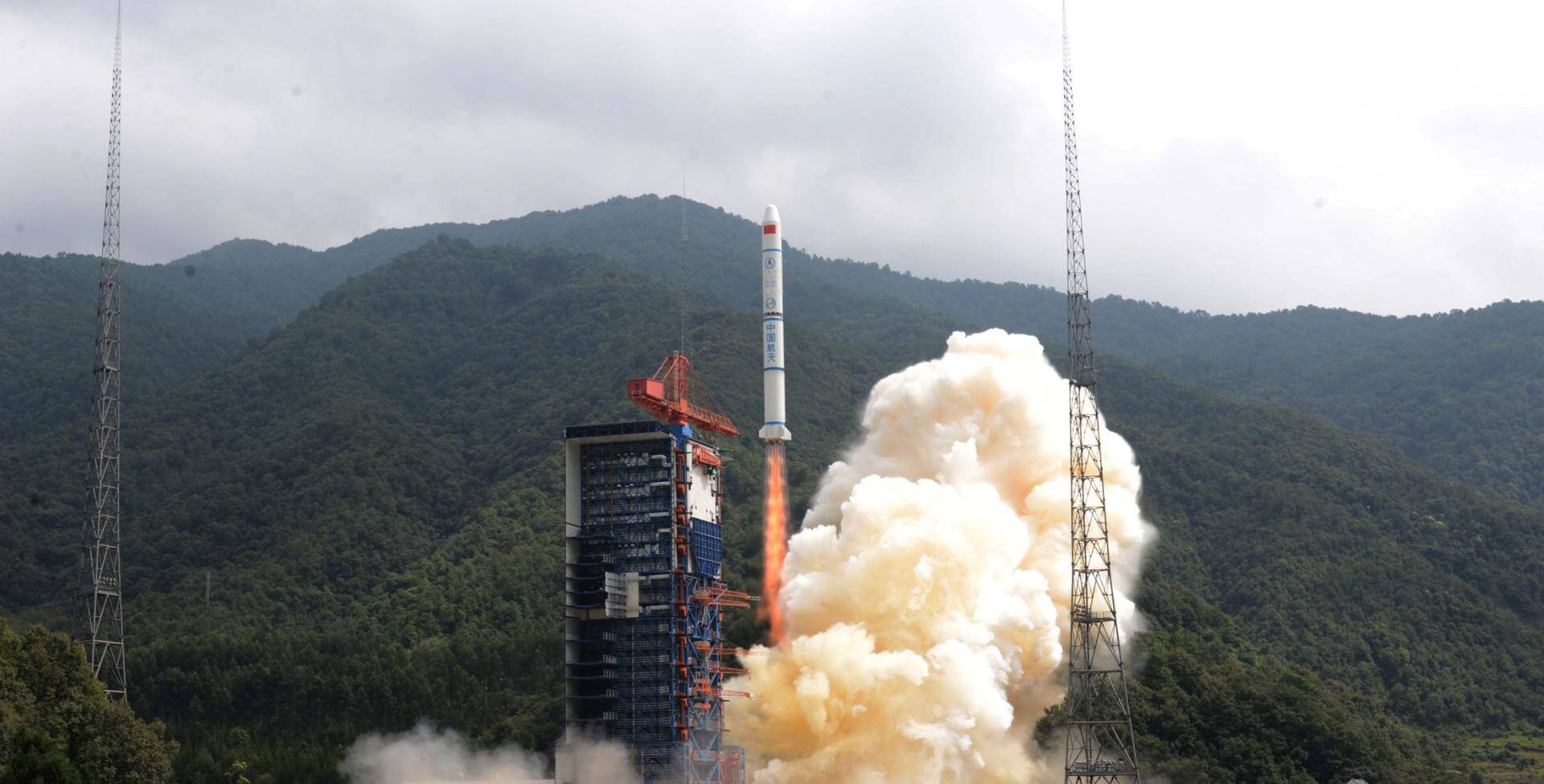
About the Long March 2C/SD
Long March 2C/SD
The Long March 2C/SD is a Chinese orbital launch vehicle operated by the China Aerospace Science and Technology Corporation (CASC) and manufactured by the Shanghai Academy of Spaceflight Technology (SAST). A specialized variant of the Long March 2C, the "/SD" designation refers to a modified upper stage configuration designed to deploy two satellites simultaneously into low Earth orbit, making it particularly well suited for constellation deployment missions.
Development and Design
The Long March 2C/SD stands 42 meters tall with a core diameter of 3.35 meters, dimensions consistent with the broader Long March 2C family that traces its heritage to Chinese ballistic missile technology developed in the 1960s and 1970s. The vehicle is capable of delivering up to 3,850 kilograms to low Earth orbit. The defining feature of the /SD variant is its smart dispenser upper stage, which allows the rocket to release two payloads at separate points during a single flight — a capability specifically developed to meet the requirements of large commercial satellite constellations.
Operational History
The Long March 2C/SD flew exclusively between 1997 and 1999, a focused operational window during which it compiled a perfect record of 7 successes from 7 flights in our tracking data. All recorded missions were launched from the Jiuquan Satellite Launch Center in Inner Mongolia, the oldest and most storied of China's launch facilities.
The vehicle's career was defined almost entirely by its role in supporting the Iridium satellite constellation, a landmark commercial communications project that sought to provide global mobile telephony coverage via a network of low Earth orbit satellites. While other launch providers, including McDonnell Douglas and Khrunichev, also contributed vehicles to the Iridium deployment, the Long March 2C/SD offered a competitive dual-manifest capability that made China a meaningful commercial partner in the effort.
Among the missions documented in our records are paired launches carrying Iridium satellites 42 & 44, 51 & 61, 69 & 71, 76 & 78, 88 & 89, and 92 & 93. The China Aerospace Corporation is listed as the top customer across these flights, reflecting the commercial contracting structure through which the launches were arranged. Each mission successfully placed its two-satellite payload into the intended orbital plane, contributing to the progressive build-out of the Iridium network.
Significance
The Long March 2C/SD occupies a notable place in both Chinese and commercial spaceflight history. It represented one of the earliest sustained campaigns in which a Chinese launch vehicle competed directly for — and won — high-profile international commercial contracts. The Iridium missions demonstrated that Chinese rockets could perform reliably under rigorous commercial scheduling demands and dual-manifest constraints.
Although the /SD configuration was a short-lived and narrowly scoped variant, its 7-for-7 reliability record across a concentrated two-year period stands as a testament to the maturity of the underlying Long March 2C platform. The broader Long March 2C family continued to serve Chinese and international customers well beyond this period, but the /SD variant's role in the Iridium constellation remains its most visible and historically significant contribution.
- Jun 11, 1999Long March 2C/SD | Iridium 92 & 93Success
- Dec 19, 1998Long March 2C/SD | Iridium 88 & 89Success
- Aug 19, 1998Long March 2C/SD | Iridium 76 & 78Success
- May 02, 1998Long March 2C/SD | Iridium 69 & 71Success
- Mar 25, 1998Long March 2C/SD | Iridium 51 & 61Success
- Dec 08, 1997Long March 2C/SD | Iridium 42 & 44Success
- Sep 01, 1997Long March 2C/SD | Iridium MFS 1 & 2Success