Long March 2C
About the Long March 2C
Long March 2C
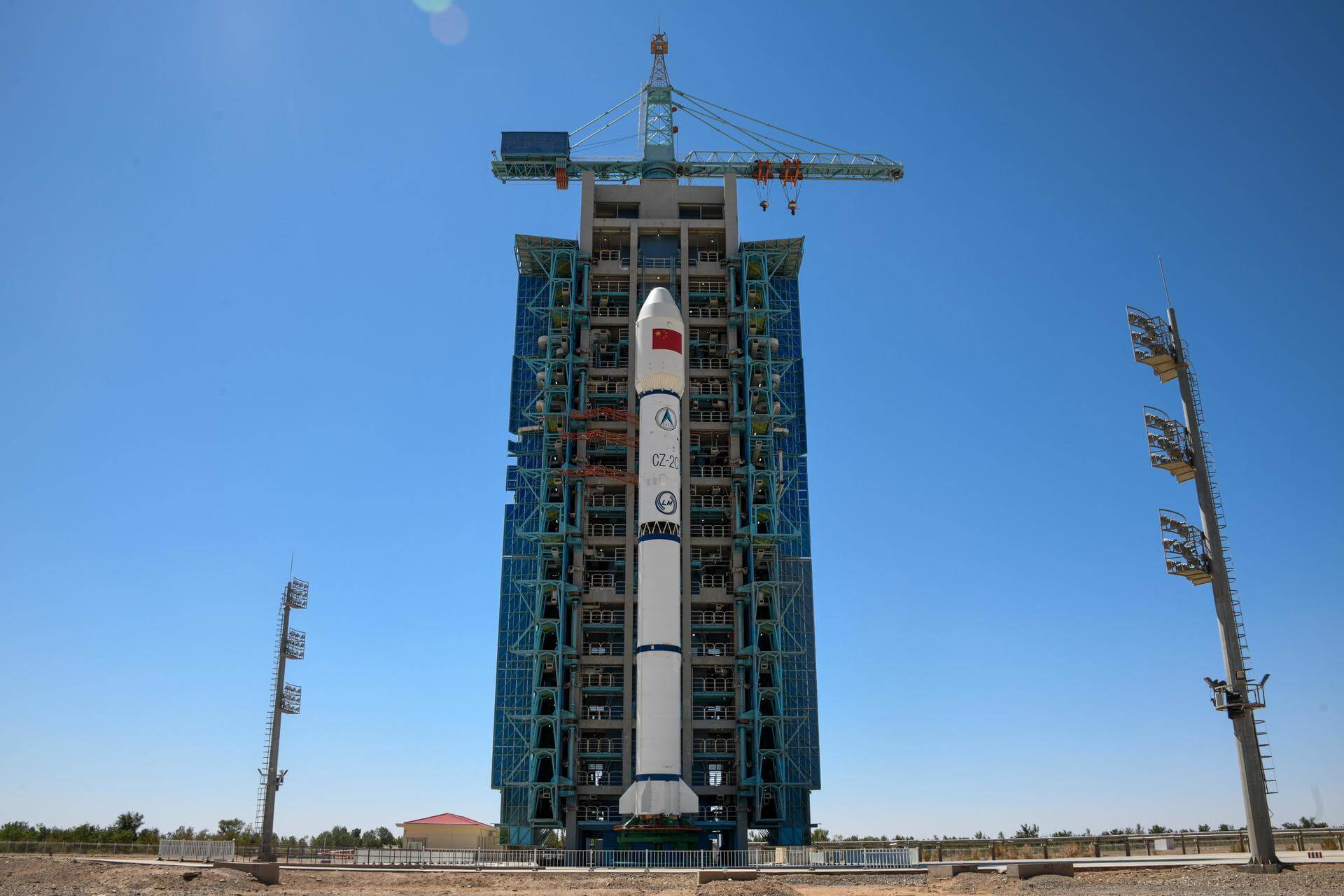
The Long March 2C (Chinese: 长征二号丙, also written CZ-2C) is a Chinese orbital launch vehicle operated by the China Aerospace Science and Technology Corporation (CASC) and manufactured by the Shanghai Academy of Spaceflight Technology (SAST). A member of China's venerable Long March rocket family, it serves as a reliable medium-lift workhorse for low Earth orbit missions, carrying payloads for both domestic and international customers.
Design and Capability
The Long March 2C stands 42 metres tall with a core diameter of 3.35 metres, dimensions shared across much of the Long March 2 family. It is a two-stage liquid-propellant rocket, burning nitrogen tetroxide and unsymmetrical dimethylhydrazine (UDMH) — a propellant combination common throughout the Long March lineage. The vehicle is capable of delivering up to 3,850 kg to low Earth orbit, placing it in a capable but focused performance class well suited to medium-sized satellites and multi-manifest missions. A restartable upper stage variant has also been employed for missions requiring more precise orbit injection.
History and Operations
The Long March 2C first flew in 1982, making it one of China's longest-serving operational launch vehicles. Across more than four decades of service, it has accumulated a strong reliability record. Our flight data covers 65 tracked launches through 2026, of which 64 were fully successful — a testament to the maturity of the design and the rigor of CASC's production and launch operations.
The rocket has launched from multiple sites within China's inland launch complex network, including Jiuquan Satellite Launch Center and Xichang Satellite Launch Center, with site selection typically driven by mission orbital requirements.
Customers and Payloads
The Long March 2C has served a range of customers over its operational life. Early missions were closely tied to Chinese government programs under the Ministry of Space Industry, the Ministry of Aerospace Industry, and the China Aerospace Corporation — institutional predecessors and predecessors-in-interest to the modern CASC structure. In more recent years, the vehicle has increasingly supported commercial Earth observation and remote sensing constellations.
Recent missions reflect this evolution clearly. The rocket has lofted SuperView Neo commercial imaging satellites, the PIESAT-2 synthetic aperture radar constellation, and the Shijian 30 experimental spacecraft series. Notably, it has also carried international payloads, including AlSat 3A and AlSat 3B, Algerian Earth observation satellites, demonstrating China's continued pursuit of launch service export opportunities.
Legacy and Significance
Few orbital launch vehicles anywhere in the world can claim an active career spanning more than four decades. The Long March 2C's longevity is a product of incremental refinement rather than radical redesign, and it remains a competitive option for customers seeking a proven, medium-capacity vehicle on the Chinese market. As China's commercial space sector expands and demand for satellite constellation deployment grows, the CZ-2C continues to find regular manifest slots, confirming its enduring relevance within both CASC's launch portfolio and the broader global launch services industry.
- Aug 17, 2026Long March 2C | Satellite for Earth Observation (SEO)Success
- Jan 31, 2026Long March 2C | AlSat 3BSuccess
- Jan 15, 2026Long March 2C | AlSat 3ASuccess
- Nov 19, 2025Long March 2C | Shijian 30 A-CSuccess
- Feb 27, 2025Long March 2C | SuperView Neo 1-03 & 04Success
- Nov 24, 2024Long March 2C | SuperView Neo 2-03 & 04Success
- Nov 09, 2024Long March 2C | PIESAT-2 01-04Success
- Oct 23, 2024Long March 2C | Yaogan 43 Group 03Success
- Jun 22, 2024Long March 2C | Space Variable Objects Monitor (SVOM)Success
- Feb 02, 2024Long March 2C | Geely Constellation Group 02Success
- Jan 09, 2024Long March 2C | Einstein ProbeSuccess
- Dec 04, 2023Long March 2C | MisrSat-2Success
- Aug 08, 2023Long March 2C | 5 m S-SAR-02 (Huanjing-2F)Success
- May 21, 2023Long March 2C | MUST-1A/B & Luojia-2 01Success
- Mar 13, 2023Long March 2C | Horus 2Success
- Feb 24, 2023Long March 2C | Horus 1Success
- Jan 12, 2023Long March 2C | APStar 6ESuccess
- Oct 12, 2022Long March 2C | 5 m S-SAR-01 (Huanjing-2E)Success
- Jul 15, 2022Long March 2C | SuperView Neo 2-01 & 02Success
- Jun 02, 2022Long March 2C | Geely Constellation Group 01Success
- Apr 29, 2022Long March 2C | SuperView Neo 1-01 & 02Success
- Mar 05, 2022Long March 2C | Yinhe-1 (x6)Success
- Jul 19, 2021Long March 2C | Yaogan-30-10Success
- Jun 18, 2021Long March 2C | Yaogan-30-09Success
- May 06, 2021Long March 2C | Yaogan-30-08Success
- Oct 26, 2020Long March 2C | Yaogan-30-07Success
- Jun 10, 2020Long March 2C | Haiyang 1DSuccess
- Mar 24, 2020Long March 2C | Yaogan-30-06Success
- Jul 26, 2019Long March 2C | Yaogan-30-05Success
- Oct 29, 2018Long March 2C | CFOSATSuccess
- Sep 07, 2018Long March 2C | Haiyang 1CSuccess
- Jun 27, 2018Long March 2C | XJS-A & XJS-BSuccess
- Jan 25, 2018Long March 2C | 3 x Yaogan-30Success
- Dec 25, 2017Long March 2C | 3 x Yaogan-30Success
- Nov 24, 2017Long March 2C | 3 x Yaogan-30Success
- Sep 29, 2017Long March 2C | 3 x Yaogan-30-01Success
- Nov 14, 2014Long March 2C | Yaogan-23Success
- Oct 27, 2014Long March 2C | Shijian 11-08Success
- Sep 28, 2014Long March 2C | Shijian 11-07Success
- Mar 31, 2014Long March 2C | Shijian 11-06Success
- Oct 29, 2013Long March 2C | Yaogan 18Success
- Jul 15, 2013Long March 2C | Shijian 11-05Success
- Nov 18, 2012Long March 2C | Huanjing 1CSuccess
- Nov 29, 2011Long March 2C | Yaogan 13Success
- Aug 18, 2011Long March 2C | Shijian 10-04Failure
- Jul 29, 2011Long March 2C | Shijian 10-02Success
- Jul 06, 2011Long March 2C | Shijian 10-03Success
- Nov 12, 2009Long March 2C | Shi Jian 11-01Success
- Apr 22, 2009Long March 2C | Yaogan Weixing 6Success
- Apr 11, 2007Long March 2C | Hai Yang 1BSuccess
- Sep 09, 2006Long March 2C | Shi Jian 8Success
- Aug 02, 2005Long March 2C | Fanhui Shi Weixing (21)Success
- Nov 18, 2004Long March 2C | Shiyan Weixing 2Success
- Aug 29, 2004Long March 2C | Fanhui Shi Weixing (19)Success
- Apr 18, 2004Long March 2C | Shiyan Weixing 1Success
- Oct 08, 1993Long March 2C | FSW-1 5Success
- Oct 06, 1992Long March 2C | FSW-1 4 & FrejaSuccess
- Oct 05, 1990Long March 2C | FSW-1 3Success
- Aug 05, 1988Long March 2C | FSW-1 2Success
- Sep 09, 1987Long March 2C | FSW-1 1Success
- Aug 05, 1987Long March 2C | FSW-0 9Success
- Oct 06, 1986Long March 2C | FSW-0 8Success
- Oct 21, 1985Long March 2C | FSW-0 7Success
- Sep 12, 1984Long March 2C | FSW-0 6Success
- Aug 19, 1983Long March 2C | FSW-0 5Success
- Sep 09, 1982Long March 2C | FSW-0 4Success