Long March 12
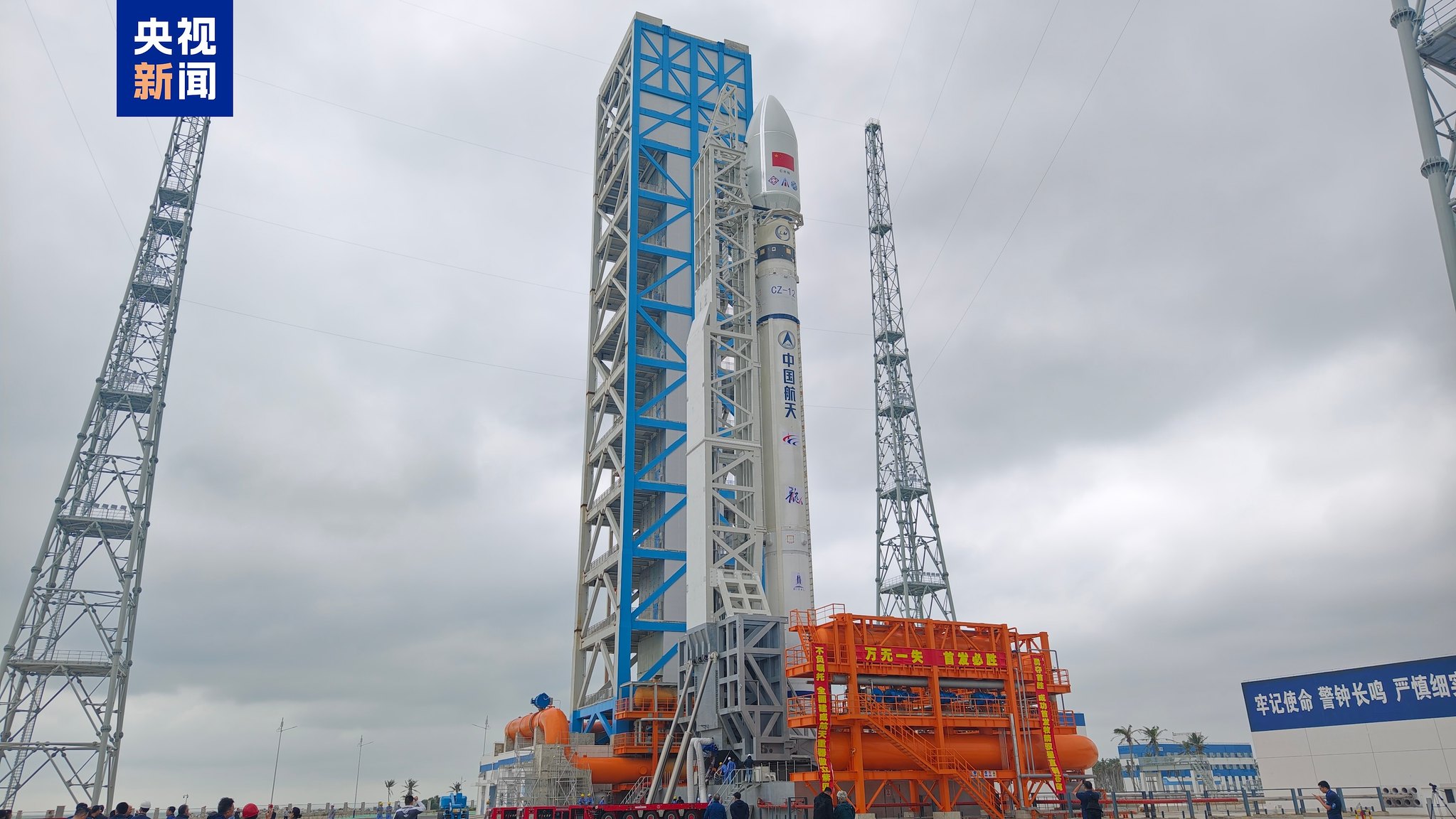
About the Long March 12
Long March 12
The Long March 12 (Chinese: 长征十二号, abbreviated CZ-12) is a Chinese orbital launch vehicle developed and operated by the China Aerospace Science and Technology Corporation (CASC). Designed as a medium-lift rocket optimized for commercial and government satellite deployment, it represents a modernization effort within China's Long March family, incorporating a larger core diameter than many of its predecessors to improve payload efficiency without relying on strap-on boosters.
Design and Capabilities
Standing 62 meters tall with a core diameter of 3.8 meters, the Long March 12 is a notably slender vehicle for its class, achieving its performance through a clean, boosterless configuration. It is capable of delivering up to 12,000 kilograms to low Earth orbit (LEO), placing it firmly in the medium-to-heavy lift category. The larger core diameter, compared to earlier Long March variants, allows for more propellant volume and improved structural efficiency — a design philosophy increasingly common among next-generation Chinese commercial launch vehicles.
The rocket launches from Wenchang Space Launch Center on Hainan Island, China's southernmost major launch facility. Wenchang's low-latitude location offers an advantageous natural boost for missions targeting equatorial and sun-synchronous orbits, making it well suited to the constellation deployment missions that have defined the Long March 12's early career.
Flight History
The Long March 12 made its maiden flight in 2024, inaugurating what has proven to be a reliable and active launch record. As tracked in our flight database, the vehicle has completed five flights between 2024 and 2026, all of which were successful — a perfect reliability record across its operational history to date.
The rocket's mission manifest has been dominated by satellite constellation work, with four of its five tracked flights dedicated to the SatNet LEO constellation, China's large-scale broadband satellite network. These missions — SatNet LEO Groups 07, 13, 16, and 19 — reflect the vehicle's clear role as a workhorse for rapid, high-cadence constellation buildout. The frequency of these launches underscores the Long March 12's suitability for repeat, standardized payloads in bulk.
Role and Significance
Within China's broader launch architecture, the Long March 12 fills an important niche between lighter commercial vehicles and the heavy-lift Long March 5 family. Its boosterless design simplifies ground operations and reduces turnaround time between launches, attributes that are increasingly valued as China accelerates deployment of large LEO constellations to compete on a global scale.
CASC remains the vehicle's primary customer, reflecting its origin as a state-developed asset serving national space infrastructure priorities. However, the rocket's commercial-leaning design characteristics position it as a potential option for a broader range of payloads as China's launch market continues to mature.
With a flawless early record and a cadence of missions already established, the Long March 12 has quickly cemented itself as a dependable element of China's growing orbital launch capability.
- Oct 09, 2026Long March 12 | SatNet LEO Group 27Success
- Sep 17, 2026Long March 12 | SatNet LEO Group 25Success
- Aug 16, 2026Long March 12 | SatNet LEO Group 24Success
- Jun 17, 2026Long March 12 | SatNet LEO Group 22Success
- Jan 19, 2026Long March 12 | SatNet LEO Group 19Success
- Dec 11, 2025Long March 12 | SatNet LEO Group 16Success
- Nov 10, 2025Long March 12 | SatNet LEO Group 13Success
- Aug 04, 2025Long March 12 | SatNet LEO Group 07Success
- Nov 30, 2024Long March 12 | Maiden FlightSuccess