Long March 11
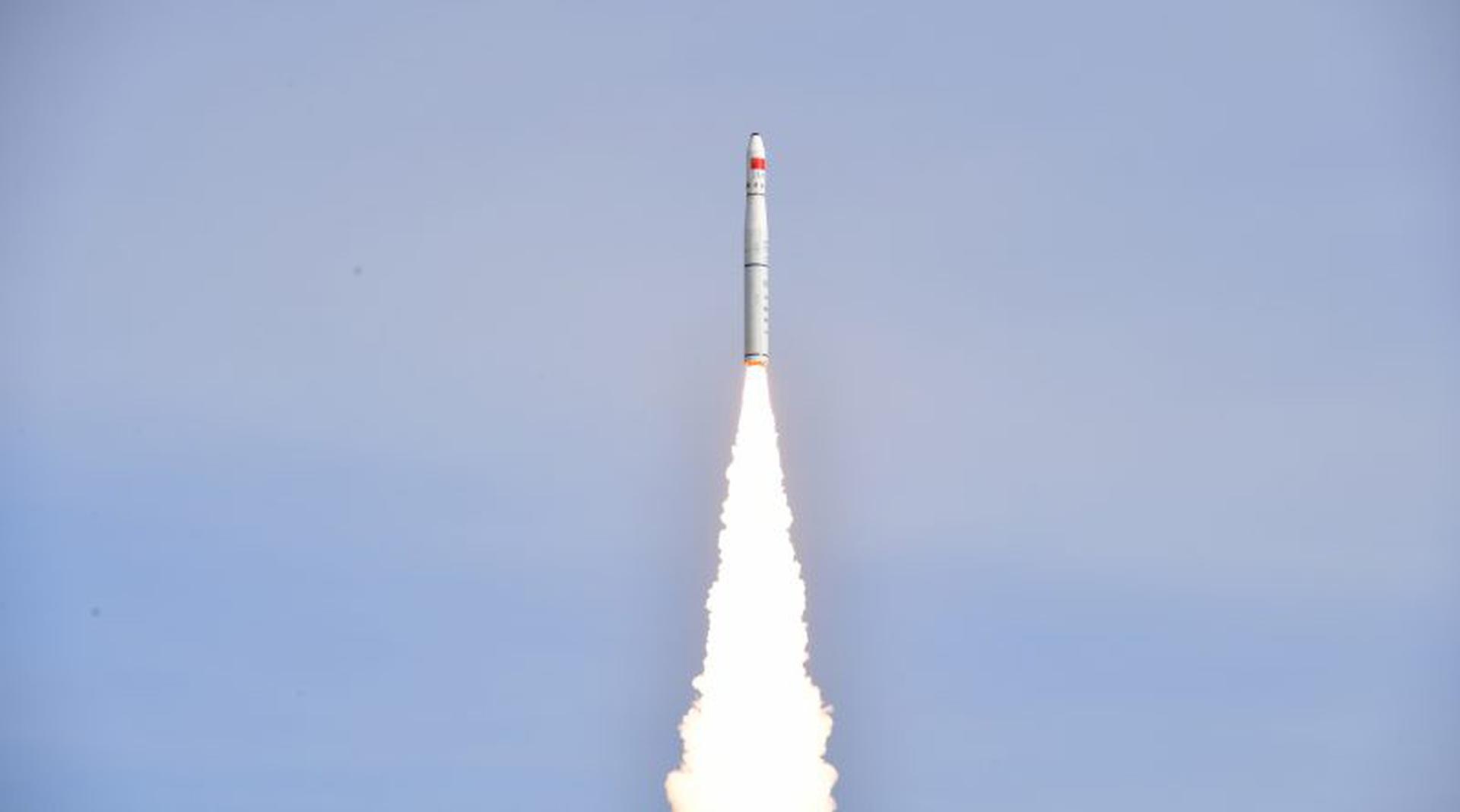
About the Long March 11
Long March 11
The Long March 11 (Chinese: 长征十一号, abbreviated CZ-11) is a Chinese small solid-fueled orbital launch vehicle developed and operated by the China Aerospace Science and Technology Corporation (CASC). It represents a departure from the liquid-fueled rockets that have historically dominated the Long March family, offering the rapid-response launch capability that solid propellants uniquely enable.
Design and Capabilities
Standing 20 meters tall with a diameter of 2 meters, the Long March 11 is among the more compact members of the Long March family. Its all-solid propulsion stack allows for significantly reduced launch preparation times compared to liquid-fueled rockets, making it well suited for responsive or time-sensitive missions. The vehicle is capable of delivering up to 500 kg to low Earth orbit (LEO), placing it firmly in the small-lift category and positioning it as a dedicated vehicle for lightweight payloads such as small satellites and experimental spacecraft.
Launch History
The Long March 11 conducted its first flight in 2015 and has remained in continuous service through at least 2025. Across 18 tracked flights, the vehicle has achieved a perfect success record — a notable milestone for any orbital launch system. This reliability has helped establish it as a trusted workhorse for Chinese government and institutional payloads.
One of the vehicle's most distinctive accomplishments is its demonstrated capability to launch from a sea-based platform, a relatively rare operational mode that broadens its range of accessible orbital inclinations and reduces dependency on fixed land-based infrastructure. These sea launches have taken place from converted vessels in open ocean, drawing international attention to China's expanding launch flexibility.
Notable Missions
The Long March 11's manifest has been dominated by Chinese government science and technology demonstration satellites. Recent missions include the Shiyan 32 01-03, Shiyan 24C, Shiyan 19, and Shiyan 21 payloads — a series of experimental spacecraft whose names translate roughly to "experiment" satellites, typically associated with technology verification and Earth observation research. The vehicle has also orbited commercial remote sensing payloads, including a batch of Jilin-1 HR-03D-04 to 07 and 04A high-resolution imaging satellites for the commercial operator Chang Guang Satellite Technology, as well as the CentiSpace-1 S5 and S6 navigation augmentation demonstration satellites.
This mix of government experimental and commercial remote sensing payloads reflects the broader small-satellite boom that has driven demand for compact launch vehicles globally.
Role and Context
The Long March 11 fills a specific niche within China's broader launch architecture, complementing larger liquid-fueled Long March variants by offering a faster-to-launch, simpler-to-operate alternative for smaller payloads. Its solid-propellant design draws on China's long experience with ballistic missile technology and reflects a wider trend among spacefaring nations toward dedicated small-lift vehicles. With nearly a decade of unbroken operational success, the Long March 11 stands as one of the more reliable small orbital launch vehicles currently in service worldwide.
- Nov 08, 2025Long March 11 | Shiyan 32 01-03Success
- Dec 25, 2023Long March 11 | Shiyan 24CSuccess
- Mar 15, 2023Long March 11 | Shiyan 19Success
- Dec 16, 2022Long March 11 | Shiyan 21Success
- Oct 07, 2022Long March 11 | CentiSpace-1 S5 & S6Success
- Apr 30, 2022Long March 11 | Jilin-1 HR-03D-04 to 07 & 04ASuccess
- Mar 30, 2022Long March 11 | Tianping-2 A/B/CSuccess
- Dec 09, 2020Long March 11 | GECAMSuccess
- Sep 15, 2020Long March 11 | Jilin-1 High Resolution 03B 01-06 & 03C 01-03Success
- May 29, 2020Long March 11 | XJS-G & XJS-HSuccess
- Sep 19, 2019Long March 11 | Zhuhai-1-03Success
- Jun 05, 2019Long March 11 | Jilin-1 & othersSuccess
- Jan 21, 2019Long March 11 | Jilin-1 Hyperspectral 01, 02, Xiaoxiang-1-03, Lingque-1ASuccess
- Dec 21, 2018Long March 11 | Hongyun-1Success
- Apr 26, 2018Long March 11 | Zhuhai-1-02Success
- Jan 19, 2018Long March 11 | Jilin-1-07 (Deqing-1), Jilin-1-08Success
- Nov 09, 2016Long March 11 | Xiaoxiang-1, XPNAV-1 & 3 others.Success
- Sep 25, 2015Long March 11 | SECM-1 ( Pujiang-1, Tianwang 1A, Tianwang 1B, Tianwang 1C )Success