Kuaizhou 11
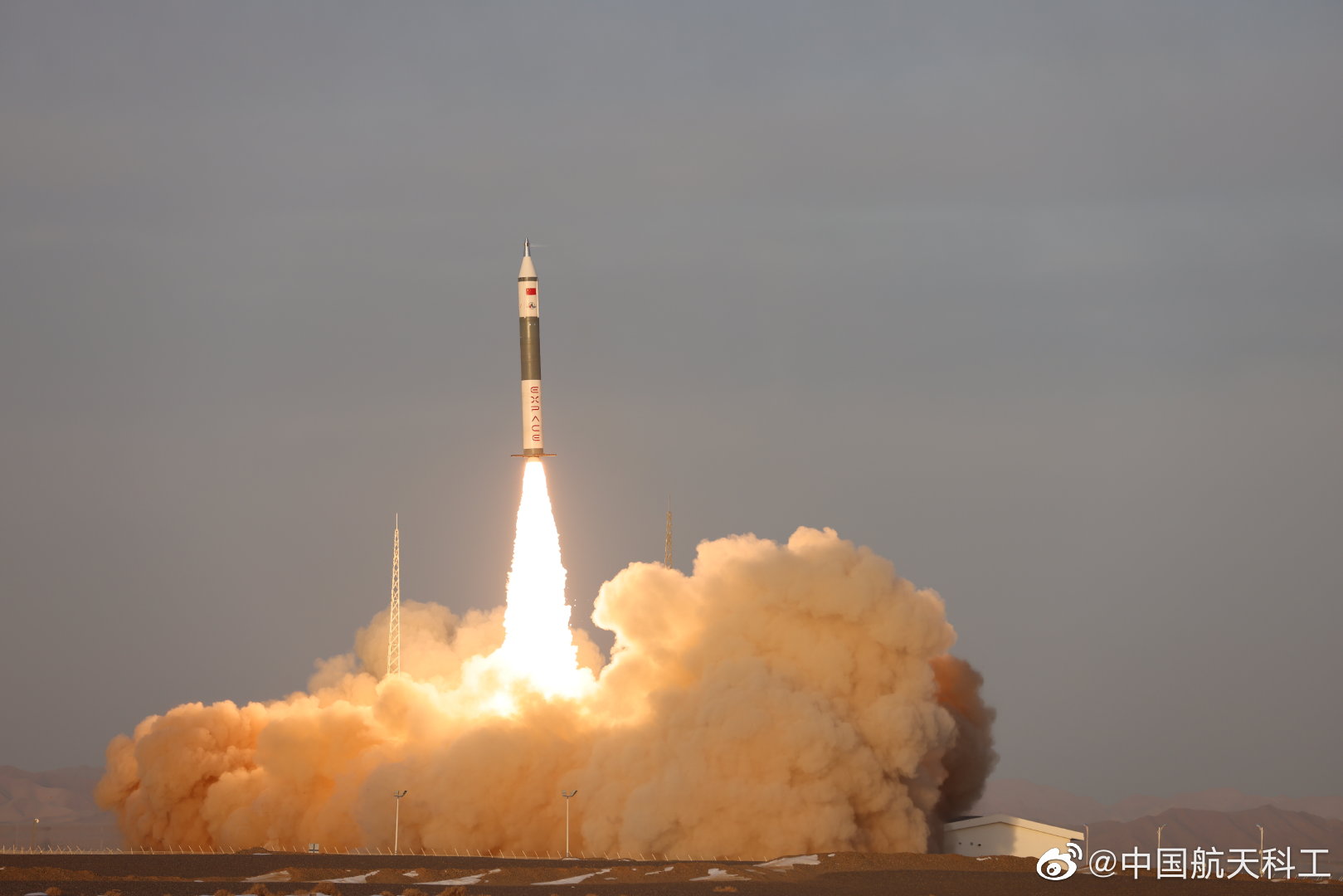
About the Kuaizhou 11
Kuaizhou 11
The Kuaizhou 11 (快舟十一号, often abbreviated KZ-11) is a Chinese solid-fueled orbital launch vehicle developed and operated by ExPace Technology Corporation, a commercial subsidiary of the state-owned China Aerospace Science and Industry Corporation (CASIC). Designed as a medium-class member of the Kuaizhou ("Fast Vessel") family, KZ-11 sits above the smaller Kuaizhou 1A in terms of capability and is intended to serve the growing commercial small-satellite market with relatively rapid launch timelines that solid propulsion enables.
Design and Capability
KZ-11 is a four-stage rocket combining three solid-fueled lower stages with an upper liquid-fueled stage for orbital insertion and maneuvering. Its 2.2-meter core diameter places it in a compact form factor for its class, and it is capable of delivering up to 1,000 kg to low Earth orbit (LEO). This payload capacity makes it well suited to rideshare missions and the deployment of small to medium satellite constellations. The vehicle is road-transportable and can be launched from a mobile platform, a practical advantage for scheduling flexibility — a hallmark of the Kuaizhou design philosophy.
Flight History
KZ-11 entered service in 2020 and has accumulated five tracked flights through 2026, recording four successes and one failure or partial failure. Its maiden flight in mid-2020 ended in failure, a setback that grounded the vehicle while anomaly investigations were conducted. The program subsequently returned to flight and achieved a consistent success record across its following missions.
Notable missions in the flight record include the launch of Xingyun VDES satellites supporting China's low-orbit Internet of Things communications infrastructure, the Wuhan-1 mission carrying multiple payloads, the DEAR-5 mission, and a prominent rideshare flight carrying eight satellites simultaneously — demonstrating the vehicle's commercial multi-manifest capability. ExPace has been the top customer across the manifest, reflecting the rocket's primary role as an in-house commercial service vehicle for CASIC-affiliated constellation programs.
Role and Context
KZ-11 occupies an important niche in China's rapidly expanding commercial launch sector. While larger liquid-fueled rockets such as the Long March series handle heavier institutional payloads, KZ-11 offers a faster-to-launch, lower-logistical-complexity alternative for operators whose satellites fall within its payload envelope. Its solid-propellant lower stages allow the vehicle to be prepared and launched on comparatively short timescales relative to cryogenic competitors.
The vehicle launches from Jiuquan Satellite Launch Center in the Gobi Desert, one of China's most active spaceports and the primary site for commercial solid-launch-vehicle operations. As the commercial satellite sector in China has grown — driven by constellation programs in communications, remote sensing, and IoT — KZ-11 has positioned itself as a reliable mid-tier option alongside competing vehicles from newer Chinese commercial launch companies.
With five flights on record spanning 2020 to 2026 and a strong recent success rate, Kuaizhou 11 represents a maturing platform within China's commercial launch ecosystem, continuing to serve both institutional and emerging commercial customers.
- Sep 17, 2026Kuaizhou 11 | SpaceTY-51 & 52Success
- Jun 17, 2026Kuaizhou 11 | CentiSpace-1 Group 05Success
- Mar 16, 2026Kuaizhou 11 | 8 satellitesSuccess
- Dec 13, 2025Kuaizhou 11 | DEAR-5Success
- May 21, 2024Kuaizhou 11 | Wuhan-1 and othersSuccess
- Dec 07, 2022Kuaizhou 11 | Xingyun VDESSuccess
- Jul 10, 2020Kuaizhou 11 | Maiden FlightFailure