Kosmos-3M (11K65M)
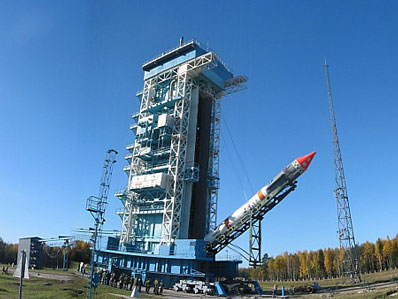
About the Kosmos-3M (11K65M)
Kosmos-3M (11K65M)
The Kosmos-3M, designated 11K65M in Soviet engineering notation, is a two-stage orbital launch vehicle developed in the Soviet Union and operated by both Soviet and later Russian space authorities. Manufactured by Production Corporation Polyot in Omsk, Russia, the rocket served as a reliable light-lift workhorse for several decades, placing small satellites into low and medium Earth orbits on behalf of military, civil, and — in its later career — commercial customers.
Origins and Development
The Kosmos-3M belongs to a lineage of small launch vehicles derived from early Soviet ballistic missile technology. It represents a refined evolution within the Kosmos rocket family, improving on earlier variants to offer greater consistency and capability. Launches take place primarily from Kapustin Yar in southern Russia, a historic Soviet test and launch range, with additional missions conducted from Plesetsk Cosmodrome in northern Russia.
Operational History
Our flight record tracks 445 flights across an active period stretching from 1967 to 2010, making the Kosmos-3M one of the longest-serving orbital launch vehicles in history. Of those flights, 423 are recorded as successful, with 22 resulting in failure or partial failure — a strong reliability record for a vehicle operating across such an extended timeframe and through significant political and institutional change.
The rocket's primary customer throughout its life was the Soviet Space Program and its successor institutions, including the Russian Space Forces, which used it extensively to deploy military satellites — most notably the Parus navigation and communications constellation. The Parus 98 and Parus 99 missions stand among the final flights in the vehicle's record, reflecting how central this satellite series was to the rocket's late-career manifest.
Commercial and International Missions
In its later years, the Kosmos-3M attracted notable international commercial payloads, demonstrating the continued viability of the aging design in a competitive launch market. The vehicle orbited multiple satellites for the SAR-Lupe program, a German military reconnaissance constellation, with SAR-Lupe 3, SAR-Lupe 4, and SAR-Lupe 5 all carried on dedicated Kosmos-3M flights. It also launched a batch of Orbcomm low-Earth-orbit communications satellites, underscoring its flexibility as a multi-payload deployer.
Role and Legacy
The Kosmos-3M occupied a well-defined niche as a dependable, cost-effective launcher for satellites in the small-to-medium class. Its longevity — more than four decades of active service — speaks to a practical, mature design that required relatively modest infrastructure and offered launch teams a well-understood, predictable vehicle. By the time operations concluded in 2010, the rocket had accumulated one of the largest flight totals of any orbital launch vehicle in history.
Although no longer in service, the Kosmos-3M's record reflects the broader Soviet and Russian philosophy of building launch systems intended for high-cadence, sustained operational use rather than single-mission spectacle. Its contributions to navigation, military reconnaissance, and eventually international commercial spaceflight cement its place as a significant vehicle in the global history of orbital launch.
- Apr 27, 2010Kosmos-3M | Parus 99Success
- Jul 21, 2009Kosmos-3M | Parus 98Success
- Jul 22, 2008Kosmos-3M | SAR-Lupe 5Success
- Jun 19, 2008Kosmos-3M | Orbcomm FM 37 to 41 & CDS 3Success
- Mar 27, 2008Kosmos-3M | SAR-Lupe 4Success
- Nov 01, 2007Kosmos-3M | SAR-Lupe 3Success
- Sep 11, 2007Kosmos-3M | Parus 97Success
- Jul 02, 2007Kosmos-3M | SAR-Lupe 2Success
- Dec 19, 2006Kosmos-3M | SAR-Lupe 1Success
- Dec 21, 2005Kosmos-3M | Strela-3M 1Success
- Oct 27, 2005Kosmos-3M | Beijing-1Success
- Jan 20, 2005Kosmos-3M | Parus 96Success
- Sep 23, 2004Kosmos-3M | Strela-3 135 to 136Success
- Jul 22, 2004Kosmos-3M | Parus 95Success
- Sep 27, 2003Kosmos-3M | Mozhaets-4Success
- Aug 19, 2003Kosmos-3M | Strela-3 133 & 134Success
- Jun 04, 2003Kosmos-3M | Parus 94Success
- Nov 28, 2002Kosmos-3M | AlSat-1Success
- Sep 26, 2002Kosmos-3M | Nadezhda-MSuccess
- Jul 08, 2002Kosmos-3M | Strela-3 131 & 132Success
- May 28, 2002Kosmos-3M | Parus 93Success
- Jun 08, 2001Kosmos-3M | Parus 92Success
- Nov 20, 2000Kosmos-3M | QuickBird 1Failure
- Jul 15, 2000Kosmos-3M | CHAMP & MITASuccess
- Jun 28, 2000Kosmos-3M | Nadezhda 9Success
- Aug 26, 1999Kosmos-3M | Parus 91Success
- Apr 28, 1999Kosmos-3M | ABRIXAS & MegSat 0Success
- Dec 24, 1998Kosmos-3M | Parus 90Success
- Dec 10, 1998Kosmos-3M | Nadezhda 8Success
- Sep 23, 1997Kosmos-3M | Parus 89Success
- Apr 17, 1997Kosmos-3M | Parus 88Success
- Dec 20, 1996Kosmos-3M | Parus 87Success
- Sep 05, 1996Kosmos-3M | Parus 86Success
- Apr 24, 1996Kosmos-3M | Taifun-1B 14Success
- Jan 16, 1996Kosmos-3M | Parus 85Success
- Oct 06, 1995Kosmos-3M | Parus 84Failure
- Jul 05, 1995Kosmos-3M | Tsikada 21Success
- Mar 22, 1995Kosmos-3M | Parus 83Success
- Mar 02, 1995Kosmos-3M | Taifun-2 27Success
- Jan 24, 1995Kosmos-3M | Tsikada 20Success
- Dec 20, 1994Kosmos-3M | Strela-2M 52Success
- Sep 27, 1994Kosmos-3M | Taifun-1 24Success
- Aug 02, 1994Kosmos-3M | Obzor TestSuccess
- Jul 14, 1994Kosmos-3M | Nadezhda 7Success
- Apr 26, 1994Kosmos-3M | Parus 82Success
- Nov 02, 1993Kosmos-3M | Parus 81Success
- Oct 26, 1993Kosmos-3M | Taifun-1B 13Success
- Jun 16, 1993Kosmos-3M | Strela-2M 51Success
- Apr 01, 1993Kosmos-3M | Parus 80Success
- Feb 09, 1993Kosmos-3M | Parus 79Success
- Jan 12, 1993Kosmos-3M | Tsikada 19Success
- Oct 29, 1992Kosmos-3M | Parus 78Success
- Aug 12, 1992Kosmos-3M | Strela-2M 50Success
- Jul 01, 1992Kosmos-3M | Parus 77Success
- Jun 03, 1992Kosmos-3M | Strela-1M 361-368Success
- Apr 15, 1992Kosmos-3M | Parus 76Success
- Mar 09, 1992Kosmos-3M | Tsikada 18Success
- Feb 17, 1992Kosmos-3M | Parus 75Success
- Nov 27, 1991Kosmos-3M | Parus 74Success
- Oct 10, 1991Kosmos-3M | Taifun-1B 12Success
- Aug 22, 1991Kosmos-3M | Parus 73Success
- Jun 25, 1991Kosmos-3M | Taifun-2 26Failure
- Jun 11, 1991Kosmos-3M | Strela-2M 49Success
- Apr 16, 1991Kosmos-3M | Parus 72Success
- Mar 19, 1991Kosmos-3M | Taifun-1B 11Success
- Mar 12, 1991Kosmos-3M | Nadezhda 6Success
- Feb 26, 1991Kosmos-3M | Parus 71Success
- Feb 12, 1991Kosmos-3M | Strela-1M 353-360Success
- Feb 05, 1991Kosmos-3M | Tsikada 17Success
- Jan 29, 1991Kosmos-3M | Informator-1Success
- Dec 10, 1990Kosmos-3M | Strela-2M 48Success
- Sep 14, 1990Kosmos-3M | Parus 70Success
- Aug 28, 1990Kosmos-3M | Taifun-1 23Success
- Apr 25, 1990Kosmos-3M | Taifun-2 25Success
- Apr 20, 1990Kosmos-3M | Parus 69Success
- Apr 06, 1990Kosmos-3M | Strela-1M 345-352Success
- Mar 20, 1990Kosmos-3M | Parus 68Success
- Feb 27, 1990Kosmos-3M | Nadezhda 5Success
- Feb 06, 1990Kosmos-3M | Duga-K 2Success
- Jan 18, 1990Kosmos-3M | Strela-2M 47Success
- Jul 25, 1989Kosmos-3M | Parus 67Success
- Jul 04, 1989Kosmos-3M | Nadezhda 4Success
- Jun 14, 1989Kosmos-3M | Taifun-1 22Success
- Jun 07, 1989Kosmos-3M | Parus 66Success
- Apr 04, 1989Kosmos-3M | Parus 65Success
- Mar 24, 1989Kosmos-3M | Strela-1M 337-344Success
- Feb 22, 1989Kosmos-3M | Parus 64Success
- Feb 14, 1989Kosmos-3M | Duga-K 1Success
- Jan 26, 1989Kosmos-3M | Strela-2M 46Success
- Jul 28, 1988Kosmos-3M | Taifun-2 24Success
- Jul 18, 1988Kosmos-3M | Parus 63Success
- Jul 14, 1988Kosmos-3M | Taifun-1 21Success
- Jun 21, 1988Kosmos-3M | Strela-2M 45Success
- Apr 05, 1988Kosmos-3M | Strela-2M 44Success
- Mar 22, 1988Kosmos-3M | Parus 62Success
- Mar 11, 1988Kosmos-3M | Strela-1M 329-336Success
- Dec 23, 1987Kosmos-3M | Parus 61Success
- Dec 15, 1987Kosmos-3M | Taifun-1 20Success
- Dec 01, 1987Kosmos-3M | Strela-2M 43Success
- Oct 14, 1987Kosmos-3M | Parus 60Success
- Jul 14, 1987Kosmos-3M | Taifun-1B 10Success
- Jul 06, 1987Kosmos-3M | Parus 59Success
- Jun 23, 1987Kosmos-3M | Tsikada 16Success
- Jun 16, 1987Kosmos-3M | Strela-1M 321-328Success
- Jun 09, 1987Kosmos-3M | Strela-2M 42Success
- Feb 18, 1987Kosmos-3M | Parus 58Success
- Jan 29, 1987Kosmos-3M | Tsikada 15Success
- Jan 22, 1987Kosmos-3M | Taifun-2 23Success
- Jan 21, 1987Kosmos-3M | Strela-2M 41Success
- Dec 17, 1986Kosmos-3M | Parus 57Success
- Nov 24, 1986Kosmos-3M | Parus 56Success
- Nov 21, 1986Kosmos-3M | Strela-1M 313-320Success
- Nov 13, 1986Kosmos-3M | Tsikada 14Success
- Oct 27, 1986Kosmos-3M | Taifun-1 19Success
- Sep 10, 1986Kosmos-3M | Strela-2M 40Success
- Sep 03, 1986Kosmos-3M | Taifun-2 22Success
- Jul 16, 1986Kosmos-3M | Strela-2M 39Success
- Jun 18, 1986Kosmos-3M | Parus 55Success
- Jun 06, 1986Kosmos-3M | Strela-1M 305-312Success
- May 23, 1986Kosmos-3M | Parus 54Success
- Apr 17, 1986Kosmos-3M | Strela-2M 38Success
- Jan 23, 1986Kosmos-3M | Tsikada 13Success
- Jan 16, 1986Kosmos-3M | Parus 53Success
- Jan 09, 1986Kosmos-3M | Strela-1M 297-304Success
- Dec 19, 1985Kosmos-3M | Parus 52Success
- Nov 28, 1985Kosmos-3M | Parus 51Success
- Oct 23, 1985Kosmos-3M | Parus 50Failure
- Oct 02, 1985Kosmos-3M | Taifun-2 21Success
- Sep 04, 1985Kosmos-3M | Strela-2M 37Success
- Jun 19, 1985Kosmos-3M | Taifun-2 20Success
- May 30, 1985Kosmos-3M | Tsikada 12Success
- Mar 21, 1985Kosmos-3M | Strela-1M 289-296Success
- Mar 14, 1985Kosmos-3M | Parus 49Success
- Feb 27, 1985Kosmos-3M | Taifun-1 18Success
- Feb 01, 1985Kosmos-3M | Parus 48Success
- Jan 17, 1985Kosmos-3M | Strela-2M 36Success
- Dec 20, 1984Kosmos-3M | Taifun-1B 8Success
- Nov 15, 1984Kosmos-3M | Parus 47Success
- Oct 11, 1984Kosmos-3M | Parus 46Success
- Sep 27, 1984Kosmos-3M | Taifun-2 19Success
- Sep 13, 1984Kosmos-3M | Parus 45Success
- Jun 28, 1984Kosmos-3M | Taifun-1B 7Success
- Jun 27, 1984Kosmos-3M | Parus 44Success
- Jun 21, 1984Kosmos-3M | Nadezhda 3Success
- Jun 08, 1984Kosmos-3M | Strela-2M 35Success
- May 28, 1984Kosmos-3M | Strela-1M 281-288Success
- May 17, 1984Kosmos-3M | Tsikada 11Success
- May 11, 1984Kosmos-3M | Parus 43Success
- Feb 21, 1984Kosmos-3M | Strela-2M 34Success
- Feb 02, 1984Kosmos-3M | Parus 42Success
- Jan 26, 1984Kosmos-3M | Taifun-1 17Success
- Jan 11, 1984Kosmos-3M | Parus 41Success
- Jan 05, 1984Kosmos-3M | Strela-1M 273-280Success
- Dec 08, 1983Kosmos-3M | Parus 40Success
- Nov 11, 1983Kosmos-3M | Taifun-1 16Success
- Oct 26, 1983Kosmos-3M | Tsikada 10Success
- Oct 12, 1983Kosmos-3M | Strela-2M 33Success
- Oct 05, 1983Kosmos-3M | Taifun-1B 6Success
- Sep 30, 1983Kosmos-3M | Taifun-2 18Success
- Aug 31, 1983Kosmos-3M | Taifun-2 17Success
- Aug 03, 1983Kosmos-3M | Strela-2M 32Success
- Jul 06, 1983Kosmos-3M | Strela-1M 265-272Success
- May 26, 1983Kosmos-3M | Taifun-2 16Success
- May 24, 1983Kosmos-3M | Parus 39Success
- May 19, 1983Kosmos-3M | Taifun-1B 5Success
- May 06, 1983Kosmos-3M | Parus 38Success
- Apr 19, 1983Kosmos-3M | Taifun-2 15Success
- Apr 12, 1983Kosmos-3M | Strela-2M 31Success
- Apr 06, 1983Kosmos-3M | Taifun-1 15Success
- Mar 30, 1983Kosmos-3M | Parus 37Success
- Mar 24, 1983Kosmos-3M | Nadezhda 2Success
- Jan 25, 1983Kosmos-3M | Taifun-2 14Failure
- Jan 19, 1983Kosmos-3M | Strela-1M 257-264Success
- Jan 12, 1983Kosmos-3M | Parus 36Success
- Dec 29, 1982Kosmos-3M | Taifun-1B 4Success
- Nov 24, 1982Kosmos-3M | Strela-1M 249-256Failure
- Nov 11, 1982Kosmos-3M | Strela-2M 30Success
- Oct 21, 1982Kosmos-3M | Taifun-1B 3Success
- Oct 19, 1982Kosmos-3M | Parus 35Success
- Aug 30, 1982Kosmos-3M | Strela-2M 29Failure
- Jul 29, 1982Kosmos-3M | Taifun-2 13Success
- Jul 21, 1982Kosmos-3M | Strela-1M 241-248Success
- Jul 07, 1982Kosmos-3M | Parus 34Success
- Jun 29, 1982Kosmos-3M | Nadezhda 1Success
- Jun 18, 1982Kosmos-3M | Parus 33Failure
- Jun 06, 1982Kosmos-3M | DS-P1-M 16Success
- Jun 01, 1982Kosmos-3M | Strela-2M 28Success
- May 06, 1982Kosmos-3M | Strela-1M 233-240Success
- Apr 28, 1982Kosmos-3M | Strela-2M 27Success
- Apr 21, 1982Kosmos-3M | Taifun-2 12Success
- Apr 08, 1982Kosmos-3M | Parus 32Success
- Mar 31, 1982Kosmos-3M | Tselina-O 41Success
- Mar 24, 1982Kosmos-3M | Parus 31Success
- Mar 04, 1982Kosmos-3M | Taifun-2 11Failure
- Feb 17, 1982Kosmos-3M | Tsikada 9Success
- Jan 29, 1982Kosmos-3M | Taifun-2 10Success
- Jan 14, 1982Kosmos-3M | Parus 30Success
- Jan 07, 1982Kosmos-3M | Strela-2M 26Success
- Dec 17, 1981Kosmos-3M | Radio Sputnik 3 to 8Success
- Nov 28, 1981Kosmos-3M | Strela-1M 225-232Success