Kosmos-2I
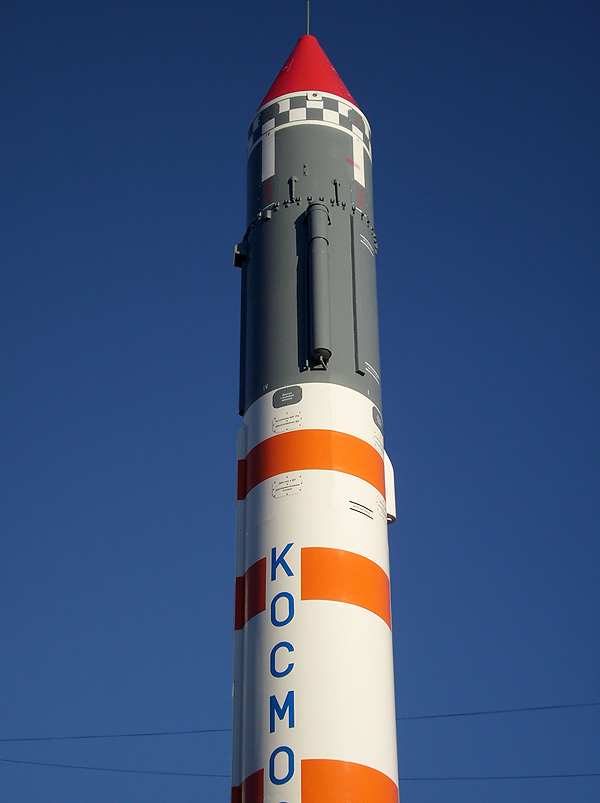
About the Kosmos-2I
Kosmos-2I
The Kosmos-2I (also identified by its GRAU designation 63S1) is a Soviet orbital launch vehicle developed and operated under the auspices of the Soviet Space Program and the Strategic Rocket Forces. A member of the broader Kosmos rocket family, it was purpose-built to deliver small scientific and military satellites into low Earth orbit during the early years of the Space Race.
Development and Role
The Kosmos-2I emerged from a Soviet initiative to field a lightweight, reliable booster capable of placing modest payloads into orbit at relatively low cost and with considerable operational flexibility. Standing 31 meters tall with a core diameter of 1.6 meters, the vehicle was compact by the standards of its era. Its capacity to deliver up to 300 kilograms to low Earth orbit made it well suited to the small experimental and reconnaissance satellite programs that characterized Soviet space activity in the 1960s. The rocket is understood to have been derived from a ballistic missile lineage, a common practice in both Soviet and American early space launch programs.
Flight History
According to tracked flight records, the Kosmos-2I was active from 1961 through 1967, a period of intense activity in Soviet satellite operations. Across that window, 38 flights were recorded, of which 26 were successful and 12 resulted in failure or partial failure — reflecting a success rate broadly consistent with the technological maturity of early orbital launch vehicles worldwide. The relatively high number of failures underscores the experimental nature of rocketry during this formative period and the demanding pace at which the Soviet program pushed its launch cadence.
Payloads and Customers
The vehicle's primary customers were the Soviet Space Program and the Strategic Rocket Forces, reflecting its dual scientific and defense utility. Payloads carried under the Kosmos designation spanned a variety of mission types, as illustrated by the range of spacecraft in the mission record. Among the most recent tracked missions are flights carrying payloads designated DS-U1-G, DS-U2-D, DS-P1-Yu, and DS-K-40 — spacecraft associated with the Dnepropetrovsk Sputnik series of small experimental satellites developed by the Yuzhnoye Design Bureau in Ukraine. These missions encompassed scientific research, technology demonstration, and military-related functions typical of early Soviet small-satellite programs.
Historical Significance
The Kosmos-2I occupies a meaningful place in the history of orbital spaceflight as one of several Soviet rockets that enabled a rapid expansion of satellite operations during the 1960s. By providing a dedicated, if modest, lift capability, it helped the Soviet Union maintain a high tempo of launches, populating low Earth orbit with an array of experimental and operational spacecraft at a time when every new satellite represented a significant technological and geopolitical statement. Though its operational life was relatively brief — spanning just six years — the groundwork it laid informed subsequent generations of Soviet light-lift launchers and contributed to the broader institutional experience of the Soviet launch vehicle industry.
- Dec 19, 1967Kosmos-2I 63S1 | DS-U1-G 2Success
- Dec 21, 1966Kosmos-2I 63S1 | DS-U2-D 1Success
- Jul 08, 1966Kosmos-2I 63S1 | DS-P1-Yu 6Success
- Feb 21, 1966Kosmos-2I 63S1 | DS-K-40 2Failure
- Feb 11, 1966Kosmos-2I 63S1 | DS-U1-G 1Success
- Dec 28, 1965Kosmos-2I 63S1 | DS-K-40 1Failure
- Dec 21, 1965Kosmos-2I 63S1 | DS-P1-Yu 4Success
- Jul 23, 1965Kosmos-2I 63S1 | DS-P1-Yu 3Success
- Jul 02, 1965Kosmos-2I 63S1 | DS-A1 7Success
- Feb 20, 1965Kosmos-2I 63S1 | DS-A1 6Failure
- Feb 12, 1965Kosmos-2I 63S1 | DS-P1-Yu 2Failure
- Jan 30, 1965Kosmos-2I 63S1 | DS-A1 5Success
- Dec 09, 1964Kosmos-2I 63S1 | DS-MT 3Success
- Dec 01, 1964Kosmos-2I 63S1 | DS-2 2Failure
- Oct 24, 1964Kosmos-2I 63S1 | DS-MG 2Success
- Aug 22, 1964Kosmos-2I 63S1 | Strela-1 4,5Success
- Jul 30, 1964Kosmos-2I 63S1 | DS-P1-Yu 1Success
- Jun 06, 1964Kosmos-2I 63S1 | DS-MT 2Success
- Mar 18, 1964Kosmos-2I 63S1 | DS-MG 1Success
- Feb 27, 1964Kosmos-2I 63S1 | DS-P1 4Success
- Dec 13, 1963Kosmos-2I 63S1 | Omega 2Success
- Oct 24, 1963Kosmos-2I 63S1 | DS-A1 4Failure
- Aug 22, 1963Kosmos-2I 63S1 | DS-A1 3Failure
- Aug 06, 1963Kosmos-2I 63S1 | DS-P1 3Success
- Jun 01, 1963Kosmos-2I 63S1 | DS-MT 1Failure
- May 22, 1963Kosmos-2I 63S1 | DS-A1 2Success
- Apr 13, 1963Kosmos-2I 63S1 | Omega 1Success
- Apr 06, 1963Kosmos-2I 63S1 | DS-P1 2Failure
- Oct 25, 1962Kosmos-2I 63S1 | 1MS 2Failure
- Oct 20, 1962Kosmos-2I 63S1 | DS-A1 1Success
- Aug 18, 1962Kosmos-2I 63S1 | Sputnik 18Success
- Jun 30, 1962Kosmos-2I 63S1 | DS-P1 1Success
- May 28, 1962Kosmos-2I 63S1 | Sputnik 15Success
- Apr 24, 1962Kosmos-2I 63S1 | Sputnik 13Success
- Apr 06, 1962Kosmos-2I 63S1 | 1MS 1Success
- Mar 16, 1962Kosmos-2I 63S1 | DS-2 1Success
- Dec 21, 1961Kosmos-2I 63S1 | DS-1 2Failure
- Oct 27, 1961Kosmos-2I 63S1 | Kosmos-2I | DS-1-1Failure