Kosmos 11K65
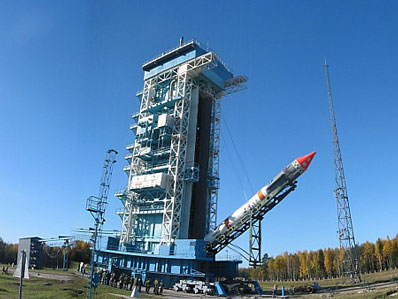
About the Kosmos 11K65
Kosmos 11K65
The Kosmos 11K65 is a Soviet orbital launch vehicle developed and operated by the Soviet Space Program during the mid-1960s. A member of the broader Kosmos rocket family, it was derived from the R-12 intermediate-range ballistic missile and served as a dedicated small-satellite launcher, reflecting the Soviet Union's emphasis on rapid, low-cost access to orbit for military and scientific payloads during the early Space Race era.
Design and Specifications
Standing 26 meters tall with a diameter of 2.4 meters, the Kosmos 11K65 is a compact, two-stage liquid-propellant rocket. It is capable of delivering up to 1,400 kg to low Earth orbit, placing it firmly in the light-lift category. Its relatively modest size and straightforward design made it well-suited for the kind of routine, operationally focused launches that characterized much of the Soviet military space effort. Launches were conducted from facilities within the Soviet Union, primarily at Kapustin Yar, which served as the principal site for smaller Kosmos-family vehicles.
Operational History
Our flight record documents four tracked flights between 1966 and 1968, spanning a brief but operationally significant window. Of those four missions, two were fully successful and two resulted in failure or partial failure — a mixed performance record that underscores the technical challenges inherent in early orbital launch operations, even for a program with considerable ballistic missile heritage to draw upon.
All four tracked missions were dedicated to the Strela-2 constellation, a Soviet military communications satellite program. The missions — designated Strela-2 2, 3, 4, and 5 — represent early attempts to establish a functional store-and-forward communications network in low Earth orbit for Soviet military users. The Strela program was among the first operational military satellite constellations in history, and the Kosmos 11K65 played a direct role in its early deployment phase.
Role and Legacy
The Kosmos 11K65 occupies a specific niche within the Soviet space effort: it was purpose-built to support high-cadence military satellite deployment without consuming the capacity of larger, more expensive launch vehicles. Its short operational window in our records — just three years — reflects both the rapid pace of development in Soviet space infrastructure during this period and the tendency to evolve or replace vehicle variants quickly as requirements changed.
The broader Kosmos rocket family of which this vehicle is a part became one of the most prolific launcher lineages in spaceflight history, eventually conducting hundreds of missions over several decades. The 11K65 variant, however, represents an early and relatively short-lived chapter in that lineage, notable primarily for its role in standing up the Strela-2 communications architecture during the formative years of military space operations.
For researchers and satellite trackers, the Kosmos 11K65 serves as a useful marker of the transition from experimental Soviet spaceflight to routine, mission-oriented orbital operations — a transition defined as much by its failures as by its successes.