HANBIT-Nano
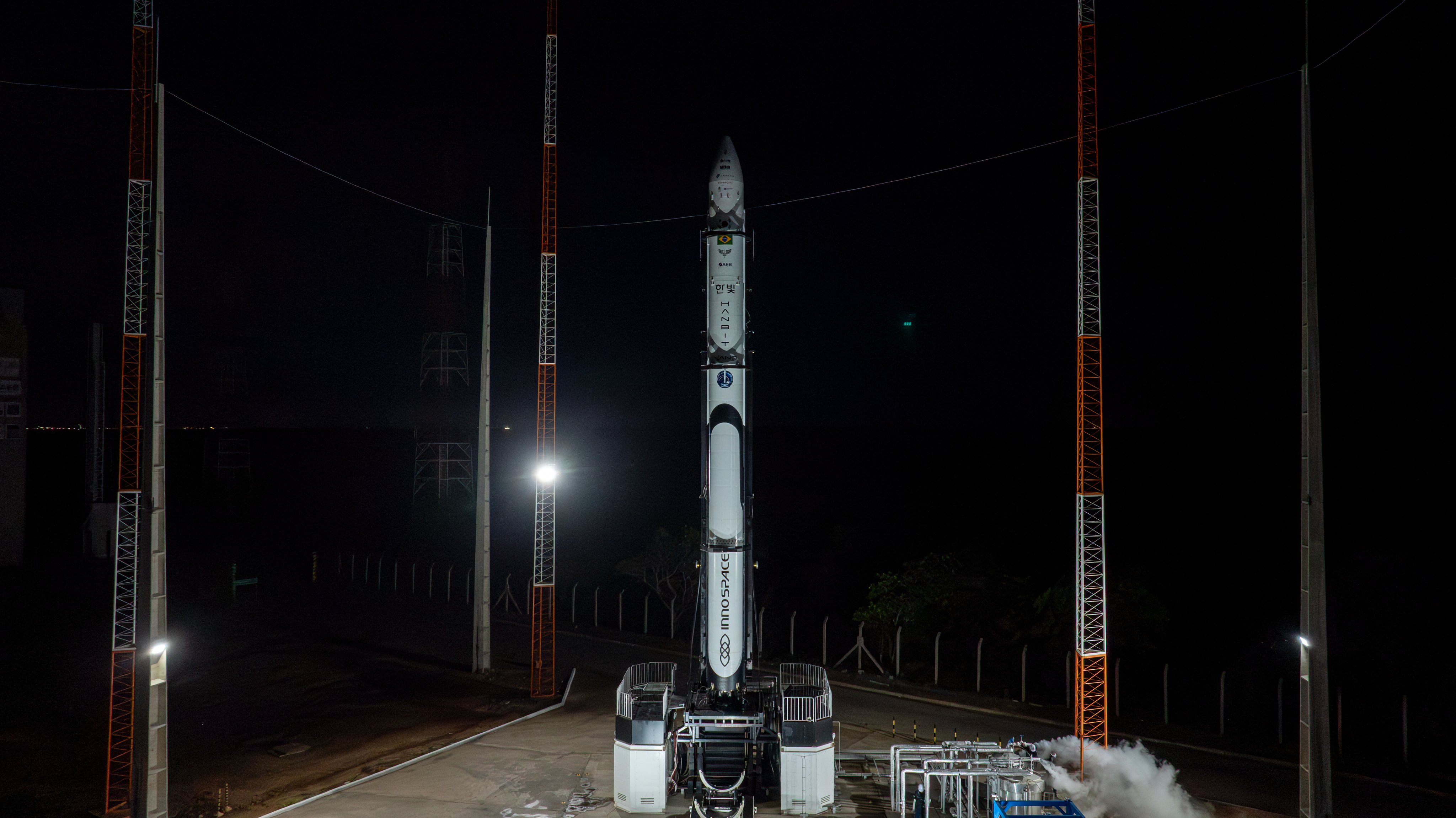
About the HANBIT-Nano
HANBIT-Nano
HANBIT-Nano is a small orbital launch vehicle developed and operated by Innospace, a South Korean commercial launch company. Designed to serve the rapidly expanding market for small satellite deployment, it represents one of South Korea's early entries into the commercial orbital launch sector and reflects the broader global surge in privately developed micro- and nano-launch vehicles during the 2020s.
Design and Configuration
Standing 21.8 metres tall with a diameter of 1.4 metres, HANBIT-Nano occupies the slender, compact form factor typical of vehicles targeting small payload rideshare and dedicated nano-satellite missions. The rocket's name connects it to Innospace's broader HANBIT vehicle family, with the "Nano" designation reflecting its focus on lightweight payloads. Beyond its physical dimensions, specific performance figures such as payload capacity and propulsion details are not elaborated here, as the vehicle's flight history remains the most authoritative guide to its operational character.
Operational History
HANBIT-Nano has been active from 2025 through 2026, during which three flights have been tracked. Of those, no missions have been recorded as fully successful, and at least one has been formally recorded as a failure or partial failure, underscoring the difficult early phase that most new launch vehicles encounter as operators work through vehicle maturation.
The three tracked missions — HANBIT-Nano | Spaceward, HANBIT-Nano | InnoSat-0, and HANBIT-Nano | Flight 2 — reflect a cadence consistent with a vehicle still in its developmental and early commercial phase. The InnoSat-0 mission name suggests a connection to Innospace's own in-house satellite programme, while Spaceward and Flight 2 indicate a mix of dedicated and potentially experimental payloads. Innospace itself stands as the top customer in the flight manifest, which is common among emerging launch providers who frequently fly their own demonstration payloads alongside — or in place of — external commercial cargo in early operations.
Context and Significance
Innospace and HANBIT-Nano sit within a generation of Asian commercial launch companies that emerged in the late 2010s and early 2020s, inspired in part by the success of SpaceX's rapid iteration model and driven by growing domestic and regional demand for sovereign launch access. South Korea's government-backed space ambitions, alongside a liberalising commercial launch environment, helped create conditions in which companies like Innospace could pursue orbital-class vehicles.
The vehicle's sub-100% success rate across its early flights is not unusual for a rocket in this stage of development. History shows that most new launch vehicles require multiple attempts before achieving consistent mission success, and the data available for HANBIT-Nano places it squarely in that pattern. How quickly Innospace resolves the technical challenges revealed by these early missions will determine whether HANBIT-Nano can carve out a durable commercial niche in an increasingly competitive small-launch market.
For the latest launch status, mission outcomes, and scheduling updates, the flight record on this platform provides the most current tracking data available.