H3-24
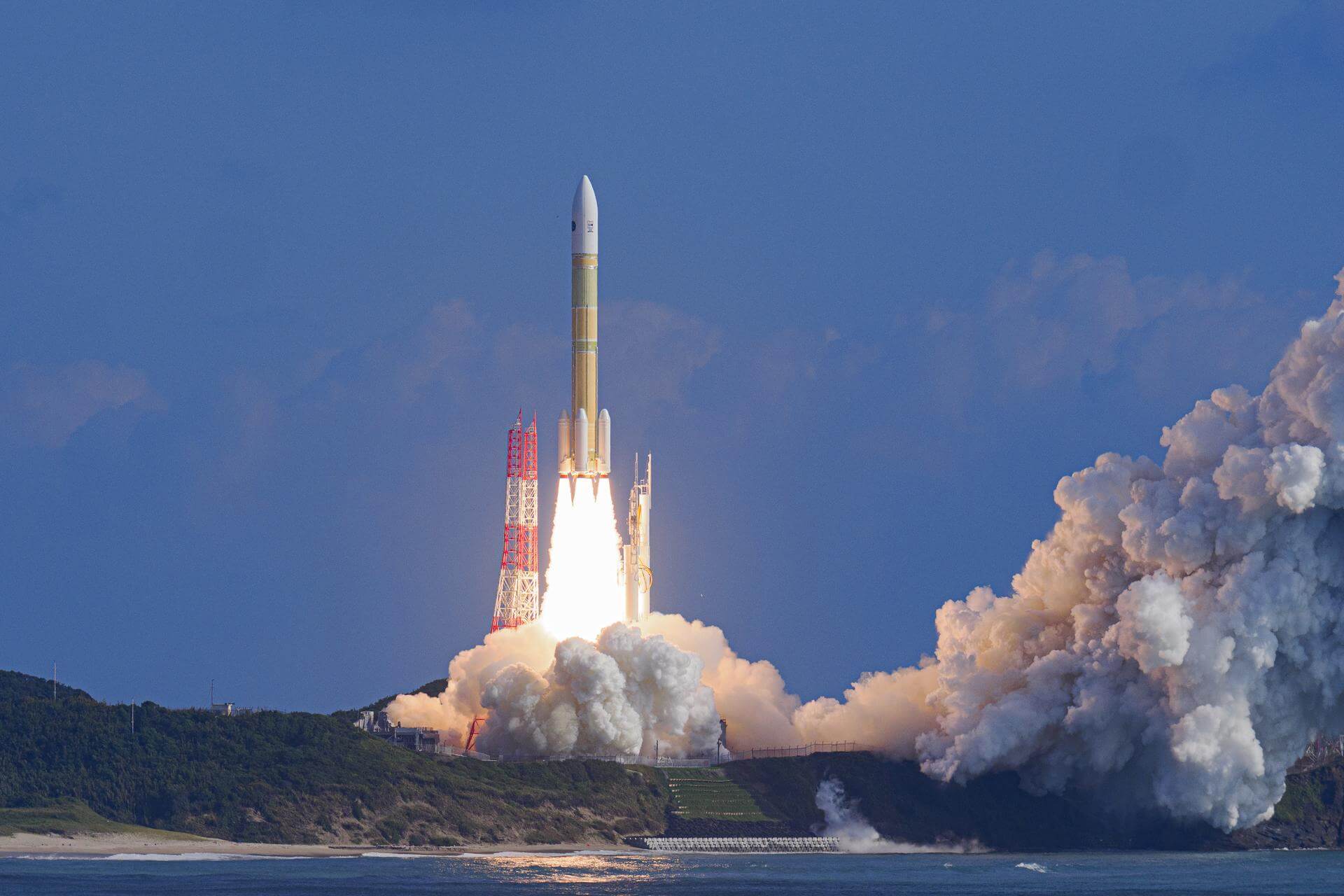
About the H3-24
H3-24
The H3-24 is a configuration of Japan's H3 launch vehicle, developed and operated by the Japan Aerospace Exploration Agency (JAXA) in partnership with Mitsubishi Heavy Industries (MHI), which serves as the primary manufacturer and launch services provider. A member of Japan's next-generation H3 rocket family, the H3-24 variant is distinguished by its two-stage core structure paired with four solid rocket boosters, giving it the heavy-lift capability needed for demanding government and institutional missions.
Standing 63 metres tall with a core diameter of 5.27 metres, the H3-24 is one of the most capable configurations in the H3 family, rated to deliver up to 7,900 kg to geostationary transfer orbit (GTO). It launches from the Yoshinobu Launch Complex at the Tanegashima Space Center in southern Japan, the historic site of Japan's flagship orbital launch operations.
Role and Significance
The H3 program was conceived to replace Japan's workhorse H-IIA rocket, with a mandate to reduce launch costs while improving reliability and flexibility. Within that family, the H3-24 configuration addresses the high end of Japan's national launch requirements, handling payloads that demand the greatest lift performance. Its customer base reflects this role: Mitsubishi Heavy Industries is the top customer in tracked flight data, underscoring the vehicle's importance as a domestic industrial and scientific asset rather than primarily a commercial export product.
Flight Record
According to tracked flight data, the H3-24 has conducted six flights between 2025 and 2028, recording one confirmed success. The mission manifest reveals the vehicle's central place in Japan's deep-space and space station logistics ambitions. Notable missions include the HTV-X1, HTV-X2, and HTV-X3 flights, which carried the next-generation H-II Transfer Vehicle to resupply the International Space Station or its successors. The Lunar Polar Exploration Mission (LUPEX), a joint JAXA–Indian Space Research Organisation endeavour, used the H3-24 to pursue water-ice prospecting at the lunar south pole — a mission of significant scientific and strategic importance for future human exploration.
Further demonstrating the vehicle's deep-space versatility, the manifest includes the Martian Moon eXplorer (MMX) mission, designed to visit Phobos and Deimos and return a sample from the Martian system, and the DESTINY+ & RAMSES dual payload, combining a JAXA technology-demonstration spacecraft en route to a near-Earth asteroid with a European mission targeting asteroid Apophis.
Context
The H3-24's mission portfolio positions it as a cornerstone of Japan's aspirations in lunar exploration, interplanetary science, and sustained human spaceflight logistics. The breadth of payloads it has carried — spanning Earth orbit resupply, lunar surface exploration, and planetary science — reflects both the vehicle's performance envelope and Japan's increasingly prominent role in international space exploration partnerships. As the H3 family matures, the H3-24 configuration stands as the variant entrusted with Japan's most consequential and complex scientific and exploration objectives.