H-IIA 204
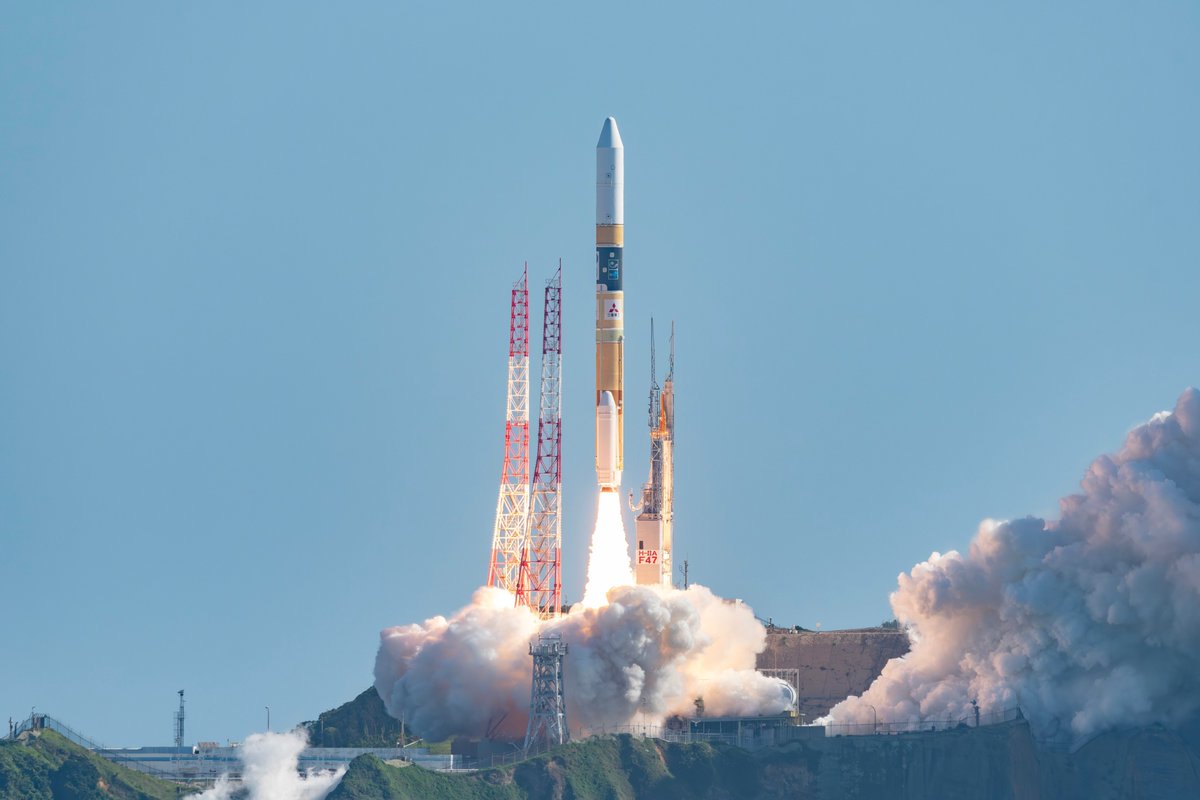
About the H-IIA 204
H-IIA 204
The H-IIA 204 is a Japanese orbital launch vehicle operated by Mitsubishi Heavy Industries (MHI) in cooperation with the Japan Aerospace Exploration Agency (JAXA). It is a variant of the broader H-IIA rocket family, which has served as Japan's primary medium-to-heavy-lift launch system since the early 2000s. The vehicle launches from the Yoshinobu Launch Complex at the Tanegashima Space Center on Tanegashima Island in southern Japan.
Vehicle Design and Capability
The H-IIA 204 designation reflects its specific strap-on booster configuration within the H-IIA family. Standing 53 meters tall with a core diameter of 4 meters, the rocket is capable of delivering up to 10,000 kg to low Earth orbit (LEO) and up to 6,000 kg to geostationary transfer orbit (GTO). The "204" configuration uses four solid rocket boosters attached to the first stage, giving it considerably more lift capacity than the baseline H-IIA 202 variant, which is the most commonly flown member of the family.
The H-IIA family uses a liquid hydrogen and liquid oxygen propellant combination for its main engines, a technology lineage inherited from earlier Japanese H-series rockets and reflecting JAXA's longstanding commitment to cryogenic propulsion.
Operational History
Our flight record shows the H-IIA 204 has been tracked across 50 flights between 2001 and 2025, compiling a record of 49 successes and 1 failure or partial failure. This places it among the more reliable medium-lift vehicles to have operated during this era of spaceflight. The single anomaly occurred early in the vehicle's history, and subsequent missions demonstrated sustained improvements in operational reliability.
The rocket's top customers have been Mitsubishi Heavy Industries and JAXA, reflecting its dual role as both a commercial launch service and a workhorse for Japanese government space programs. Payloads have included Earth observation satellites, intelligence-gathering spacecraft, and science missions representing the full breadth of Japan's national space priorities.
Notable Recent Missions
Among the most recent missions in our record is the H-IIA 204 | Inmarsat-6 F1 launch, which carried a large commercial communications satellite for the British operator Inmarsat — a notable deployment to geostationary transfer orbit that demonstrated the variant's commercial relevance. Other recent flights have predominantly used the H-IIA 202 configuration and include a diverse manifest: the XRISM & SLIM mission, which orbited the XRISM X-ray astronomy observatory alongside the SLIM lunar lander; the GOSAT-GW (Ibuki GW) greenhouse gas monitoring satellite; and multiple IGS Radar and IGS Optical payloads serving Japan's government intelligence satellite network.
Legacy and Context
The H-IIA 204's operational span across more than two decades reflects its central place in Japan's independent launch capability. As Japan transitions toward next-generation systems such as the H3 rocket, the H-IIA has remained in limited service to support continuity for critical government missions. Its track record of reliability and its support for both domestic and international payloads have established it as one of the most significant Asian launch vehicles of the early 21st century.
- Jun 28, 2025H-IIA 202 | GOSAT-GW (Ibuki GW)Success
- Sep 26, 2024H-IIA 202 | IGS Radar 8Success
- Jan 12, 2024H-IIA 202 | IGS Optical 8Success
- Sep 06, 2023H-IIA 202 | XRISM & SLIMSuccess
- Jan 26, 2023H-IIA 202 | IGS Radar 7Success
- Dec 22, 2021H-IIA 204 | Inmarsat-6 F1Success
- Oct 26, 2021H-IIA 202 | QZS-1RSuccess
- Nov 29, 2020H-IIA 202 | JDRS-1Success
- Jul 19, 2020H-IIA 202 | Hope (Emirates Mars Mission)Success
- Feb 09, 2020H-IIA 202 | IGS Optical 7Success
- Oct 29, 2018H-IIA 202 | KhalifaSat & GOSAT-2Success
- Jun 12, 2018H-IIA 202 | IGS Radar 6Success
- Feb 27, 2018H-IIA 202 | IGS Optical 6Success
- Dec 23, 2017H-IIA 202 | GCOM-C1 & SLATSSuccess
- Oct 09, 2017H-IIA 202 | Michibiki 4 (QZS-4)Success
- Aug 19, 2017H-IIA 204 | Michibiki 3 (QZS-3)Success
- Jun 01, 2017H-IIA 202 | Michibiki 2 (QZS-2)Success
- Mar 17, 2017H-IIA 202 | IGS Radar 5Success
- Jan 24, 2017H-IIA 204 | DSN 2 (Kirameki 2)Success
- Nov 02, 2016H-IIA 202 | Himawari-9Success
- Feb 17, 2016H-IIA 202 | Astro-H (Hitomi)Success
- Nov 24, 2015H-IIA 204 | Telstar 12 VANTAGESuccess
- Mar 26, 2015H-IIA 202 | IGS Optical 5Success
- Feb 01, 2015H-IIA 202 | IGS Radar SpareSuccess
- Dec 03, 2014H-IIA 202 | Hayabusa-2Success
- Oct 07, 2014H-IIA 202 | Himawari-8Success
- May 24, 2014H-IIA 202 | ALOS-2Success
- Feb 27, 2014H-IIA 202 | GPM-CoreSuccess
- Jan 27, 2013H-IIA 202 | IGS Radar 4 & IGS Optical 5VSuccess
- May 17, 2012H-IIA 202 | GCOM-W1Success
- Dec 12, 2011H-IIA 202 | IGS Radar 3Success
- Sep 23, 2011H-IIA 202 | IGS Optical 4Success
- Sep 11, 2010H-IIA 202 | Michibiki (QZS-1)Success
- May 20, 2010H-IIA 202 | Akatsuki (Planet-C)Success
- Nov 28, 2009H-IIA 202 | IGS-Optical 3Success
- Jan 23, 2009H-IIA 202 | GOSATSuccess
- Feb 23, 2008H-IIA 2024 | KizunaSuccess
- Sep 14, 2007H-IIA 2022 | KaguyaSuccess
- Feb 24, 2007H-IIA 2024 | IGS Radar 2 & IGS Optical 3VSuccess
- Dec 18, 2006H-IIA 204 | Kiku-8Success
- Sep 11, 2006H-IIA 202 | IGS Optical 2Success
- Feb 18, 2006H-IIA 2024 | Himawari-7 (MTSAT-2)Success
- Jan 24, 2006H-IIA 2022 | DaichiSuccess
- Feb 26, 2005H-IIA 2022 | Himawari-6 (MTSAT-1R)Success
- Nov 29, 2003H-IIA 2024 | IGS Radar (2) & IGS Optical (2)Failure
- Mar 28, 2003H-IIA 2024 | IGS Radar 1 & IGS Optical 1Success
- Dec 14, 2002H-IIA 202 | Midori-2Success
- Sep 10, 2002H-IIA 2024 | USERS & DRTSSuccess
- Feb 04, 2002H-IIA 2024 | TsubasaSuccess
- Aug 29, 2001H-IIA 202 | LRESuccess