H-II
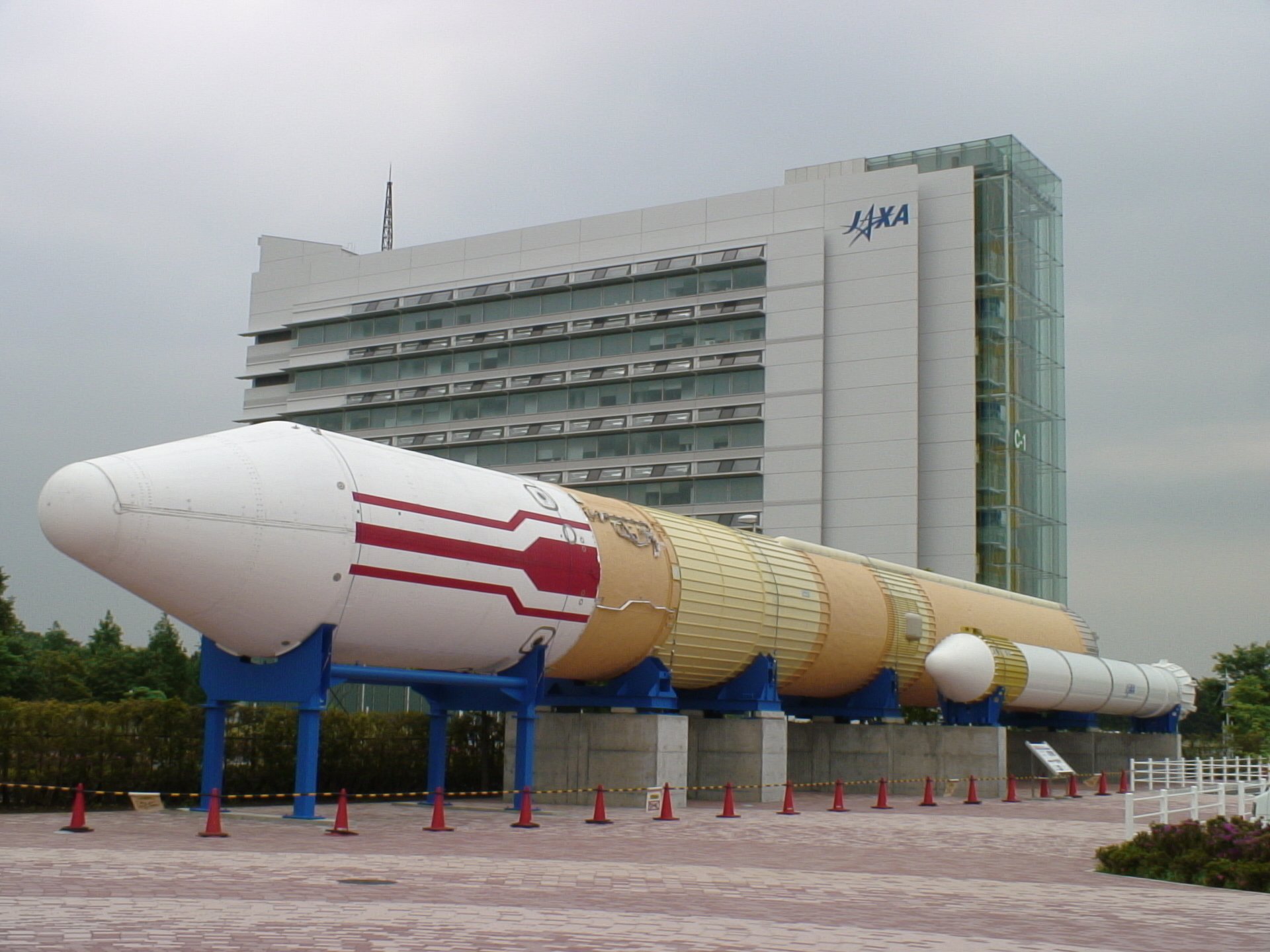
About the H-II
H-II
The H-II was a Japanese expendable launch vehicle developed and operated by the National Space Development Agency of Japan (NASDA), the predecessor organization to the Japan Aerospace Exploration Agency (JAXA). It represented Japan's first domestically developed large-scale orbital rocket, designed and built without reliance on foreign technology — a deliberate national goal that distinguished it from earlier Japanese launchers. The H-II launched from the Tanegashima Space Center on Japan's southern coast.
Development and Significance
The H-II was a landmark achievement in Japan's space program, demonstrating an indigenous capability to deliver both scientific and commercial payloads to low Earth orbit and geostationary transfer orbit. Its twin cryogenic liquid-hydrogen and liquid-oxygen main engines placed Japan among a small number of nations capable of independently developing high-performance staged-combustion rocket technology. This technological ambition, however, also contributed to the vehicle's considerable development costs, which drew scrutiny throughout its operational life.
Flight Record
Our tracking data covers 7 flights of the H-II between 1994 and 1999, of which 6 were fully successful and 1 resulted in a failure or partial failure. The vehicle stood 49 meters tall with a core diameter of 4 meters, and was rated to carry up to 10,060 kg to low Earth orbit and 3,930 kg to geostationary transfer orbit.
The H-II's career opened with a series of significant missions for NASDA and the broader Japanese scientific community. Notable flights in our record include the launch of Midori (Japan's Advanced Earth Observing Satellite), the joint TRMM and ETS-7 mission carrying NASA's Tropical Rainfall Measuring Mission alongside an Engineering Test Satellite, and the SFU and Himawari 5 flight, which deployed a retrievable space platform alongside a meteorological satellite. The Kakehashi communications experiment satellite and an attempted MTSAT launch also appear in the record. The early Kiku-6 mission served as an engineering test of the vehicle's performance in GTO delivery.
Operators and Customers
The Japan Aerospace Exploration Agency (through its predecessor NASDA) was by far the primary customer for H-II launches, using the vehicle almost exclusively to advance Japan's national space science, Earth observation, and communications satellite programs. The H-II was never widely commercialized, and its high per-launch cost made it uncompetitive on the international commercial launch market of the late 1990s.
Legacy
The H-II's operational period came to a close after 1999, following mission failures that underscored the technical and economic challenges of the program. It was succeeded by the H-IIA, a redesigned and more cost-effective evolution of the vehicle that retained the H-II's core architecture while addressing its reliability and affordability shortcomings. Despite its mixed record, the H-II is widely regarded as a foundational program that gave Japan the sovereign launch capability and engineering expertise upon which its subsequent rocket programs were built.