Gravity-1
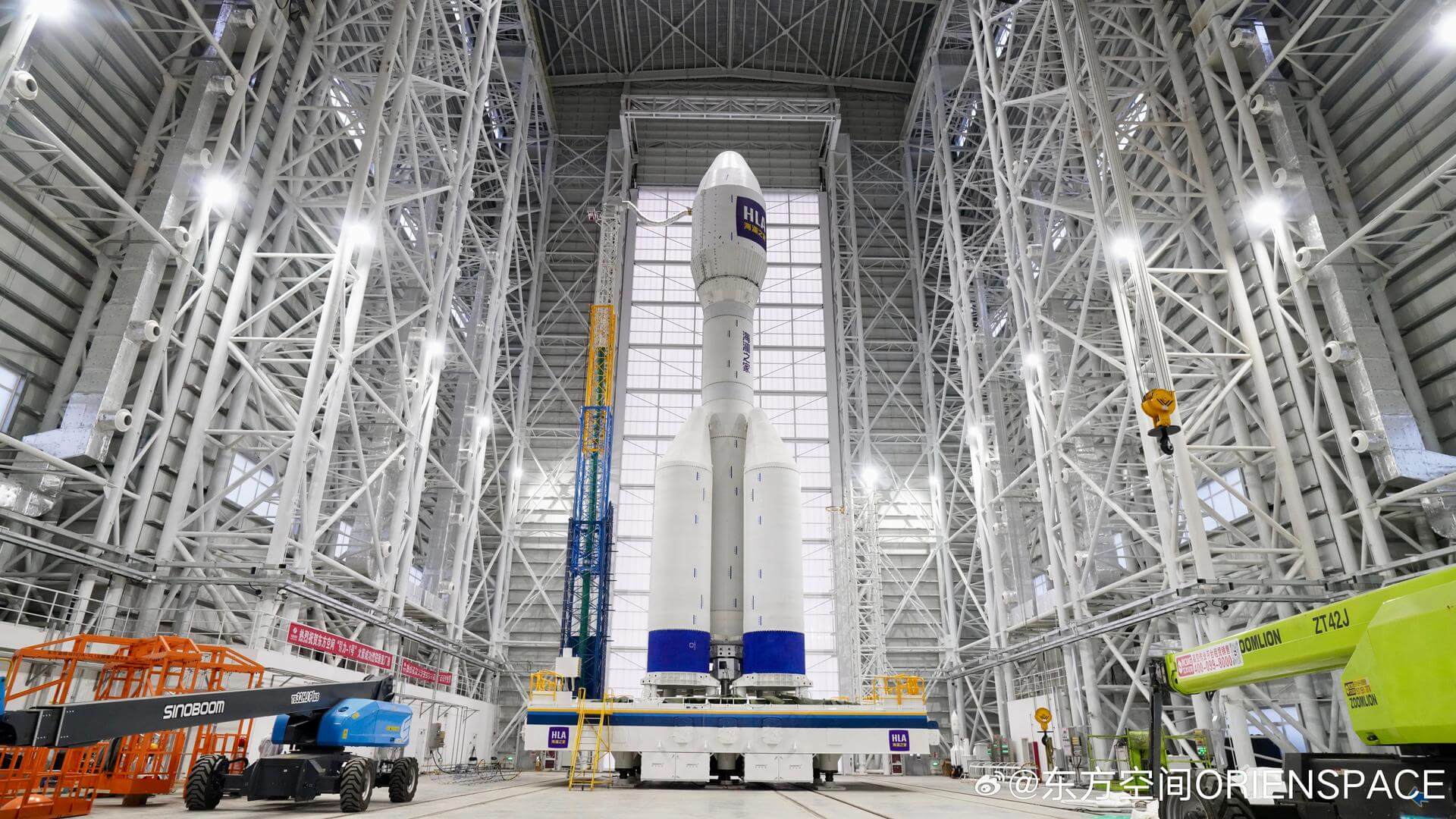
About the Gravity-1
Gravity-1
Gravity-1 is a Chinese solid-fueled orbital launch vehicle developed and operated by Orienspace Technology (also rendered as Origin Space or Dongfang Space). Designed to serve the commercial small-to-medium satellite market, it holds a notable place in spaceflight history as one of the largest solid-fueled rockets developed by a private Chinese launch provider.
Development and Design
Gravity-1 is a sea-launched vehicle, lifted off from a mobile maritime platform in Chinese coastal waters — a configuration that offers flexibility in choosing launch azimuth and reduces constraints imposed by fixed ground infrastructure. Standing 29.4 meters tall, the rocket is a compact but capable vehicle for its class, capable of delivering up to 6,500 kg to low Earth orbit (LEO). This payload capacity places it well above many of the smaller solid rockets that have proliferated in China's commercial launch sector, giving Orienspace a competitive edge for constellation deployment and rideshare missions requiring meaningful mass to orbit.
The vehicle uses a cluster of solid rocket motors at its base, a configuration that allows for high thrust at liftoff without the operational complexity of liquid propellant handling. This design philosophy prioritizes responsiveness and ease of integration, traits that are increasingly valued by commercial satellite operators working to tight deployment schedules.
Flight History
Our tracking records show two flights of Gravity-1, both conducted between 2024 and 2025, and both resulting in success. The vehicle's maiden flight marked a landmark achievement for Orienspace, validating the rocket's design and sea-launch concept in a single mission. A subsequent flight carried a payload of three satellites, demonstrating the vehicle's ability to support multi-manifest missions and underlining its appeal to commercial constellation operators.
Both missions were conducted on behalf of Orienspace Technology itself, reflecting the common practice among emerging launch providers of using early flights to demonstrate capability — either through internal payloads or closely affiliated customers — before pursuing a broader commercial manifest.
Role and Context
Gravity-1 enters a crowded but growing segment of the Chinese commercial launch market, where a wave of private companies has sought to challenge the long-standing dominance of state-owned enterprises. What distinguishes Orienspace's offering is the combination of solid propulsion, sea-launch capability, and a payload class that bridges the gap between small dedicated launchers and larger vehicles. This positions Gravity-1 as a practical option for operators needing to deploy batches of medium-sized satellites without booking space on a larger, more expensive rocket.
With a perfect launch record through the missions tracked here, Gravity-1 has established a credible foundation. The vehicle's success rate, while drawn from a still-limited number of flights, reflects positively on Orienspace's engineering and mission execution. As the global demand for satellite constellation deployment continues to rise, Gravity-1 is positioned to compete for a share of a market that increasingly values reliability, flexibility, and competitive payload capacity.
Its early track record makes it one of the more promising solid-fueled commercial launch vehicles to have emerged from China's rapidly evolving private space industry.