Firefly Alpha
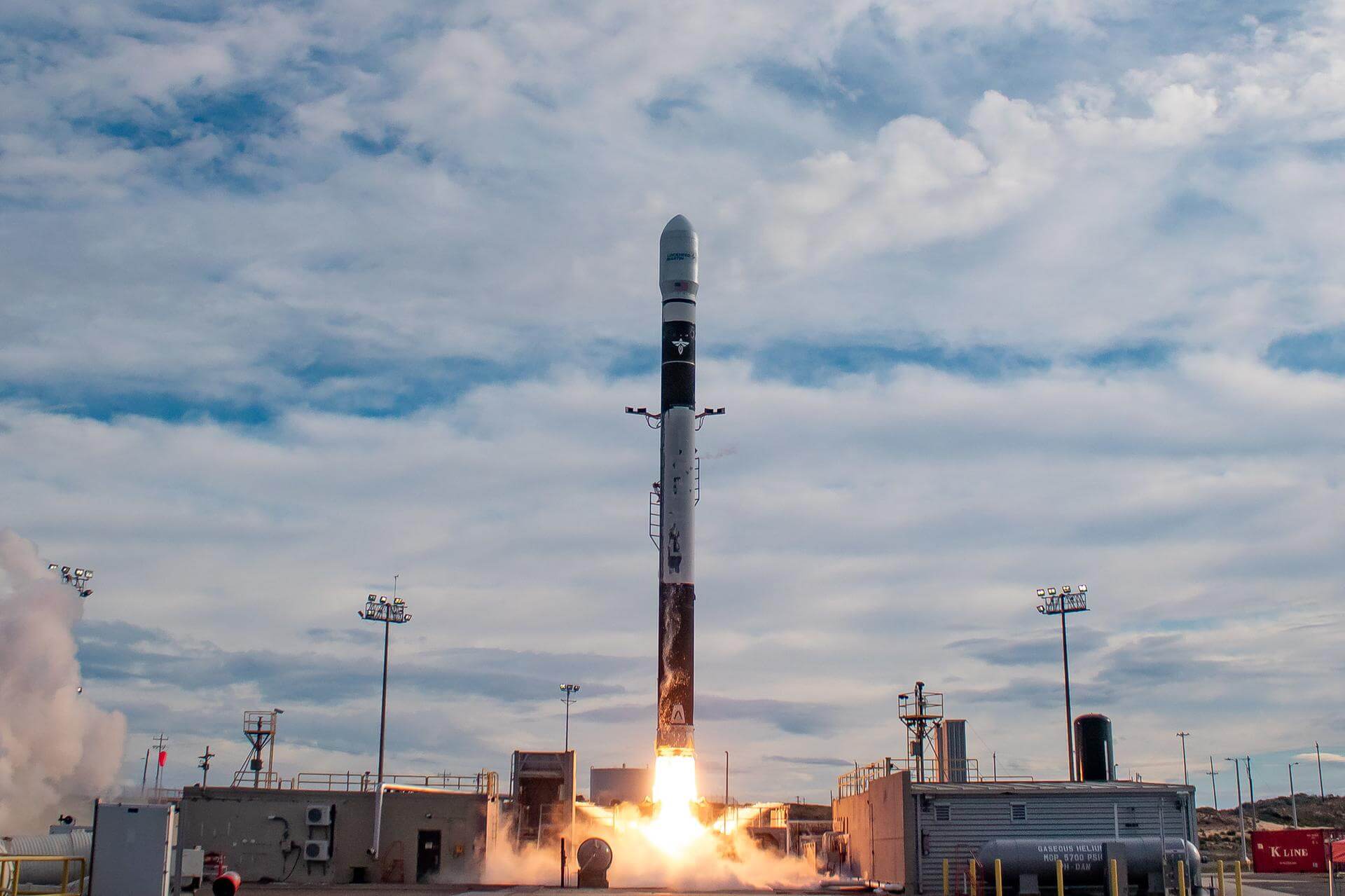
About the Firefly Alpha
Firefly Alpha
Firefly Alpha is a small orbital launch vehicle developed and operated by Firefly Aerospace, an American launch company headquartered in Cedar Park, Texas. Designed to serve the growing commercial small-satellite market, Alpha occupies the lightweight end of the orbital launch spectrum, capable of delivering up to 1,000 kg to low Earth orbit (LEO). It launches from Vandenberg Space Force Base in California, making it well-positioned to reach sun-synchronous and polar orbits favored by Earth-observation and technology-demonstration payloads.
Standing 29.6 meters tall with a diameter of 1.82 meters, Alpha is a two-stage, liquid-propellant rocket with a slender profile characteristic of modern small-lift vehicles. Its first stage is powered by four Reaver engines, while a single Lightning engine propels the upper stage — both burning a combination of liquid oxygen and RP-1 (refined kerosene). The vehicle was conceived as a cost-competitive alternative for small-payload customers who cannot afford or do not require the larger capacity of medium- or heavy-lift rockets.
Development and Flight History
Alpha's path to operational status was hard-won. Our flight record spans 2021 through 2026, covering seven tracked missions, of which four were successful and three resulted in failure or partial failure — a trajectory common among vehicles pushing into orbital service for the first time.
The program's early flights were marked by setbacks. The first orbital attempt ended in loss of the vehicle, and subsequent early missions continued to expose development challenges before the rocket demonstrated reliable performance. This maturation process, while difficult, is consistent with the broader history of new launch vehicles entering an unforgiving operational environment.
A significant early milestone came with FLTA003, known as "VICTUS NOX" — a mission conducted for the U.S. Space Force that demonstrated a rapid-call-up launch capability, with Firefly bringing the vehicle to readiness and lifting off within a compressed timeline. That mission drew considerable attention as a proof-of-concept for responsive space launch, a strategic priority for U.S. defense customers.
Subsequent missions — including FLTA004 (Fly the Lightning), FLTA005 (Noise of Summer), FLTA006 (Message in a Booster), and the most recent Stairway to Seven — reflect an increasingly active flight cadence and a maturing vehicle. The mission names, a distinctive branding choice by Firefly, have given the program a recognizable identity within the small-launch community.
Role and Significance
Firefly Alpha entered service during a competitive period for small-lift launch, alongside other vehicles vying to capture payload contracts from commercial satellite operators, government agencies, and research institutions. With Firefly Aerospace itself listed as the top customer in our flight record, the rocket has also served as a demonstration platform for the company's own mission ambitions.
Alpha's development represents a meaningful contribution to the diversification of orbital access, adding an American small-lift option that complements larger vehicles and rideshare services. As the vehicle's reliability record continues to build across its tracked flights, it stands as one of the more active small-launch offerings to reach operational status in the early 2020s.
- Mar 12, 2026Firefly Alpha | Stairway to SevenSuccess
- Apr 29, 2025Firefly Alpha | FLTA006 (Message in a Booster)Failure
- Jul 04, 2024Firefly Alpha | FLTA005 (Noise of Summer)Success
- Dec 22, 2023Firefly Alpha | FLTA004 (Fly the Lightning)Partial Failure
- Sep 15, 2023Firefly Alpha | FLTA003 (VICTUS NOX)Success
- Oct 01, 2022Firefly Alpha | FLTA002 (To The Black)Success
- Sep 03, 2021Firefly Alpha | FLTA001 (Maiden Flight)Failure