Eris Block 1
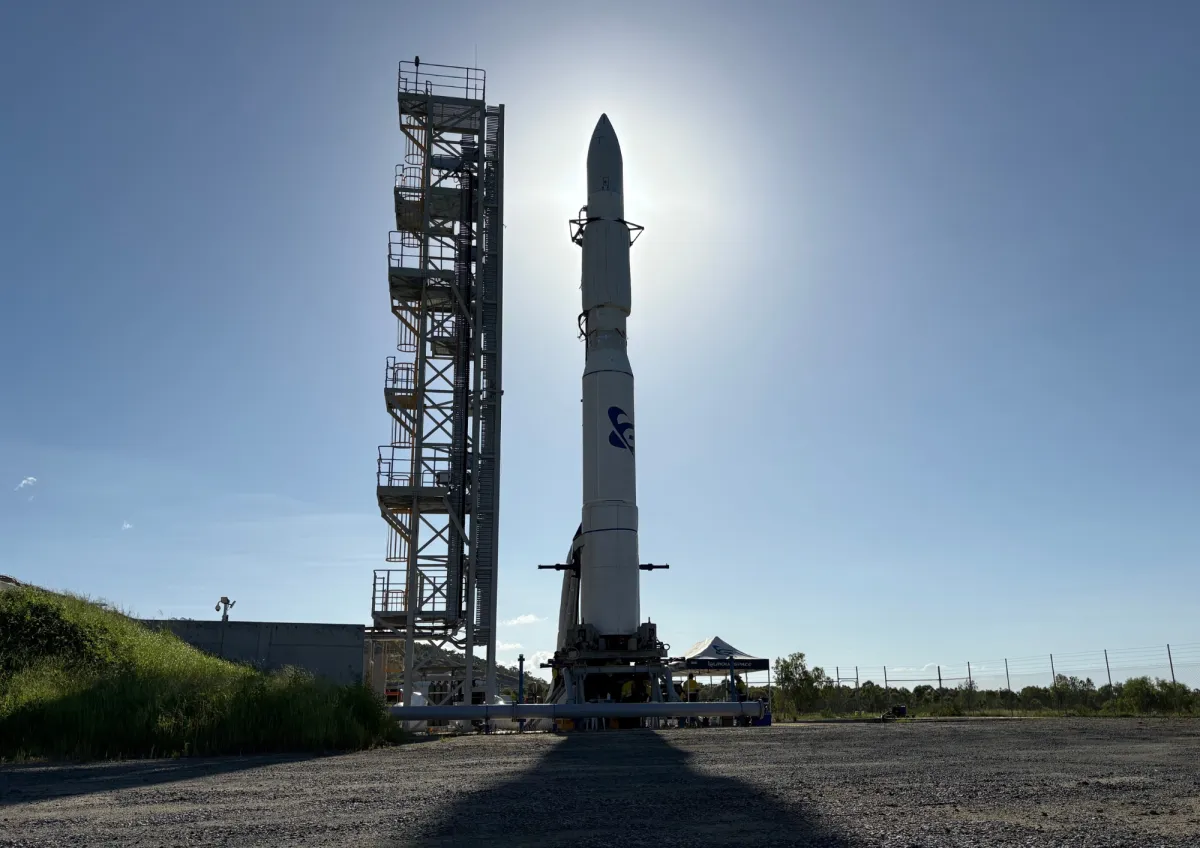
About the Eris Block 1
Eris Block 1
The Eris Block 1 is a small orbital launch vehicle developed and operated by Gilmour Space Technologies, an Australian rocket company headquartered in Queensland. Designed to deliver payloads to low Earth orbit, the Eris family represents Australia's most significant indigenous orbital launch effort and one of the more prominent small-lift vehicle programs to emerge from the Asia-Pacific region in the 2020s.
Design and Capabilities
Standing 25 metres tall with a diameter of 2 metres, Eris Block 1 is a compact, multi-stage rocket sized to compete in the growing small-satellite launch market. Its payload capacity to low Earth orbit is 305 kilograms, placing it in a similar class to other dedicated small-lift vehicles that target the rapidly expanding market for commercial and institutional smallsats. Gilmour Space has pursued a hybrid propulsion approach in the Eris family's development, combining elements of conventional and novel propellant systems — a technically ambitious choice that distinguishes it from many contemporaries relying on more traditional liquid or solid propellants exclusively.
Flight History
Eris Block 1 entered its operational demonstration phase in 2025, with activity in our tracking record spanning 2025 to 2026. The vehicle has accumulated two tracked flights, and its early record reflects the difficult realities that accompany inaugural launches of new orbital rockets.
The Maiden Flight — designated *Eris-1 | Maiden Flight* — marked the first orbital launch attempt for both the vehicle and for Gilmour Space Technologies as a company. Like many debut orbital missions, it faced significant challenges; the flight is recorded as a failure or partial success, underscoring how demanding the step from development testing to orbital flight remains even for well-funded and carefully prepared programs.
Flight Two, designated *Eris-1 | Flight Two*, followed as the program continued its demonstration campaign. The broader record reflects the iterative nature of new launch vehicle development, where early flights serve as live data-gathering events as much as operational missions.
Operational Context
Gilmour Space Technologies conducts launches from Bowen Orbital Spaceport in Queensland, Australia — a purpose-built facility that made Eris one of the first orbital rockets to lift off from Australian soil in the modern era of commercial spaceflight. This geographic positioning offers useful orbital inclination options for sun-synchronous and mid-inclination trajectories popular with Earth-observation and technology-demonstration smallsats.
The company serves as both the primary developer and the top customer appearing in our mission record, which is typical for a launch vehicle still in its flight-qualification phase — early manifests are often anchored by the developer's own demonstration payloads before commercial customers commit at scale.
Significance
Eris Block 1 occupies a meaningful place in spaceflight history as the vehicle that brought Australia into the modern commercial orbital launch age. Its development challenges and early flight outcomes mirror those experienced by comparable programs globally, and the data gathered during these initial missions forms the empirical foundation on which subsequent variants or block upgrades will be built. The program remains an important one to watch for observers of the Asia-Pacific space industry.