Epsilon S
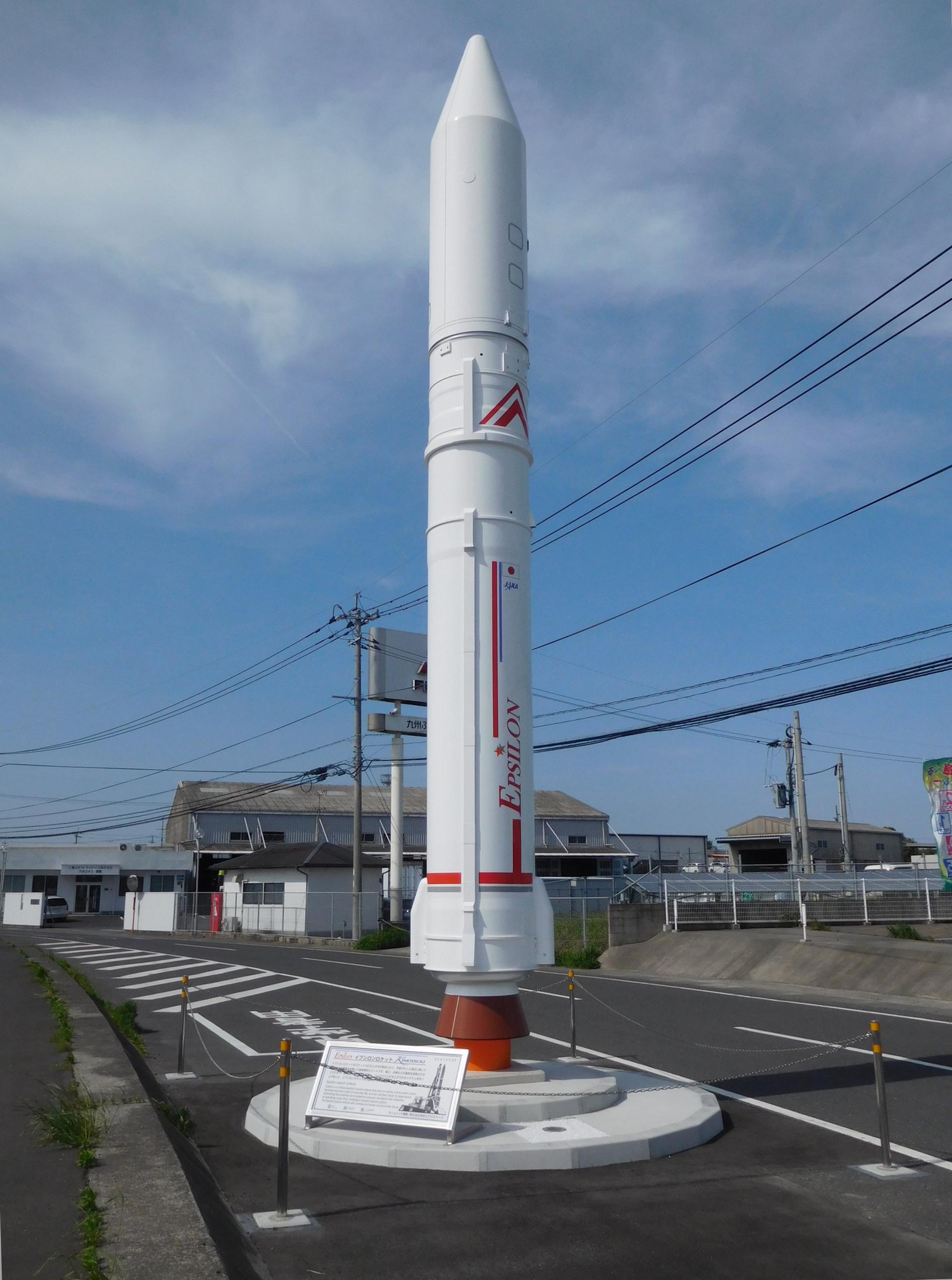
About the Epsilon S
Epsilon S
The Epsilon S is a Japanese solid-fueled orbital launch vehicle developed and operated by the Japan Aerospace Exploration Agency (JAXA) in partnership with IHI Aerospace. It represents an evolution of the original Epsilon rocket, which itself descended from Japan's long heritage of solid-propellant launch systems stretching back to the M-V rocket. The Epsilon S was designed to offer improved performance and reliability while maintaining the compact, cost-efficient character that defines Japan's small-to-medium launch capabilities.
Standing 24.4 meters tall with a diameter of 2.5 meters, the Epsilon S is a relatively modest vehicle by orbital launch standards, well-suited to the deployment of scientific satellites and smaller government payloads. Its slender profile reflects the design philosophy inherited from its predecessors — a rocket optimized for flexibility and manageable operating costs rather than heavy-lift ambitions.
Development and Role
The Epsilon S emerged from JAXA's efforts to streamline and modernize its domestic launch capability following the retirement of the M-V and the operational history of the original Epsilon. Japan has long maintained an independent solid-rocket launch capability as a matter of both scientific necessity and national strategic interest, allowing it to place scientific probes and Earth observation satellites into orbit without reliance on foreign providers. The Epsilon S continues this tradition, serving primarily JAXA's own institutional mission needs.
Launches take place from the Uchinoura Space Center on the southern tip of Kyushu, Japan's historic site for solid-rocket orbital launches dating back decades. The facility's geographic location and the unique azimuth constraints it imposes have long shaped the design and operational parameters of Japan's solid-launch vehicles.
Flight History
According to tracked flight data, the Epsilon S has conducted two flights, recorded across the period 2026 to 2028. The missions documented in this record include Epsilon S | SOLAR-C and Epsilon S | JV-LOTUSat-1, both reflecting the vehicle's role in supporting scientific and civil remote sensing objectives. SOLAR-C is a JAXA-led solar observation mission, while JV-LOTUSat-1 is a Vietnamese Earth observation satellite developed in cooperation with Japanese institutions — illustrating how the Epsilon S serves not only Japan's domestic science agenda but also the country's broader space cooperation partnerships in the Asia-Pacific region.
Neither mission in the current record is classified as a success or failure within this dataset, reflecting the early and developing stage of the vehicle's tracked operational history.
Significance
The Epsilon S occupies an important niche in Japan's launch architecture, bridging the gap between larger liquid-fueled vehicles like the H3 and the demand for dedicated, responsive launches of smaller scientific payloads. Its continued development underscores Japan's commitment to maintaining an indigenous solid-rocket capability — a capability that carries both scientific utility and strategic value. As the vehicle accumulates more flight experience, it is expected to become a reliable workhorse for JAXA science missions and for regional partners seeking affordable access to orbit aboard a Japanese rocket.