Diamant A
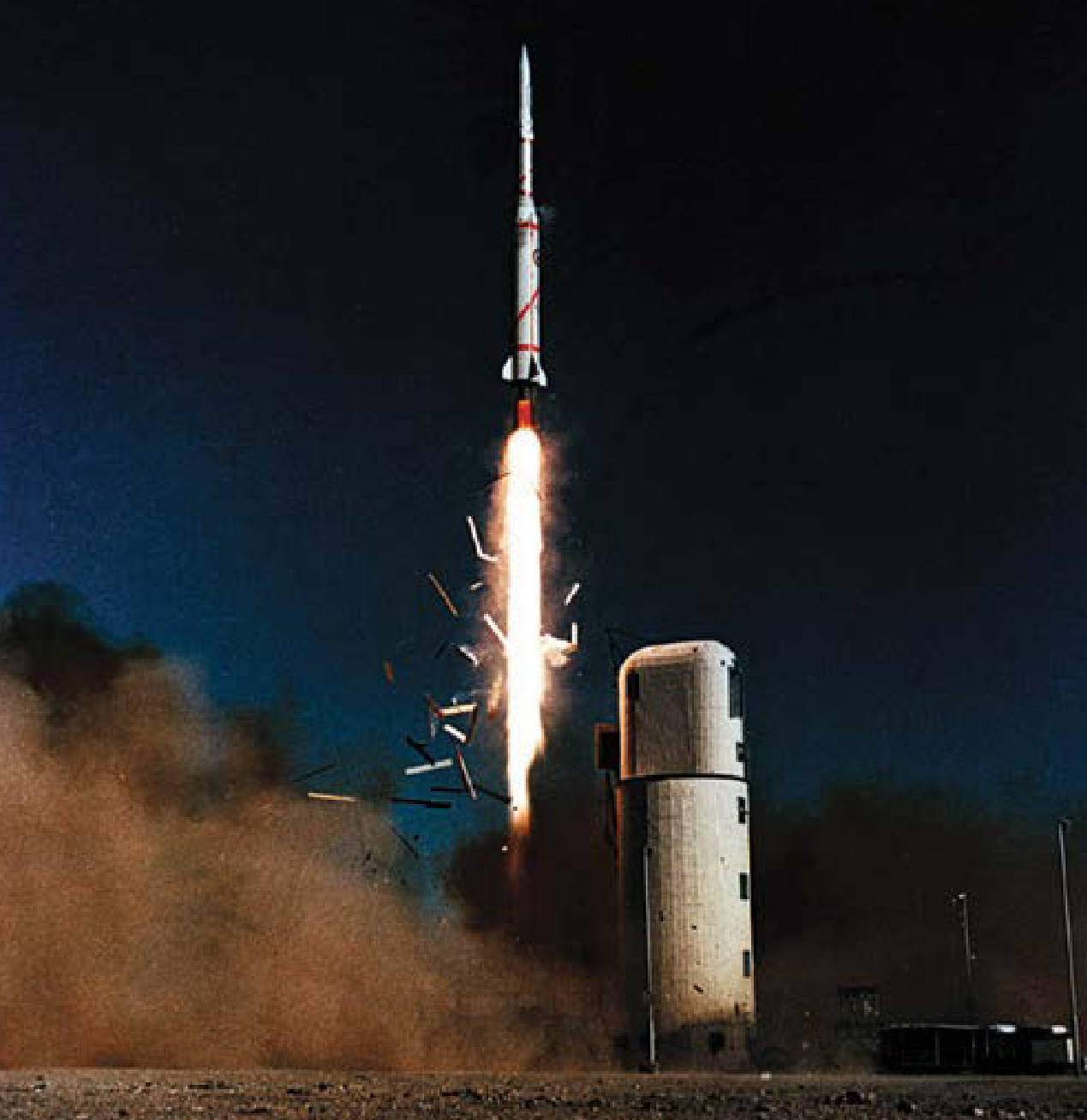
About the Diamant A
Diamant A
The Diamant A is a French orbital launch vehicle developed and operated by the Centre National d'Études Spatiales (CNES), making France the third nation in history — after the Soviet Union and the United States — to independently develop and launch a satellite into orbit. Built under the direction of what was then known as the SEREB industrial consortium, Diamant A represented the culmination of France's early ballistic missile research program and stood as the foundation of Europe's first successful orbital rocket family.
Standing 18.95 meters tall with a diameter of 1.34 meters, Diamant A was a slender, three-stage vehicle powered by a combination of liquid and solid propellants across its stages. Its capacity to deliver up to 160 kilograms to low Earth orbit was modest by international standards of the era, but it was entirely sufficient for the small scientific and geodetic satellites that defined its mission profile. All launches took place from the Guiana Space Centre in Kourou, French Guiana — then still in its early operational phase — as well as from the Hammaguir launch facility in Algeria for the earliest flights.
Operational History
In our flight record, Diamant A logged four tracked flights between 1965 and 1967, achieving a perfect success rate of four successes from four attempts. Its inaugural mission carried Astérix, which in November 1965 became the first French — and first Western European — satellite to reach orbit. This milestone placed France firmly among the world's spacefaring nations and demonstrated the viability of an independent European path to space.
Subsequent missions built on that foundation. The Diapason D-1A satellite followed, continuing France's program of scientific exploration. The vehicle then launched the Diapason D-1C and Diapason D-1D geodetic satellites, both part of the Diadème program, which were designed to improve knowledge of Earth's gravitational field through precise orbital tracking. These missions underscored the primary customer relationship with the National Center of Space Research, which directed and funded the scientific objectives of all tracked flights.
Significance and Legacy
Diamant A occupies a singular place in spaceflight history as the rocket that opened the orbital era for France and, by extension, for Western Europe. Its development drew heavily on the Pierres Précieuses series of sounding rockets and the expertise accumulated through France's independent nuclear delivery program, demonstrating how military and civilian space ambitions could converge into a capable launch capability.
The Diamant A's active window of 1965 to 1967 was brief, but it established the operational infrastructure, the launch culture, and the national confidence that would evolve into later, more capable variants of the Diamant family and, ultimately, contribute to the multinational Ariane program that followed in the next decade. For a vehicle of its size and era, its unblemished record and its role as a pioneer of sovereign European access to space ensure that Diamant A remains one of the most historically consequential small launch vehicles ever flown.