Delta IV M+(5,2)
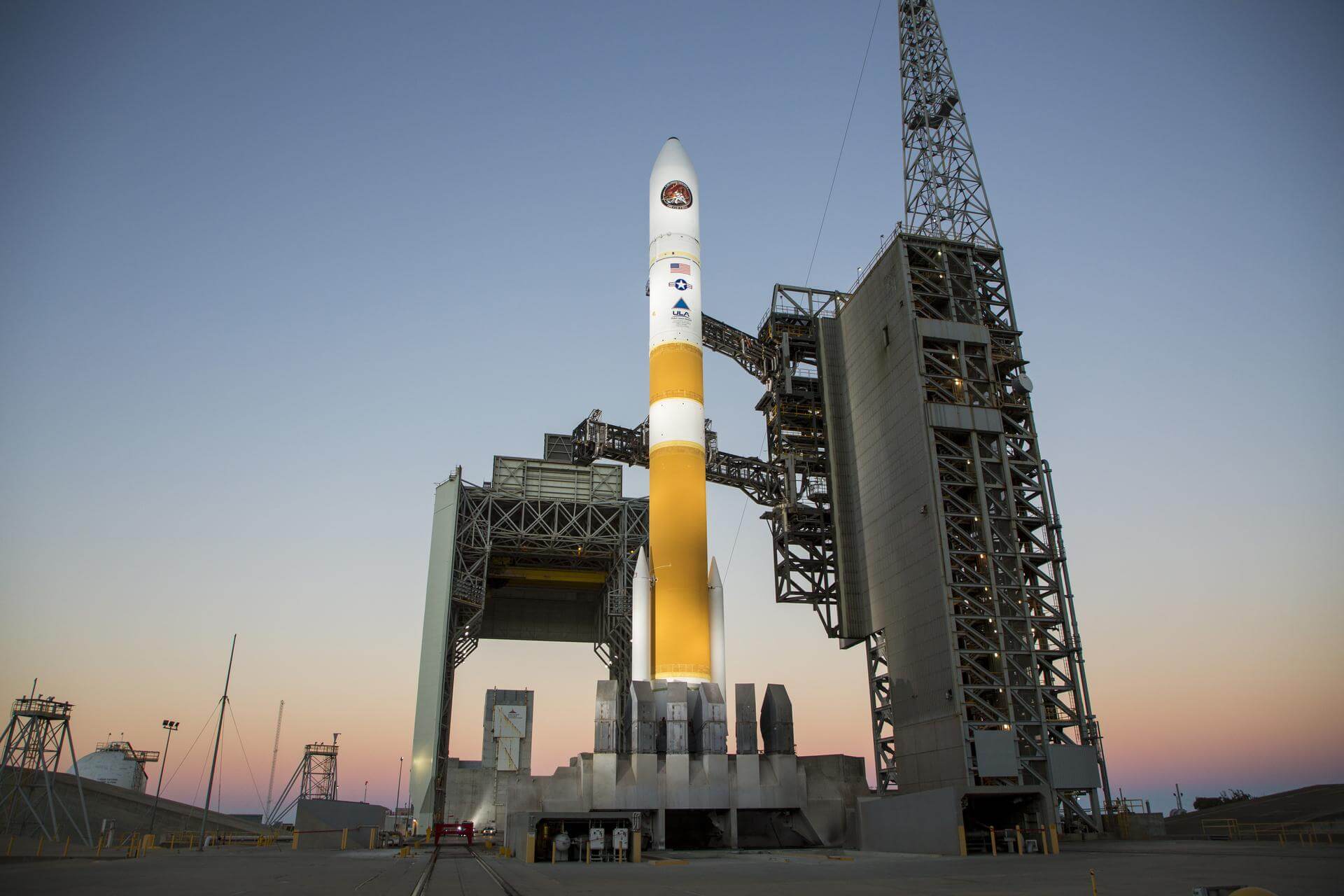
About the Delta IV M+(5,2)
Delta IV M+(5,2)
The Delta IV M+(5,2) is an American orbital launch vehicle operated by United Launch Alliance (ULA), a joint venture between Boeing and Lockheed Martin. It represents one of several configurations within the broader Delta IV Medium+ family, distinguished by its five-meter payload fairing and a pair of solid rocket boosters strapped to the core stage. The vehicle stands 72 meters tall with a core diameter of 5 meters, making it one of the larger members of the Medium+ lineup.
Design and Capability
The Delta IV family as a whole is built around the Common Booster Core (CBC), a cryogenic stage powered by the RS-68 engine and fueled by liquid hydrogen and liquid oxygen. The M+(5,2) configuration augments the core with two solid rocket boosters, providing additional lift capacity at liftoff. The five-meter fairing — wider than the standard four-meter option — accommodates larger payload envelopes, making this variant well suited to bulky government spacecraft.
The vehicle is capable of delivering 11,700 kg to low Earth orbit (LEO) and 6,565 kg to geostationary transfer orbit (GTO), positioning it in the upper tier of medium-to-heavy launch vehicles. This performance profile made it an attractive choice for demanding national security payloads that required both substantial mass capacity and a generously sized fairing.
Flight History
According to tracked flight records, the Delta IV M+(5,2) flew three times between 2012 and 2018, achieving a perfect success rate with no failures or partial failures recorded. All three missions carried classified payloads for the National Reconnaissance Office (NRO), underscoring the vehicle's role as a trusted workhorse for United States intelligence satellite programs.
The most recent tracked mission was NROL-47, followed earlier in the manifest by NROL-45, which carried the Topaz-4 radar imaging satellite (designated USA-267). The first tracked flight was NROL-25, associated with the Future Imagery Architecture radar program and designated USA-234. The consistent assignment of NRO reconnaissance missions to this configuration reflects both its reliable performance history and its ability to accommodate the large, complex spacecraft typical of that program.
Operational Context
Delta IV M+(5,2) launches took place from Vandenberg Space Force Base in California, a launch site optimized for polar and sun-synchronous orbits — trajectories commonly used by reconnaissance satellites requiring global ground coverage. The vehicle's consistent use for intelligence community payloads meant it operated with a level of mission security atypical of commercial launch programs, with limited public disclosure of payload details.
The Delta IV family as a whole has been gradually phased out in favor of ULA's newer Vulcan Centaur vehicle. The relatively small number of M+(5,2) flights — three in total — reflects how specialized this particular configuration was, filling a precise niche in payload mass and volume rather than serving as a general-purpose workhorse. Its unblemished record, however, speaks to the engineering maturity of the Delta IV platform and the operational precision ULA brought to each mission it supported.