Delta 3920/PAM
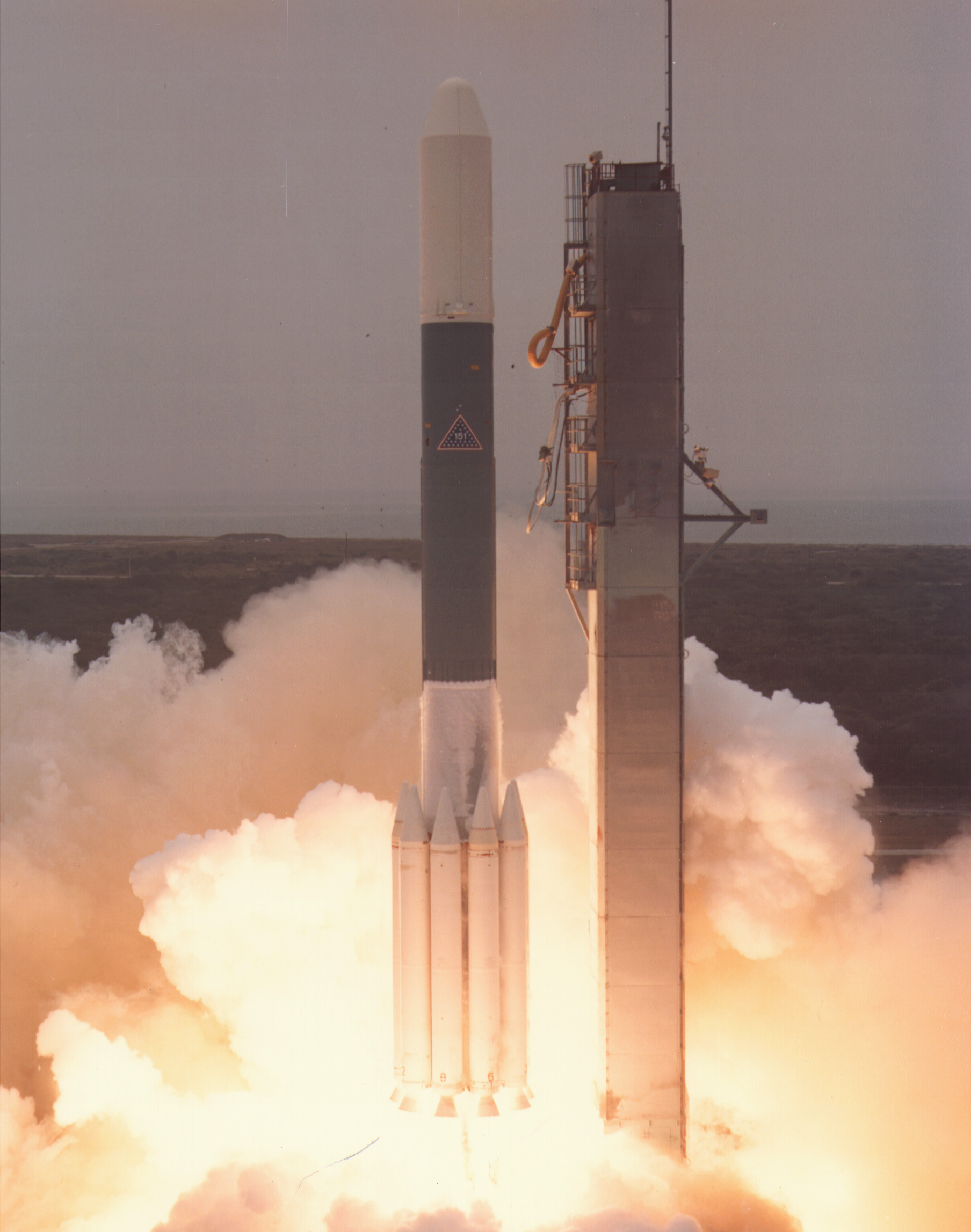
About the Delta 3920/PAM
Delta 3920/PAM
The Delta 3920/PAM is an American expendable orbital launch vehicle developed and operated by McDonnell Douglas for NASA and commercial customers, serving as a member of the long-running Delta rocket family. Combining a nine-solid-strap-on first stage configuration with a Payload Assist Module (PAM-D) upper stage, the vehicle was purpose-built to deliver communications satellites directly to geostationary transfer orbit, filling a critical role in the commercial satellite industry during the early 1980s.
Design and Configuration
Standing 36 meters tall with a core diameter of 2.44 meters, the Delta 3920/PAM followed the evolutionary design philosophy that characterized the Delta family throughout its history. The "3920" designation reflects its configuration: a Thor-derived liquid-fueled first stage augmented by nine Castor IV solid rocket strap-ons, a liquid-fueled second stage, and the solid-fueled PAM-D kick motor as the third stage. The PAM-D, originally developed with NASA involvement and also flown on the Space Shuttle, provided the final velocity increment needed to place payloads on a path toward geostationary orbit. The vehicle could place approximately 1,280 kg into low Earth orbit, though its primary mission profile targeted geosynchronous transfer trajectories for communications satellite payloads.
Operational History
The Delta 3920/PAM conducted its first tracked flight in 1982 and remained active through 1987, logging six launches across that period — all of them successful. This unblemished record made it a reliable workhorse at a time when competition for commercial satellite launch contracts was intensifying. The vehicle flew predominantly from Cape Canaveral in Florida, the traditional home of the Delta family's eastward geostationary launches.
Among the most notable payloads carried were the Galaxy 1, Galaxy 2, and Galaxy 3 satellites for Hughes Communications, which became cornerstones of American cable television distribution. The vehicle also lofted Telstar 301 for AT&T, Anik D1 for Canadian operator Telesat, and Palapa B2P for Indonesia's Palapa system. These missions collectively supported some of the most commercially significant communications satellite infrastructure of the decade. The United States Air Force stands as the vehicle's top institutional customer in the flight record, reflecting the government's ongoing reliance on Delta-family rockets for national space objectives.
Legacy and Context
The 3920/PAM variant represented a mature expression of Delta's modular design approach, allowing McDonnell Douglas to tailor performance to mission requirements by swapping upper stages and adjusting strap-on configurations. Its perfect six-for-six launch record during a competitive and formative era for commercial spaceflight speaks to the reliability that made the Delta brand enduring. The satellites it deployed — particularly the Galaxy constellation — shaped how millions of Americans received television and data services throughout the 1980s and beyond.
Though the 3920/PAM configuration was eventually succeeded by more capable Delta variants as payload masses grew, its short operational career left a meaningful imprint on both the commercial satellite industry and the broader legacy of the Delta launch vehicle family.