Delta 0900
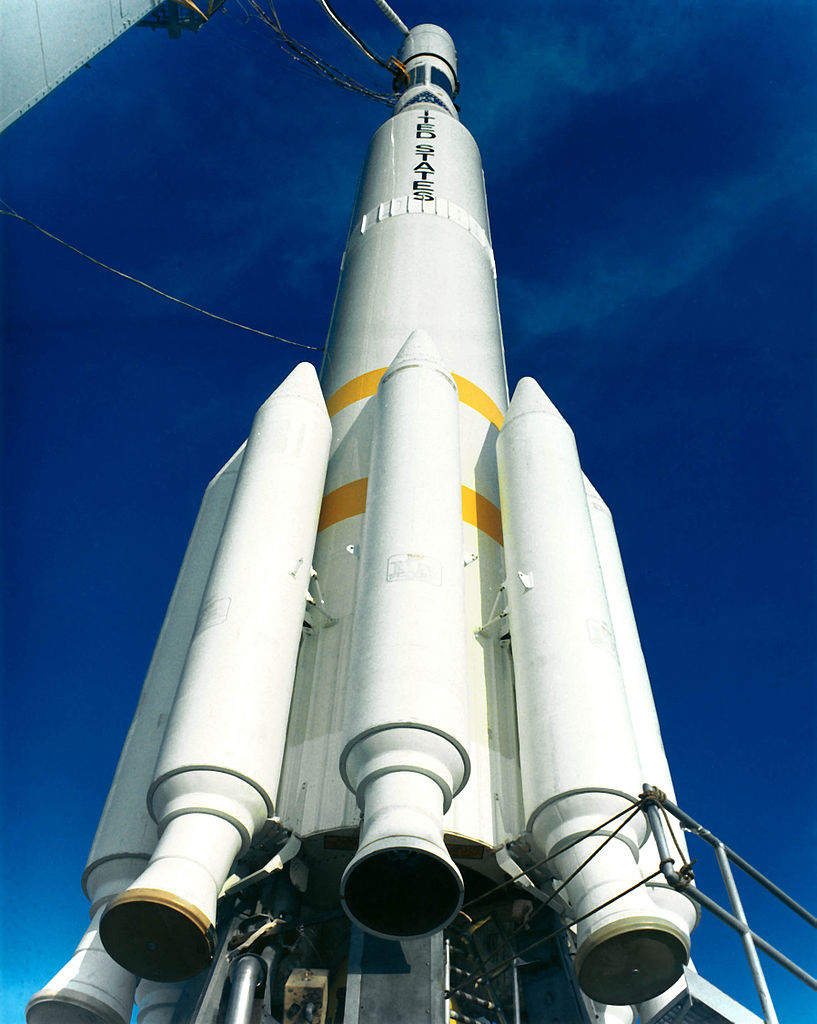
About the Delta 0900
Delta 0900
The Delta 0900 is an American expendable orbital launch vehicle and a member of the long-running Delta family, developed and operated by McDonnell Douglas for NASA. A product of the United States' expanding civil and military space infrastructure in the early 1970s, the Delta 0900 represents one of the many incremental configuration variants that defined the Delta program's modular evolution during that era.
Design and Configuration
The Delta naming convention used a four-digit code to describe the vehicle's configuration, and the 0900 designation indicates a specific combination of core stage, upper stage, and strap-on booster arrangement. Standing 34 meters tall with a core diameter of 2.44 meters, the Delta 0900 was a medium-class launch vehicle capable of delivering up to 1,300 kilograms to low Earth orbit. Like other Delta variants of the period, it was derived from the Thor intermediate-range ballistic missile as its first stage, a lineage that gave the Delta family its characteristic reliability and adaptability throughout the 1960s and 1970s.
Flight History
The Delta 0900 flew twice, both times in 1972, and achieved two successful missions — a perfect operational record. Though its active service window was brief, the vehicle performed during a particularly significant year for Earth observation spaceflight.
Both missions tracked in the record carried high-profile scientific payloads. The Nimbus 5 mission delivered NASA's Nimbus-5 meteorological research satellite, part of a series that advanced atmospheric and climate science. The Landsat 1 mission — originally known as the Earth Resources Technology Satellite (ERTS-1) — placed in orbit what became one of the most historically important civilian remote-sensing satellites ever launched, inaugurating a program of continuous Earth observation that continues to the present day.
Customers and Role
The United States Air Force figures as the top customer in the launch record, reflecting the close relationship between civil launch infrastructure and military oversight that characterized American spaceflight operations during the Cold War period. The Delta family served as a reliable workhorse for both government science missions and defense-related payloads throughout this era.
Legacy
Although the Delta 0900 configuration was short-lived, its two missions left a lasting imprint on the history of remote sensing and Earth science. The launch of Landsat 1 in particular is widely regarded as a milestone in humanity's ability to monitor and understand the planet from space. The Delta 0900's brief but unblemished record is consistent with the broader reputation of the Delta program, which became one of the most dependable launch vehicle families in the history of American rocketry, accumulating hundreds of flights across its many variants over several decades.