Chollima-1
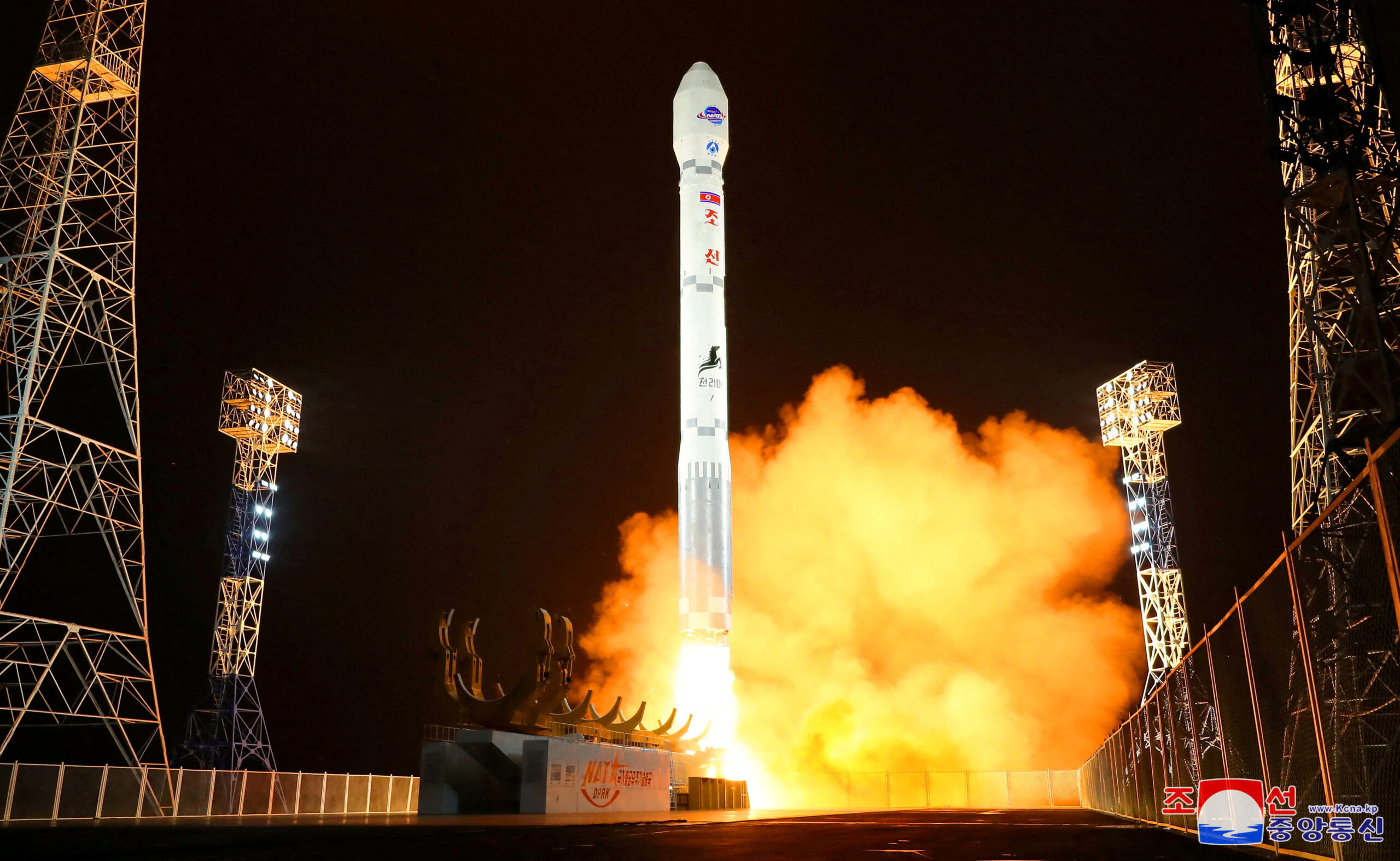
About the Chollima-1
Chollima-1
The Chollima-1 is a North Korean orbital launch vehicle developed and operated by the National Aerospace Development Administration (NADA), the country's state space agency. It represents North Korea's most recent effort to establish a domestic satellite launch capability, and its development attracted significant international attention given the dual-use nature of the rocket technologies involved.
Background and Development
Chollima-1 is named after the legendary winged horse of Korean mythology, a symbol widely used in North Korean political and industrial contexts to connote speed and national progress. The vehicle is understood to be a liquid-fueled rocket, and it is launched from the Sohae Satellite Launching Station (also known as Tongchang-ri) on North Korea's northwest coast, which has served as the country's primary orbital launch facility for over a decade. The development of Chollima-1 is widely regarded as a significant step beyond North Korea's earlier Unha rocket series, though precise technical details about its design remain limited in open sources.
Flight History
Our records show four tracked flights of the Chollima-1, conducted between 2023 and 2024, reflecting a rapid launch cadence as North Korea pressed to demonstrate a functioning reconnaissance satellite capability. Of these four attempts, one was successful and three resulted in failure or only partial success, underscoring the significant technical challenges NADA faced in maturing the vehicle.
The four missions tracked are Malligyong-1a, Malligyong-1b, Malligyong-1c, and Malligyong-1-1, all carrying payloads for the National Aerospace Development Administration. The Malligyong ("telescope" in Korean) spacecraft are described by North Korean authorities as military reconnaissance satellites. The Malligyong-1 satellite, successfully placed into orbit, was acknowledged internationally as a genuine orbital insertion, making North Korea one of a small number of nations to operate a dedicated reconnaissance satellite. The earlier attempts — Malligyong-1a and Malligyong-1b — ended in vehicle failures during ascent, illustrating the steep developmental curve the program faced before achieving orbit.
Significance
The Chollima-1 program drew intense scrutiny from neighboring nations, the United States, and international monitoring bodies, partly because the same propulsion and staging technologies applicable to an orbital launch vehicle are closely related to those used in intercontinental ballistic missiles. South Korea and Japan both issued public statements and took defensive measures in response to the launch attempts, and the United Nations Security Council discussed several of the flights in the context of existing sanctions resolutions against North Korea's ballistic missile and space programs.
Despite its troubled early record, the eventual success of the Malligyong-1 mission marked a notable milestone: North Korea demonstrated the ability to manufacture, launch, and insert a satellite into orbit using an entirely domestically developed vehicle. Whether the Chollima-1 continues to fly in its current form or serves as a steppingstone to a more capable follow-on vehicle remains to be seen, but its place in the history of North Korean spaceflight — and in broader discussions of proliferation and space access — is already well established.