Chang'e Sample Ascender
About the Chang'e Sample Ascender
Chang'e Sample Ascender
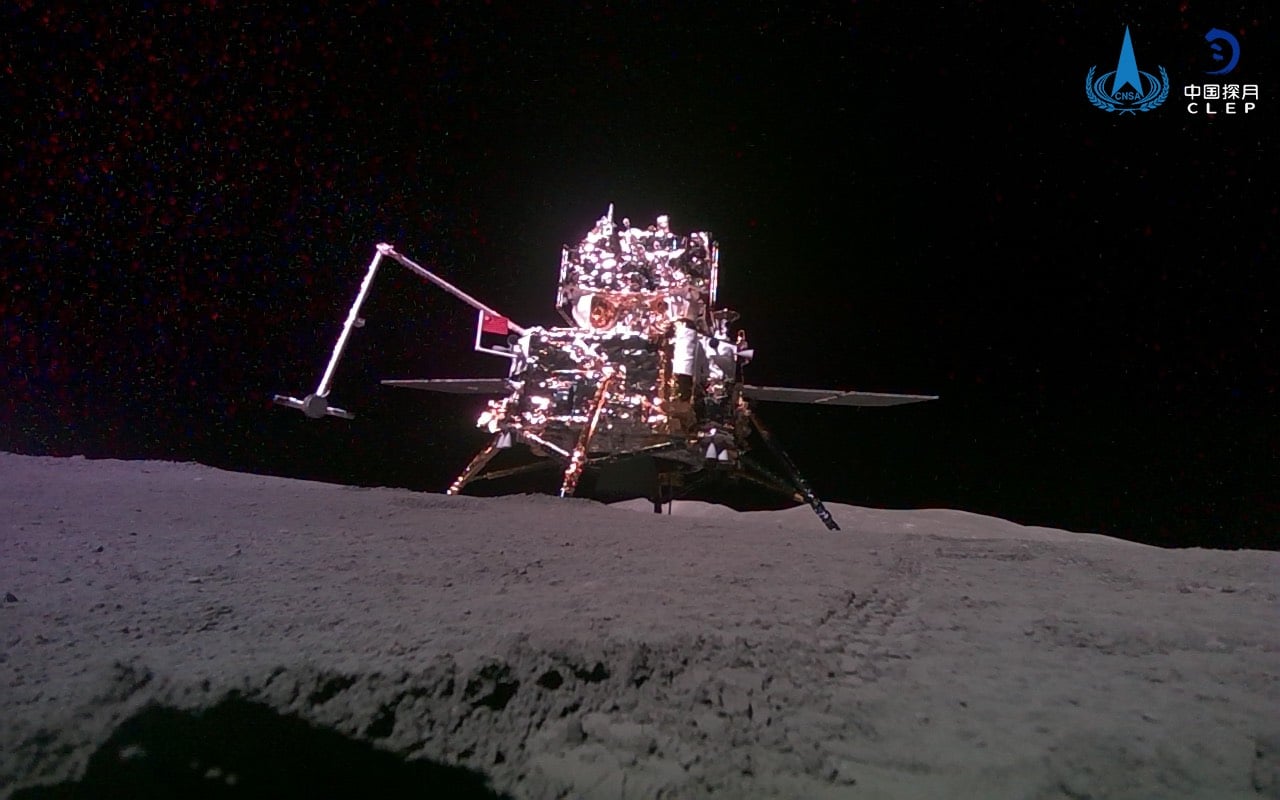
The Chang'e Sample Ascender is a small Chinese ascent stage rocket operated by the China National Space Administration (CNSA), designed for a singular and highly specialized purpose: lifting a sealed sample canister from the surface of the Moon and delivering it into lunar orbit, where it can rendezvous with a waiting orbiter for the journey back to Earth. It represents a critical link in China's ambitious robotic lunar sample-return architecture.
Role and Design Philosophy
Unlike conventional launch vehicles that lift off from Earth, the Chang'e Sample Ascender operates in the extreme conditions of the lunar surface — low gravity, thermal extremes, and complete remoteness from any ground support infrastructure. The vehicle must ignite reliably after its lander has spent days or weeks on the Moon, making dependability under harsh conditions a core design requirement. Its compact scale reflects the Moon's weaker gravitational pull compared to Earth, but the engineering challenge is compounded by the need to achieve precise orbital insertion so that an autonomous rendezvous and docking can be completed without direct human intervention.
Flight History
The Chang'e Sample Ascender has recorded two flights in our tracking data, both successful, spanning the years 2020 to 2024. Its sole customer across both missions has been the China National Space Administration, reflecting its purpose-built, government-operated nature.
The first tracked flight was conducted as part of the Chang'e 5 mission, which marked a historic milestone as China's first successful lunar sample-return effort. The ascender lifted off from the lunar surface in late 2020, carrying samples collected from the Mons Rümker region of the Moon's near side, and docked autonomously with the Chang'e 5 orbiter. The returned samples — the first brought back from the Moon since the Soviet Luna 24 mission in 1976 — represented a landmark achievement in planetary science.
The second tracked flight took place as part of the Chang'e 6 mission in 2024, an even more ambitious undertaking targeting the Moon's far side. Because the lunar far side never faces Earth, all communications required relay through an orbiting satellite. The ascender again performed successfully, lifting samples from the South Pole–Aitken Basin — one of the oldest and largest impact craters in the solar system — and completing the rendezvous sequence needed to begin their return journey. Chang'e 6 marked the first time samples had ever been retrieved from the Moon's far side, cementing the vehicle's place in spaceflight history.
Significance
With a perfect two-for-two launch record, the Chang'e Sample Ascender has demonstrated consistent reliability in one of the most unforgiving operational environments in space exploration. Each flight is effectively a single-use, non-recoverable mission with no possibility of a retry from the same location, making every launch a high-stakes event. As CNSA continues to develop its lunar exploration program toward eventual crewed missions, the technologies validated by this vehicle — autonomous ascent, lunar orbit rendezvous, and far-side operations — will inform future Chinese spaceflight efforts for decades to come.