Ceres-1S
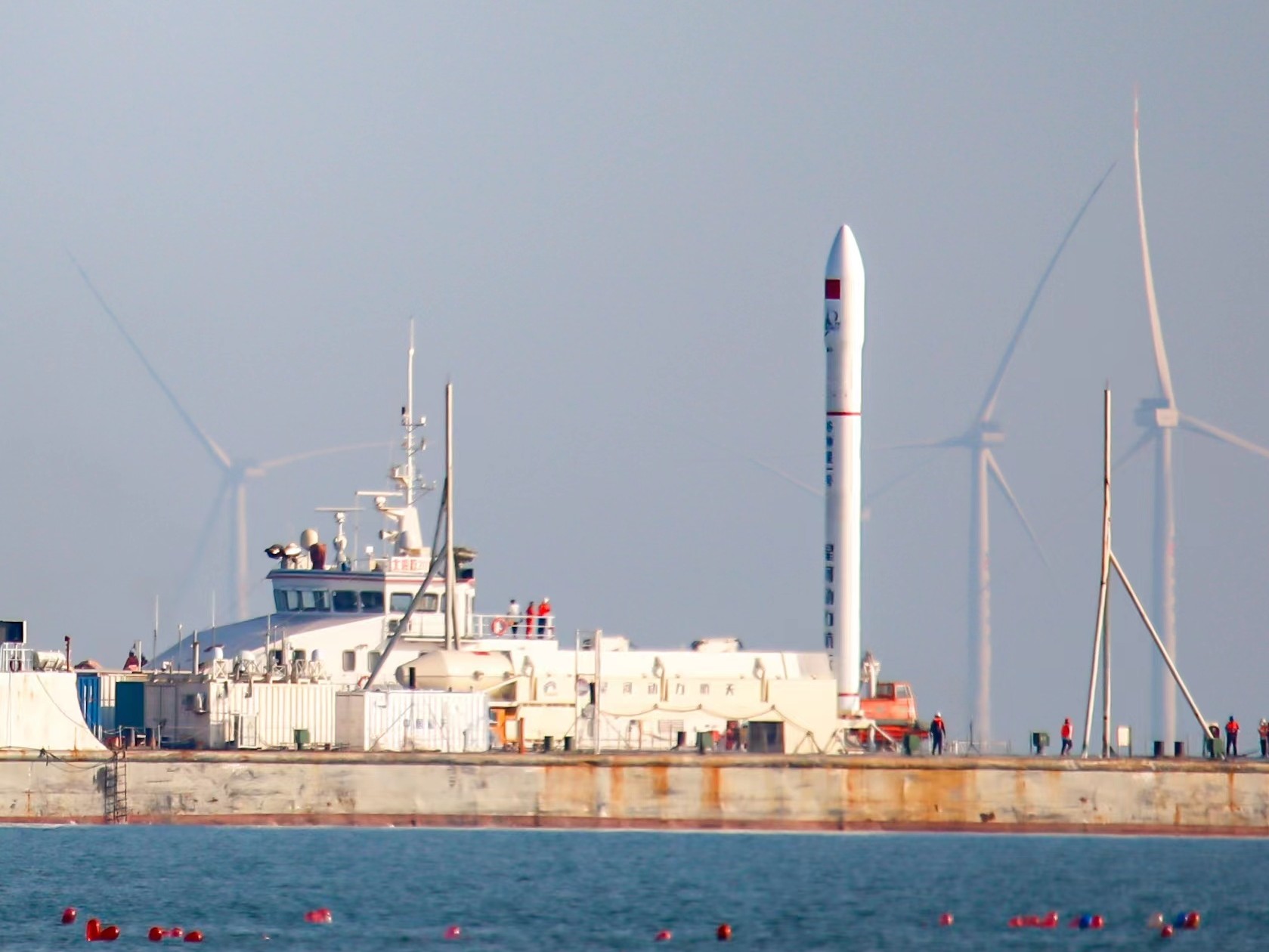
About the Ceres-1S
Ceres-1S
The Ceres-1S is a small solid-fueled orbital launch vehicle developed and operated by Galactic Energy (銀河航天), a Chinese commercial launch company founded in 2018. It is a member of the Ceres-1 family and is optimized for the deployment of multiple small satellites in a single mission, serving the growing demand for constellation replenishment and rideshare services in low Earth orbit.
Development and Design
Ceres-1S builds on the heritage of the original Ceres-1, which became one of China's first commercially developed rockets to reach orbit. The "S" variant is understood to represent a configuration tailored for multi-satellite batch launches, reflecting the shift in the commercial small-satellite market toward rapid, affordable constellation deployment. Like its predecessor, the vehicle relies on solid propulsion across its lower stages, a design choice that simplifies handling and reduces turnaround time compared to liquid-fueled alternatives. It is capable of delivering up to 350 kg to low Earth orbit, placing it firmly in the small-lift category alongside other vehicles targeting the burgeoning smallsat industry.
Launch Operations
Ceres-1S launches from sites in China and has established itself as a reliable workhorse for high-cadence constellation builds. The vehicle's track record in this website's flight log spans 2023 to 2026, during which it completed six flights without a single failure or partial failure — a perfect success rate that underscores both the maturity of Galactic Energy's operations and the relative simplicity afforded by a solid-fueled architecture.
Mission History
The vehicle's manifest has been dominated by missions serving Tianqi, a narrowband Internet of Things satellite constellation operated by Commsat. Successive batches — Tianqi 16–18 & 20, Tianqi 21–24, Tianqi 25–28, Tianqi 33–36, and Tianqi 37–40 — were each delivered on dedicated Ceres-1S flights, demonstrating the rocket's suitability as a dedicated constellation-replenishment launcher. A sixth mission carried a payload described simply as six satellites, consistent with the vehicle's multi-satellite rideshare role.
The regularity of these Tianqi missions illustrates a broader trend in the commercial space industry: constellation operators increasingly favor dedicated small-lift vehicles that can guarantee orbital slots and inclinations on a predictable schedule, rather than waiting for rideshare slots on larger rockets. Ceres-1S has positioned itself as a reliable partner for exactly this kind of programmatic launch demand.
Significance
Galactic Energy's Ceres-1S represents a meaningful contribution to China's rapidly maturing commercial launch sector. Its unblemished record across six missions and its clear specialization in batch satellite deployment distinguish it within the competitive small-lift market. As IoT and remote-sensing constellations continue to expand, vehicles like the Ceres-1S — capable of frequent, affordable, and reliable multi-satellite deliveries — are expected to play an increasingly central role in the global launch landscape.