Ceres-1
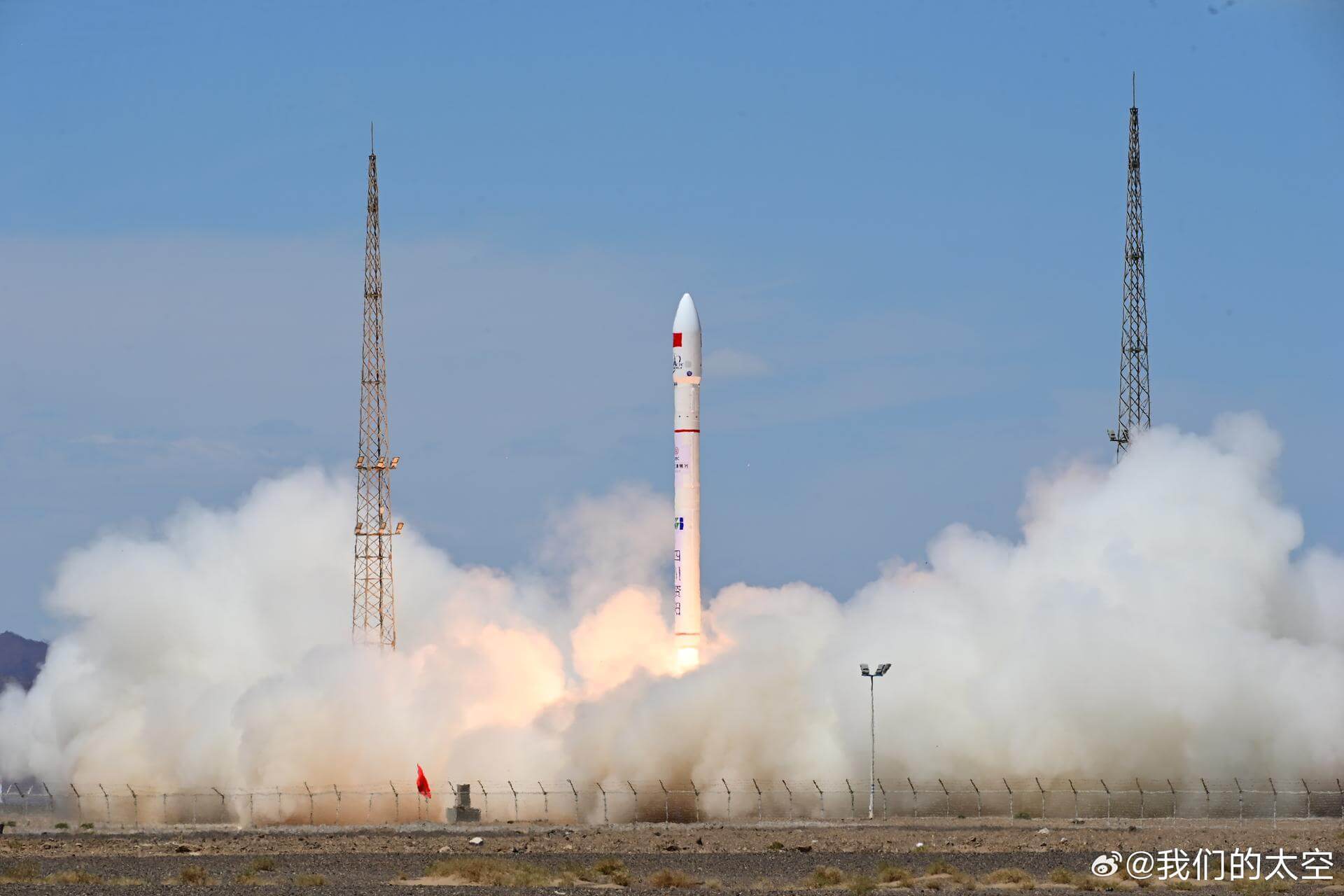
About the Ceres-1
Ceres-1
Ceres-1 (谷神星一号, *Gǔshénxīng Yī Hào*) is a small solid-fueled orbital launch vehicle developed and operated by Galactic Energy (星河动力, *Xīnghé Dònglì*), a Beijing-based Chinese commercial launch company. It stands as one of the earliest Chinese commercial rockets to reach orbit, and its sustained operational record has established Galactic Energy as a notable player in the growing market for dedicated small-satellite launch services.
Development and Design
Ceres-1 is a four-stage rocket, with the first three stages powered by solid propellant and a liquid-propellant upper stage providing fine orbital insertion control. This configuration is characteristic of vehicles optimized for responsiveness and simplicity, as solid motors require less pre-launch preparation than fully liquid-fueled systems. The rocket is capable of delivering up to 350 kg to low Earth orbit, placing it firmly in the small-lift category alongside other dedicated smallsat launchers. Its design prioritizes affordability and reliability for commercial constellation customers.
Operational History
Ceres-1 made its debut in November 2020, becoming one of the first commercial Chinese rockets to successfully reach orbit. Since then, the vehicle has compiled an impressive operational record, with 17 flights tracked between 2020 and 2025, of which 15 were fully successful and 2 resulted in failure or partial failure. This success rate reflects a maturing vehicle that has undergone refinement across its flight history.
The rocket launches from Jiuquan Satellite Launch Center in the Gobi Desert, one of China's established state-run launch facilities made available to commercial operators. The choice of Jiuquan provides access to a range of orbital inclinations suitable for Earth observation and remote sensing missions.
Customers and Payloads
Galactic Energy's primary customer base has centered on commercial Earth observation constellations, with missions frequently carrying multiple smallsats on a single flight. Recent missions in the tracked record include multi-satellite deployments such as the Jilin-1 High Resolution-04C mission, the Yunyao-1 43–48 cluster, and several grouped launches carrying 3, 5, and 8 satellites respectively. These rideshare and dedicated constellation-replenishment flights highlight the rocket's role as a workhorse for Chinese commercial remote sensing operators seeking affordable, timely access to orbit.
Significance
Ceres-1 occupies a meaningful place in the broader story of China's commercial space sector. Its first successful orbital flight in 2020 demonstrated that privately funded Chinese companies could compete technically with state enterprises, and its continued cadence of launches has helped validate the business case for domestic commercial launch services. With a growing manifest and a demonstrated ability to handle multi-satellite deployments efficiently, Ceres-1 remains an active and relevant vehicle in the small-lift segment of the global launch market as of 2025.
- Nov 10, 2025Ceres-1 | Jilin-1 High Resolution-04C and othersFailure
- Sep 05, 2025Ceres-1 | 3 satellitesSuccess
- Mar 21, 2025Ceres-1 | Yunyao-1 43-48Success
- Mar 17, 2025Ceres-1 | 8 satellitesSuccess
- Jan 20, 2025Ceres-1 | 5 satellitesSuccess
- Jun 06, 2024Ceres-1 | 3 satellitesSuccess
- May 30, 2024Ceres-1 | 5 satellitesSuccess
- Dec 04, 2023Ceres-1 | Tianyan-16 & Starpool-01ASuccess
- Sep 21, 2023Ceres-1 | Jilin-1 High Resolution 04BFailure
- Aug 25, 2023Ceres-1 | Jilin-1 Wideband-02ASuccess
- Aug 10, 2023Ceres-1 | 7 satellitesSuccess
- Jul 22, 2023Ceres-1 | Qiankun-1 & Xingshidai‐16Success
- Jan 09, 2023Ceres-1 | 5 satellitesSuccess
- Nov 16, 2022Ceres-1 | Jilin-1 High Resolution 03D-08, 51 to 54Success
- Aug 09, 2022Ceres-1 | Taijing-1-01 & 02Success
- Dec 07, 2021Ceres-1 | Golden Bauhinia 1-03 & othersSuccess
- Nov 07, 2020Ceres-1 | Tianqi-11Success