Black Arrow
About the Black Arrow
Black Arrow
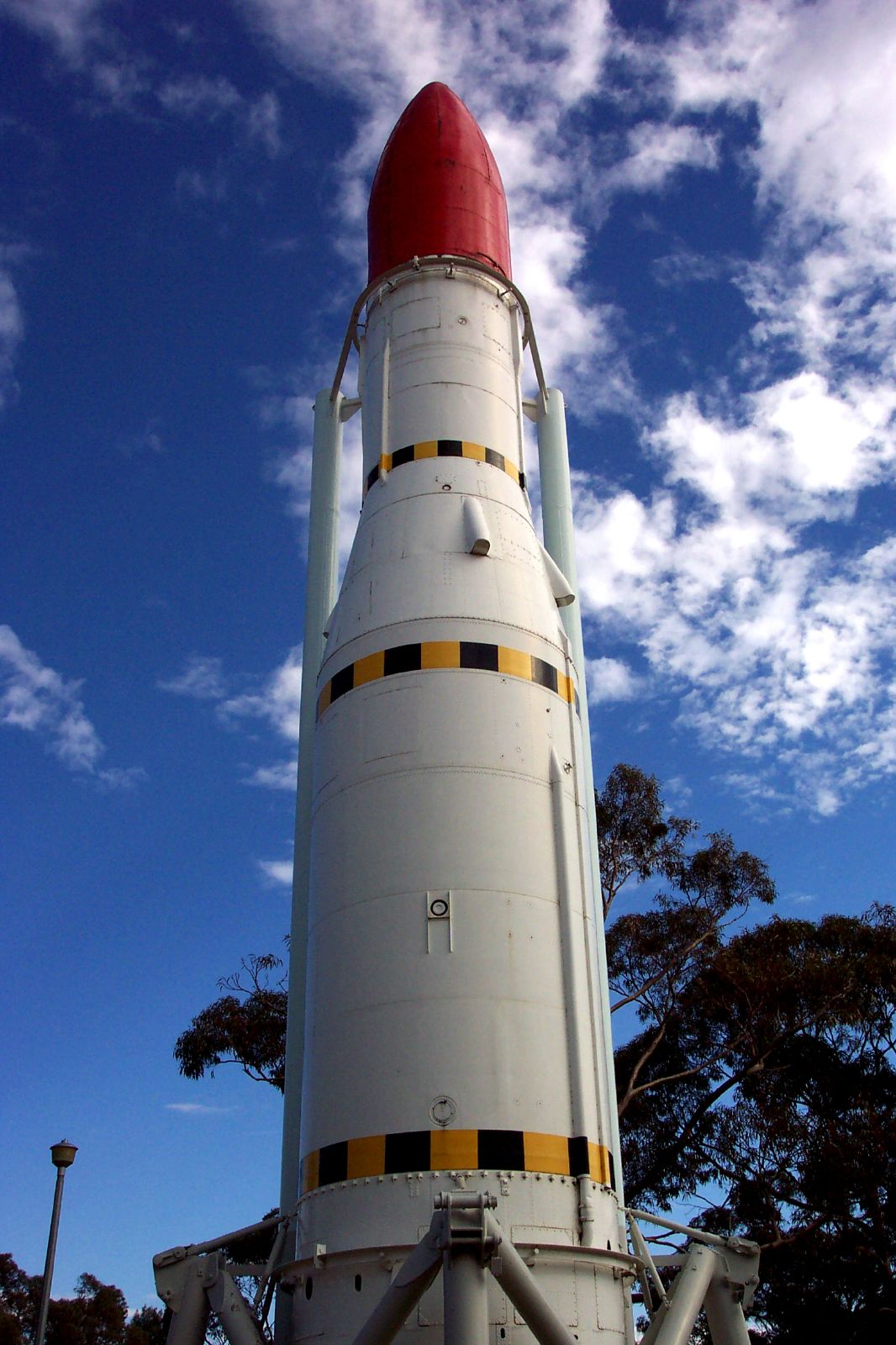
Black Arrow is a British orbital launch vehicle developed and operated by the Royal Aircraft Establishment (RAE) on behalf of the United Kingdom government. Designed and manufactured by Saunders-Roe (later British Hovercraft Corporation) and built in England, it holds a singular place in spaceflight history as the only launch vehicle to have placed a satellite into orbit under the British flag.
Background and Development
Black Arrow emerged from a broader British rocketry programme of the 1960s, drawing on propulsion and engineering work conducted under earlier efforts such as the Black Knight ballistic research rocket. The vehicle used a combination of hydrogen peroxide and kerosene propellants — an unusual pairing that reflected British expertise developed through the preceding decade of rocketry research. Standing 13 metres tall with a diameter of 2 metres, Black Arrow was a compact, three-stage vehicle designed to deliver modest payloads to low Earth orbit, with a rated capacity of 135 kilograms.
All launches were conducted from Woomera, the Anglo-Australian joint launch facility in South Australia, which served as the United Kingdom's primary rocket test range during this era.
Flight Record
Our tracking data covers two Black Arrow flights, spanning the years 1970 to 1971, with one success and one failure or partial failure recorded across that period.
The two missions on record are Black Arrow | X-2 and Black Arrow | Prospero. The latter — carrying the Prospero satellite for the Royal Aircraft Establishment — represents the programme's crowning achievement. Launched in October 1971, Prospero became the first and, to date, only British satellite to be placed in orbit by a British rocket. The X-2 mission, which preceded it, did not achieve its objectives, underscoring the technical difficulty of developing an indigenous orbital capability with limited resources.
The Royal Aircraft Establishment stands as the top customer in our data, reflecting the programme's character as a government-directed scientific and technological endeavour rather than a commercial enterprise.
Significance and Cancellation
Black Arrow occupies a complicated place in the history of spaceflight. Even as the Prospero mission succeeded, the programme had already been cancelled by the British government earlier in 1971, a decision driven by cost considerations and a policy shift toward reliance on American launch services. The United Kingdom thus became the sixth nation to independently orbit a satellite — and the only one to subsequently abandon that capability voluntarily.
The vehicle's small size and modest payload capacity reflected both the constrained budgets under which it was developed and the relatively focused scientific mission it was intended to serve. Despite flying only a handful of times across its entire development and operational history, Black Arrow demonstrated that the United Kingdom possessed the technical foundation to sustain an independent space launch capability.
Legacy
Though short-lived, Black Arrow remains a point of national pride and a subject of ongoing interest among space historians and enthusiasts. The Prospero satellite, placed into a long-lived orbit, continues to circle the Earth to this day — a lasting memorial to a programme that achieved its goal just as the decision to end it was being made.