Atlas V 531
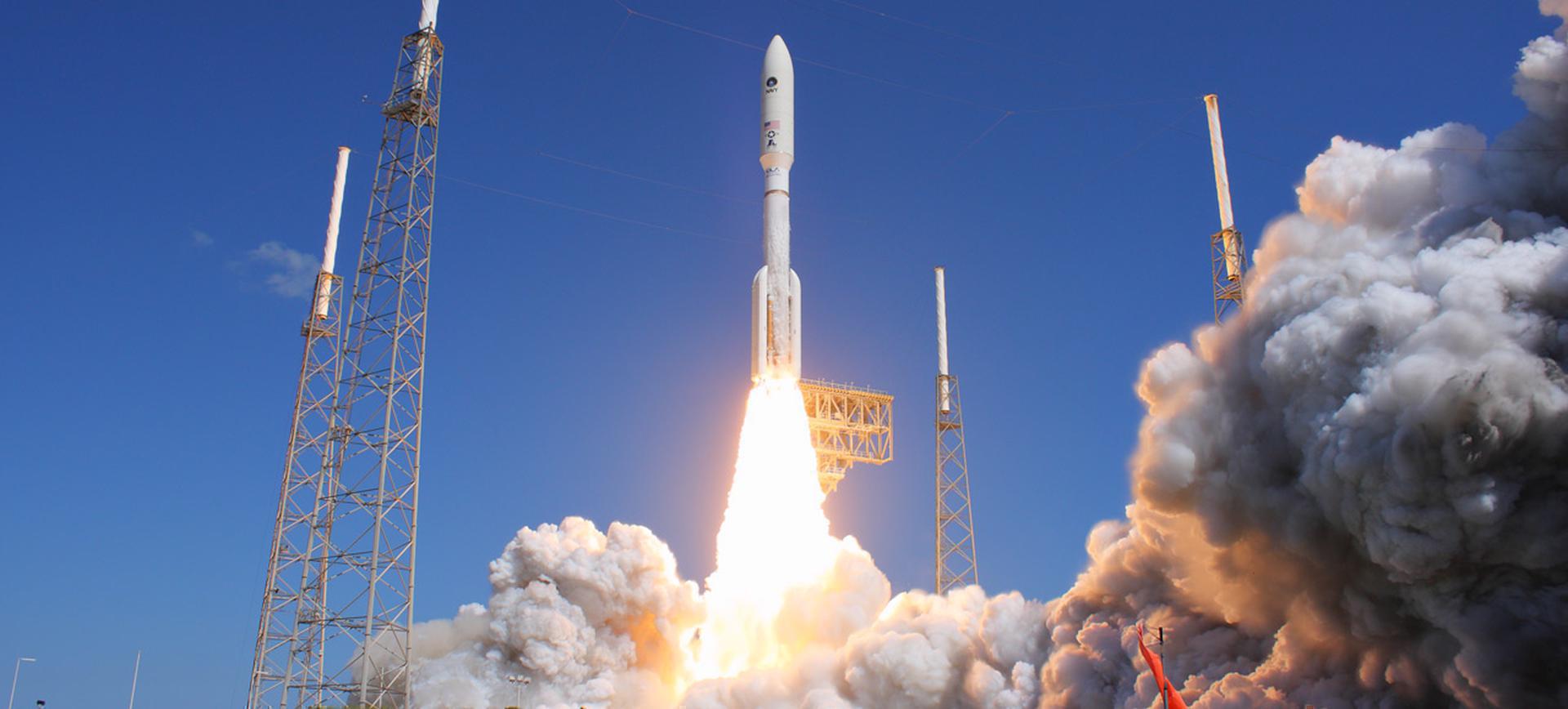
About the Atlas V 531
Atlas V 531
The Atlas V 531 is a medium-to-heavy-lift expendable orbital launch vehicle operated by United Launch Alliance (ULA), an American launch services joint venture between Boeing and Lockheed Martin. It is a member of the broader Atlas V family, one of the most reliable and widely-used rocket families in the history of American spaceflight. Like all Atlas V variants, the 531 launches from Cape Canaveral Space Force Station in Florida and, for certain missions, from Vandenberg Space Force Base in California.
Configuration and Designation
The three-digit designation "531" follows the standard Atlas V numbering convention. The first digit, 5, indicates the 5-meter-diameter payload fairing. The second digit, 3, means the vehicle flies with three solid rocket boosters (SRBs) attached to the first stage, providing additional thrust at liftoff. The third digit, 1, denotes a single-engine Centaur upper stage. This configuration places the 531 on the heavier end of the Atlas V lineup, capable of delivering 15,530 kg to low Earth orbit and 7,450 kg to geostationary transfer orbit. The vehicle stands 60 meters tall with a core diameter of 3.8 meters.
The asymmetric arrangement of three solid boosters is a distinctive characteristic of the 531. Unlike configurations with an even number of SRBs, the three-booster layout requires active thrust-vector control adjustments during ascent to compensate for the off-axis forces introduced by the asymmetric burn.
Flight History
Our tracking data records five flights of the Atlas V 531 configuration, spanning the years 2010 to 2022, all of which were successful. This perfect track record reflects both the reliability of the Atlas V platform and the demanding, high-value nature of the missions it carried.
The most prominent payloads flown on the 531 were the Advanced Extremely High Frequency (AEHF) communications satellites for the United States Space Force. AEHF-1 (USA-214), AEHF-2 (USA-235), and AEHF-3 (USA-246) were each delivered by the 531, making this configuration the dedicated workhorse for that critical national security program. The AEHF satellites provide highly secure, jam-resistant communications for U.S. and allied military forces, and their size and mass requirements made the 531 a natural fit.
The NROL-101 mission, operated on behalf of the National Reconnaissance Office, further demonstrated the configuration's value to government intelligence and defense customers.
The final recorded flight was the commercial SES-20 & SES-21 mission in 2022, which delivered a pair of telecommunications satellites for Luxembourg-based operator SES, showcasing the 531's ability to serve both government and commercial markets.
Role and Legacy
The Atlas V 531 occupies a specialized niche within the Atlas V family — powerful enough to handle large classified and military payloads, yet flexible enough for commercial geostationary missions. Its consistent record of success on high-stakes national security payloads cemented its reputation as a dependable configuration within the broader Atlas V program, which itself remains one of the defining launch vehicles of the early twenty-first century.