Atlas V 501
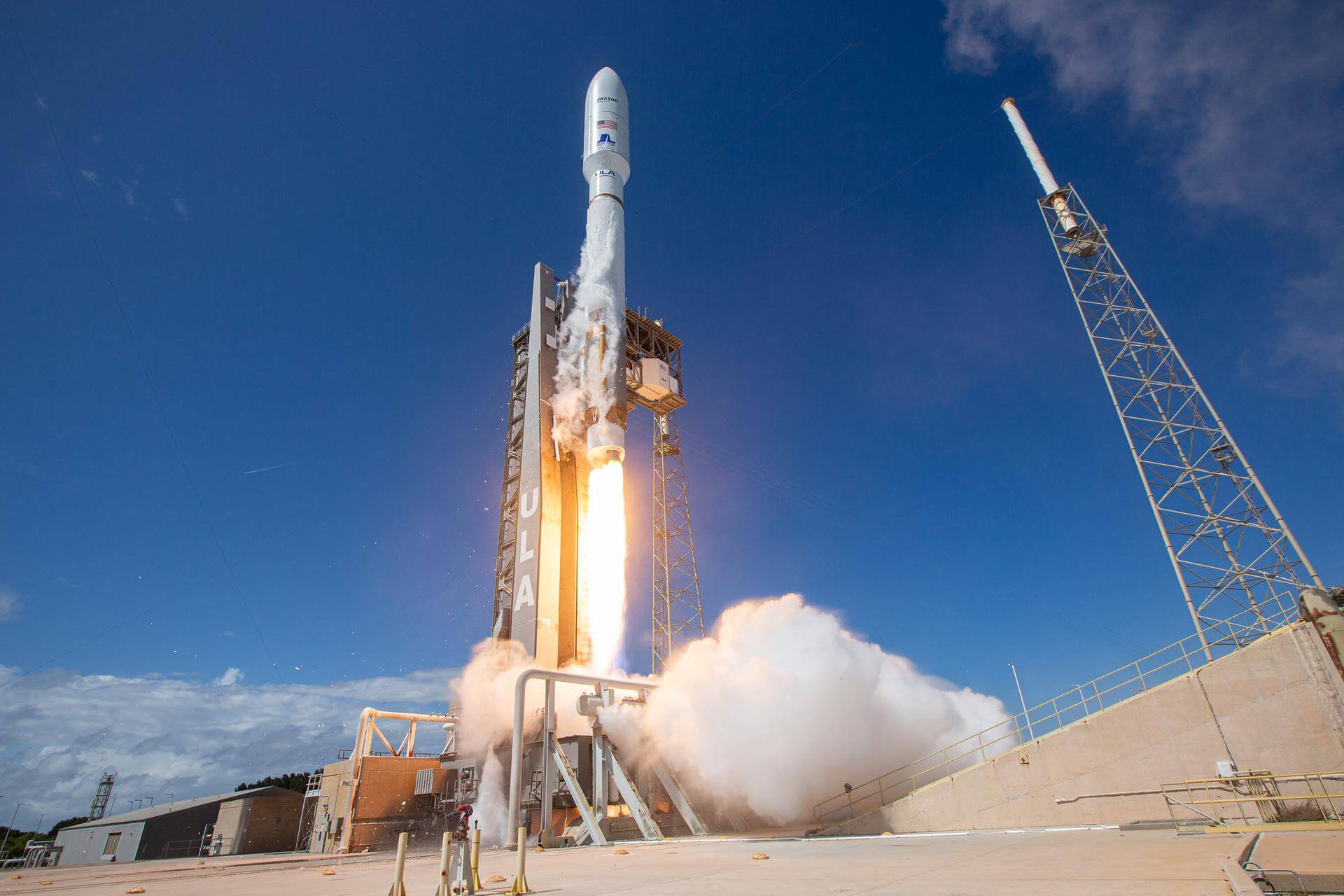
About the Atlas V 501
Atlas V 501
The Atlas V 501 is an American orbital launch vehicle operated by United Launch Alliance (ULA), a joint venture between Boeing and Lockheed Martin. It represents a specific configuration within the broader Atlas V family, which has served as one of the United States' most reliable medium-to-heavy lift launch systems since the early 2000s. Atlas V vehicles launch from Space Launch Complex 41 at Cape Canaveral Space Force Station in Florida, and have been used extensively for both government and commercial satellite missions.
Configuration and Design
The "501" designation follows the Atlas V's standardized naming convention, where the three digits encode the vehicle's configuration: a 5-meter payload fairing, zero solid rocket boosters, and one Centaur upper stage engine. This places the 501 among the lighter configurations in the Atlas V lineup, relying entirely on its liquid-fueled booster and a single-engine Centaur for propulsion rather than augmenting liftoff thrust with strap-on solids. The vehicle stands 58.3 meters tall with a core diameter of 3.8 meters, and is capable of delivering up to 8,210 kg to low Earth orbit and 3,780 kg to geostationary transfer orbit.
The large 5-meter fairing that gives this configuration its first digit provides generous volume for bulky spacecraft, making the 501 well-suited to payloads that are physically large but not necessarily the heaviest a launch vehicle might carry.
Flight History
In the flight record tracked here, the Atlas V 501 flew 8 times between 2010 and 2023, achieving a perfect success rate across all missions. This unblemished record is consistent with the broader Atlas V family's reputation for reliability, which made it a preferred vehicle for high-value national security and government science payloads.
The 501 configuration became closely associated with the U.S. Air Force and Space Force's X-37B Orbital Test Vehicle (OTV) program. No fewer than four of its tracked flights carried the X-37B spaceplane: OTV-2, OTV-3, OTV-4, and OTV-6. The X-37B missions were notable for their extended orbital durations and classified objectives, and the consistent use of the 501 configuration highlighted the vehicle's suitability for this particular spacecraft's size and mass characteristics. The OTV-4 mission also carried the ULTRASat cubesat deployer as a secondary payload.
Other significant missions included NROL-39, a classified National Reconnaissance Office payload, and the Amazon Project Kuiper Protoflight Mission in 2023, which demonstrated the Atlas V 501's continued relevance late in its operational life by supporting the early validation of Amazon's broadband satellite constellation.
Legacy and Operator
ULA managed all Atlas V 501 launches, reflecting the company's dominant role in U.S. government launch services throughout the 2010s. The Atlas V family as a whole was phased toward retirement as ULA transitioned its manifest to the next-generation Vulcan Centaur rocket. The 501 configuration's final tracked mission in 2023 marked the close of a thirteen-year operational window that demonstrated consistent performance across some of the most demanding and sensitive missions in American spaceflight.
- Oct 06, 2023Atlas V 501 | Amazon Leo (Project Kuiper) Protoflight MissionSuccess
- May 17, 2020Atlas V 501 | OTV-6 (X-37B) (USSF-7)Success
- May 20, 2015Atlas V 501 | OTV-4 (X-37B) (USA 261) (AFSPC-5) & ULTRASat cubesat deployerSuccess
- Dec 06, 2013Atlas V 501 | NROL-39 (USA-247)Success
- Dec 11, 2012Atlas V 501 | OTV-3 (X-37B) (USA-240)Success
- Mar 05, 2011Atlas V 501 | OTV-2 (X-37B) (USA-226)Success
- Sep 21, 2010Atlas V 501 | NROL-41 (USA-215)Success
- Apr 22, 2010Atlas V 501 | OTV-1 (X-37B) (USA 212)Success