Atlas V 431
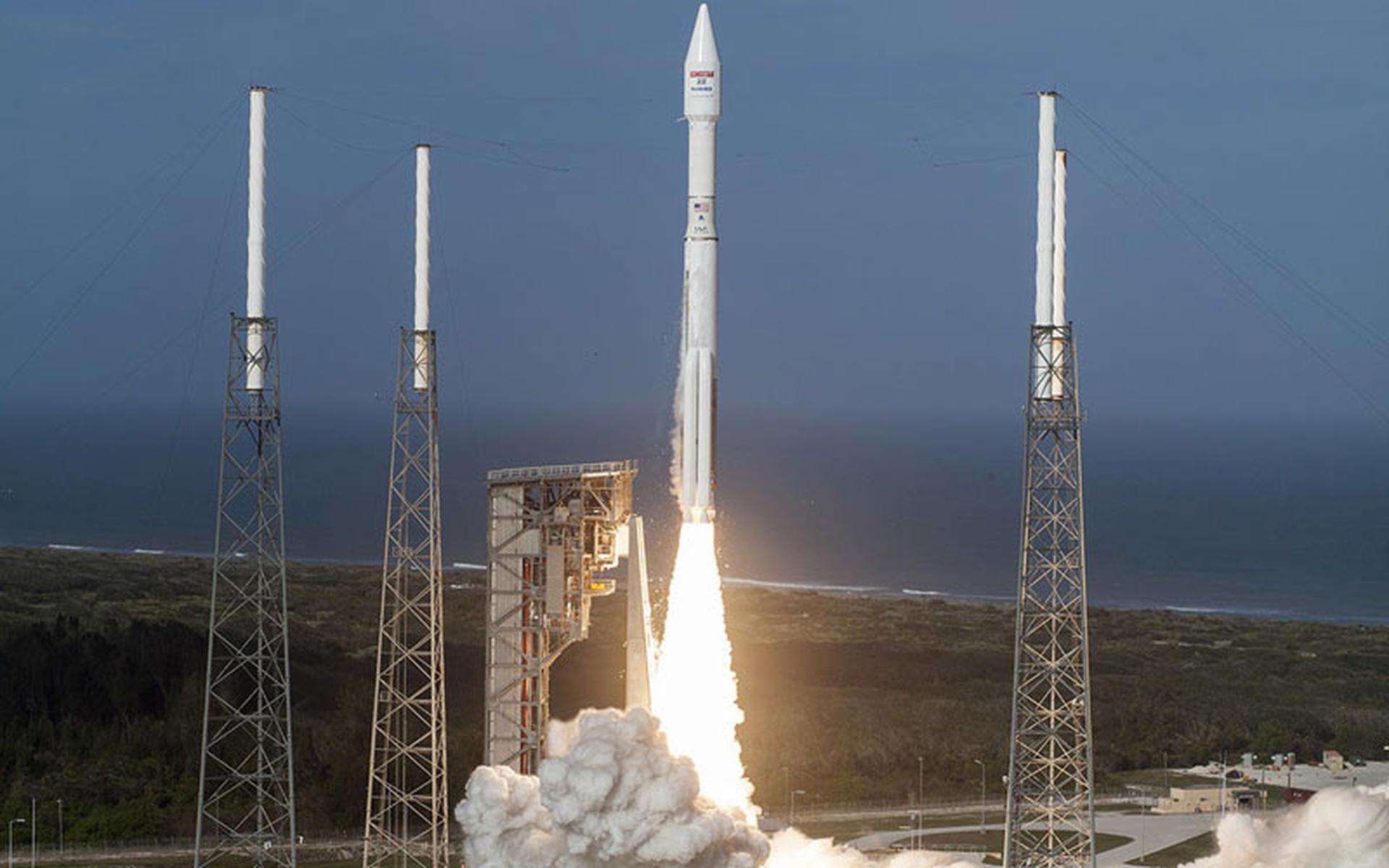
About the Atlas V 431
Atlas V 431
The Atlas V 431 is an American orbital launch vehicle operated by United Launch Alliance (ULA) and manufactured by Lockheed Martin, belonging to the highly versatile Atlas V family. Developed as part of the United States Air Force's Evolved Expendable Launch Vehicle (EELV) program, the Atlas V line was designed to provide reliable, flexible access to orbit for both government and commercial payloads.
Configuration and Design
The 431 designation follows the standard Atlas V naming convention, where each digit describes a specific configuration. The first digit — 4 — indicates the use of a four-meter-diameter payload fairing. The second digit — 3 — denotes three solid rocket boosters (SRBs) attached to the first stage, providing additional thrust at liftoff. The third digit — 1 — specifies a single-engine Centaur upper stage. This combination makes the 431 a mid-to-heavy lift variant, positioned toward the more capable end of the Atlas V spectrum without reaching the full power of configurations using five boosters.
Standing 59.1 meters tall with a core diameter of 3.8 meters, the Atlas V 431 presents a capable and well-proportioned vehicle. It is rated to deliver up to 15,260 kg to low Earth orbit (LEO) and up to 7,700 kg to geostationary transfer orbit (GTO), making it well suited to the demanding mass requirements of large commercial communications satellites. Launches have taken place from Space Launch Complex 41 at Cape Canaveral, Florida, one of the most storied launch facilities in American spaceflight history.
Flight History
Within our tracking records, the Atlas V 431 flew three times between 2005 and 2016, achieving a perfect success rate across all three missions. This flawless record reflects both the maturity of the Atlas V platform and the rigorous launch preparation standards maintained by United Launch Alliance.
The vehicle's missions were concentrated in the commercial satellite sector. Notable launches include INMARSAT 4 F1, one of the largest and most advanced mobile communications satellites of its era at the time of launch; Intelsat 14, a high-capacity telecommunications spacecraft serving broadcast and broadband customers; and EchoStar 19 (Jupiter-2), a high-throughput broadband satellite operated by EchoStar. These payloads highlight the 431 configuration's particular suitability for heavy geostationary communications satellites, which demand high GTO delivery capacity and reliable upper-stage performance from the Centaur.
Lockheed Martin and United Launch Alliance were the top customers associated with this variant in our data, reflecting the close relationship between the Atlas V's manufacturer and the operators who brought it to market.
Legacy and Context
The Atlas V 431 occupies a specific and deliberate niche within the broader Atlas V family, which offered an unusually wide range of configurations to match diverse mission requirements. The ability to fly with one, two, three, or even five solid boosters gave operators fine-grained control over performance, and the 431 in particular struck a balance between lift capability and configuration complexity. Though flown relatively infrequently compared to more common variants, its three-for-three success record and the commercial significance of its payloads cement its role as a reliable and effective workhorse within the Atlas V legacy.