Atlas V 421
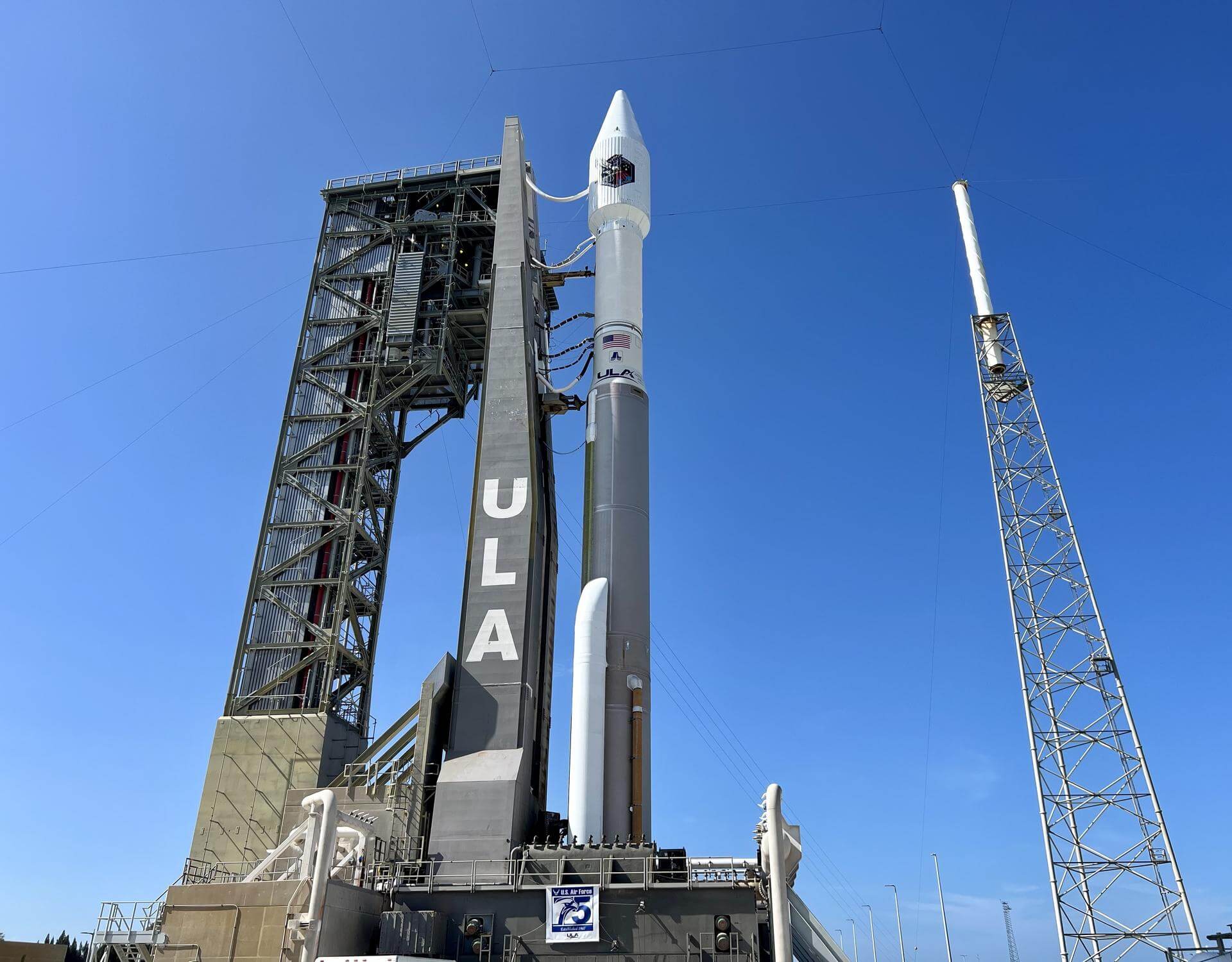
About the Atlas V 421
Atlas V 421
The Atlas V 421 is a medium-to-heavy orbital launch vehicle operated by United Launch Alliance (ULA), an American launch services provider formed as a joint venture between Boeing and Lockheed Martin. It belongs to the broader Atlas V family, one of the most reliable American expendable rockets of the early 21st century, and represents a specific configuration within that family's modular design system.
Configuration and Design
The Atlas V rocket family uses a naming convention that encodes its configuration: the first digit indicates the diameter of the payload fairing in meters, the second digit the number of solid rocket boosters, and the third the number of engines on the Centaur upper stage. The 421 designation therefore describes a vehicle flying with a 4-meter payload fairing, two solid rocket boosters, and a single-engine Centaur upper stage. Standing 58.3 meters tall with a core diameter of 3.8 meters, the 421 occupies a middle tier within the Atlas V lineup, offering meaningful augmentation over the baseline 401 configuration without scaling to the heavier 500-series fairings.
The rocket's first stage is powered by a Russian-built RD-180 engine burning RP-1 (refined kerosene) and liquid oxygen, while the Centaur upper stage uses a RL-10 engine burning liquid hydrogen and liquid oxygen — a combination well regarded for its efficiency in delivering payloads to high-energy orbits. The two Aerojet solid rocket boosters provide additional thrust during the critical early phase of ascent.
Flight History
According to tracked flight data, the Atlas V 421 conducted 9 launches between 2007 and 2022, all of which were successful, giving the configuration a perfect mission record. The vehicle is capable of delivering up to 14,067 kg to low Earth orbit and 6,890 kg to geostationary transfer orbit, making it well suited for mid-sized government and communications satellites.
Its mission manifest reflects a strong orientation toward national security and government payloads. Notable flights include multiple missions in the Space Based Infrared System (SBIRS) program — SBIRS GEO-5 and SBIRS GEO-6, both missile-warning satellites operated by the U.S. Space Force — as well as classified National Reconnaissance Office payloads under the NROL-52 and NROL-61 designations. The vehicle also supported international civil space with the launch of Mexsat-2 (Morelos III), a Mexican communications satellite, and contributed to NASA science with a mission supporting the Magnetospheric Multiscale (MMS) campaign, which studies Earth's magnetosphere.
Role and Legacy
The Atlas V 421 exemplifies the flexibility that made the Atlas V family a cornerstone of American launch capability for nearly two decades. By allowing customers to tailor performance to mission requirements through modular booster and fairing combinations, ULA was able to serve a diverse range of government and commercial clients from launch sites including Space Launch Complex 41 at Cape Canaveral. The 421 configuration's unblemished record across its nine tracked flights underscores the broader Atlas V program's reputation for consistency and reliability throughout its operational life.
- Aug 04, 2022Atlas V 421 | SBIRS GEO-6Success
- May 18, 2021Atlas V 421 | SBIRS GEO-5Success
- Oct 15, 2017Atlas V 421 | NROL-52Success
- Jul 28, 2016Atlas V 421 | NROL-61Success
- Oct 02, 2015Atlas V 421 | Mexsat-2 (Morelos III)Success
- Mar 13, 2015Atlas V 421 | MMSSuccess
- Apr 04, 2009Atlas V 421 | WGS-2Success
- Apr 14, 2008Atlas V 421 | ICO G1Success
- Oct 11, 2007Atlas V 421 | WGS-1Success