Atlas V 401
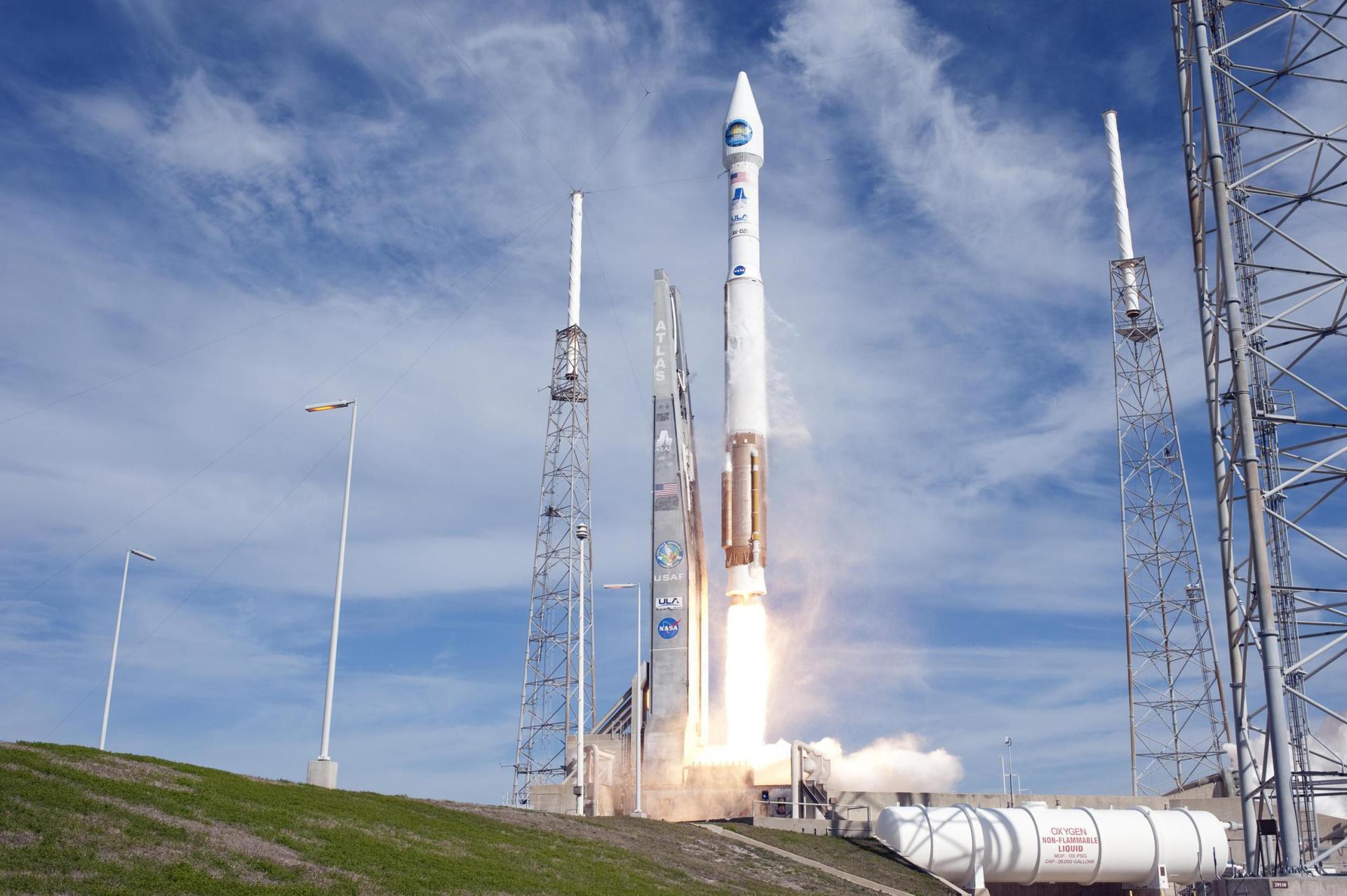
About the Atlas V 401
Atlas V 401
The Atlas V 401 is an American orbital launch vehicle operated by United Launch Alliance (ULA), a joint venture between Lockheed Martin and Boeing. It represents the baseline configuration of the broader Atlas V family, which was developed by Lockheed Martin and first flew in 2002. The 401 designation reflects its core architecture: a four-meter payload fairing, zero solid rocket boosters attached to the first stage, and a single-engine Centaur upper stage. Standing 58.3 meters tall with a diameter of 3.8 meters, it is a mid-sized vehicle well suited to a wide range of civil, commercial, and government missions.
Configuration and Capability
The "401" configuration is the simplest and most frequently flown variant within the Atlas V family. Without strap-on solid rocket boosters, it relies entirely on its liquid-fueled Common Core Booster and the Centaur upper stage to deliver payloads to orbit. This configuration can lift up to 9,050 kg to low Earth orbit (LEO) and 4,950 kg to geostationary transfer orbit (GTO), making it a capable workhorse for moderate-mass payloads. The Centaur upper stage, long associated with the Atlas family, is well regarded for its precision and ability to perform multiple restarts, enabling a broad variety of injection orbits.
Flight History
Across our tracking data, the Atlas V 401 recorded 41 flights between 2002 and 2022, achieving a perfect success rate with no failures or partial failures logged. This reliability made it a preferred choice for high-value government science and Earth observation missions, where mission assurance is paramount.
Its manifest includes a notably diverse and prestigious roster of payloads. Among the most prominent is the InSight Mars lander, which launched alongside the twin Mars Cube One (MarCO) CubeSats — the first interplanetary CubeSats ever flown. The vehicle also lofted Lucy, a NASA Discovery-class mission designed to explore Jupiter's Trojan asteroids. Earth science was well represented through missions such as Landsat 9, a cornerstone of the long-running Landsat program, and JPSS-2 (Joint Polar Satellite System-2), which flew alongside the experimental LOFTID atmospheric decelerator demonstrator. In human spaceflight support, the 401 variant carried the Cygnus CRS OA-7 cargo spacecraft — named the *S.S. John Glenn* — to the International Space Station, as well as the TDRS-M communications relay satellite for NASA's Tracking and Data Relay Satellite System.
Role and Legacy
The Atlas V 401 earned a reputation as one of the most dependable configurations in the American launch vehicle inventory during the early twenty-first century. Its consistent performance across planetary science, Earth observation, communications, and cargo resupply missions demonstrated the flexibility of the platform. ULA served as the primary operator throughout its active service life, with Lockheed Martin playing a foundational role in the vehicle's heritage and development.
By the early 2020s, the broader Atlas V program was winding down as ULA transitioned toward its next-generation Vulcan Centaur rocket. The Atlas V 401's unblemished record across four decades of spaceflight activity stands as a defining chapter in American expendable launch vehicle history.
- Nov 10, 2022Atlas V 401 | JPSS 2 (Joint Polar Satellite System spacecraft No. 2) & LOFTIDSuccess
- Oct 16, 2021Atlas V 401 | LucySuccess
- Sep 27, 2021Atlas V 401 | Landsat 9Success
- May 05, 2018Atlas V 401 | InSight, Mars Cube One 1 & Mars Cube One 2Success
- Aug 18, 2017Atlas V 401 | TDRS-MSuccess
- Apr 18, 2017Atlas V 401 | Cygnus CRS OA-7 (S.S. John Glenn)Success
- Mar 01, 2017Atlas V 401 | NROL-79Success
- Jan 21, 2017Atlas V 401 | SBIRS GEO Flight 3 (SBIRS GEO-4)Success
- Nov 11, 2016Atlas V 401 | WorldView-4Success
- Mar 23, 2016Atlas V 401 | Cygnus CRS OA-6 (S.S. Rick Husband)Success
- Feb 05, 2016Atlas V 401 | GPS IIF-12 (USA-266)Success
- Dec 06, 2015Atlas V 401 | Cygnus CRS Orb-4 (S.S. Deke Slayton II)Success
- Oct 31, 2015Atlas V 401 | GPS IIF-11 (USA-265)Success
- Oct 08, 2015Atlas V 401 | NROL-55 (Multipayload mission)Success
- Jul 15, 2015Atlas V 401 | GPS IIF-10 (USA-262)Success
- Oct 29, 2014Atlas V 401 | GPS IIF-8 (USA-258)Success
- Sep 17, 2014Atlas V 401 | CLIO (USA-257)Success
- Aug 13, 2014Atlas V 401 | WorldView-3Success
- Aug 02, 2014Atlas V 401 | GPS IIF-7 (USA-256)Success
- May 22, 2014Atlas V 401 | NROL-33 (Quasar)Success
- Apr 03, 2014Atlas V 401 | DMSP-5D3 F19Success
- Jan 24, 2014Atlas V 401 | TDRS-LSuccess
- Nov 18, 2013Atlas V 401 | MAVENSuccess
- May 15, 2013Atlas V 401 | GPS IIF-4 (USA-242)Success
- Mar 19, 2013Atlas V 401 | SBIRS GEO Flight 2 (USA-241) (SBIRS GEO-2)Success
- Feb 11, 2013Atlas V 401 | Landsat 8 (DCM)Success
- Jan 31, 2013Atlas V 401 | TDRS-KSuccess
- Sep 13, 2012Atlas V 401 | NROL-36 (Multipayload mission)Success
- Aug 30, 2012Atlas V 401 | Radiation Belt Storm Probe ASuccess
- Jun 20, 2012Atlas V 401 | NROL-38 (SDS) (USA-236)Success
- May 07, 2011Atlas V 401 | SBIRS GEO Flight 1 (USA-230) (SBIRS GEO-1)Success
- Feb 11, 2010Atlas V 401 | SDO (Solar Dynamics Observatory)Success
- Oct 18, 2009Atlas V 401 | DMSP-5D3 F18 (USA-210)Success
- Sep 08, 2009Atlas V 401 | PAN (USA-207)Success
- Jun 18, 2009Atlas V 401 | LRO/LCROSSSuccess
- Dec 10, 2007Atlas V 401 | NROL-24 (USA-198)Success
- Jun 15, 2007Atlas V 401 | NROL-30 & NOSS-3 (USA-194)Success
- Mar 09, 2007Atlas V 401 | STP-1Success
- Aug 12, 2005Atlas V 401 | Mars Reconnaissance OrbiterSuccess
- May 13, 2003Atlas V 401 | Hellas Sat 2Success
- Aug 21, 2002Atlas V 401 | Hot Bird 6Success