Atlas IIIB
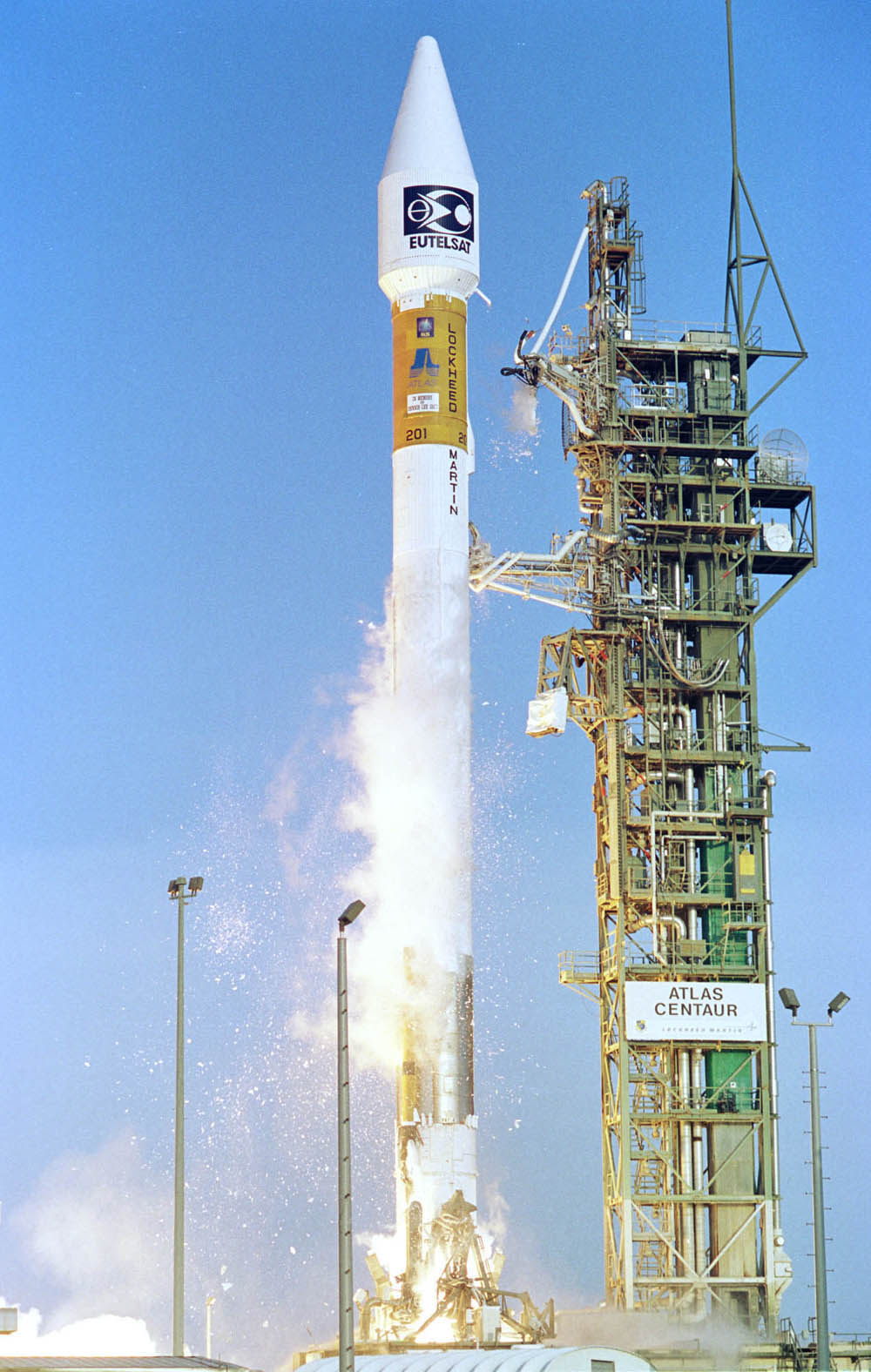
About the Atlas IIIB
Atlas IIIB
The Atlas IIIB is an American expendable orbital launch vehicle developed and operated by Lockheed Martin, serving as an intermediate member of the long-running Atlas rocket family. Launched from Space Launch Complex 36 at Cape Canaveral Air Force Station in Florida, the Atlas IIIB represented a significant transitional step in the Atlas lineage, bridging the legacy Atlas II series and the more capable Atlas V that followed.
Development and Design
The Atlas III family introduced the Russian RD-180 engine to American launch vehicles — a two-thrust-chamber, single-nozzle engine developed by NPO Energomash that replaced the older American engines used in previous Atlas variants. The Atlas IIIB in particular distinguished itself from the shorter Atlas IIIA by incorporating a dual-engine Centaur upper stage, which provided enhanced performance and greater flexibility for delivering payloads to a range of orbits. Standing 52.8 meters tall with a diameter of 3.05 meters, the vehicle presented a slender, capable profile consistent with the Atlas family's traditional design philosophy. Its performance envelope extended to 10,218 kg to low Earth orbit and 4,498 kg to geostationary transfer orbit, making it well suited for heavier commercial and government satellites.
Flight History
Our records show the Atlas IIIB flew four times, spanning the years 2002 to 2005, with a perfect success rate across all four missions. This unblemished record speaks to the reliability of the vehicle's systems and the maturity of its operational profile by the time it entered service.
Lockheed Martin was the dominant customer for the Atlas IIIB, reflecting the close relationship between the vehicle's operator and the commercial and government satellite market of the early 2000s. The manifest included a mix of commercial communications satellites and classified national security payloads.
Among the notable missions were Echostar VII and Asiasat 4, both commercial communications satellites that demonstrated the vehicle's competitiveness in the commercial GTO launch market. UHF F/O F11 was a United States Navy communications satellite, while NROL-23 represented a classified mission for the National Reconnaissance Office — illustrating the Atlas IIIB's dual role serving both commercial operators and the national security community.
Role and Legacy
The Atlas IIIB occupied a relatively brief but productive place in the history of American spaceflight. Its short operational window reflected the rapid pace of development during this period; even as the Atlas IIIB was flying, Lockheed Martin was preparing the far more capable and modular Atlas V, which would supersede it. The Atlas III series as a whole served as the critical proving ground for the RD-180 engine in an American operational context, validating the engine's performance and reliability before it was entrusted to the higher-volume Atlas V program.
Though modest in total flight count, the Atlas IIIB's four missions were executed without a single failure, cementing its reputation as a dependable workhorse during the transitional era of American commercial and government launch services in the early twenty-first century.