Atlas IIIA
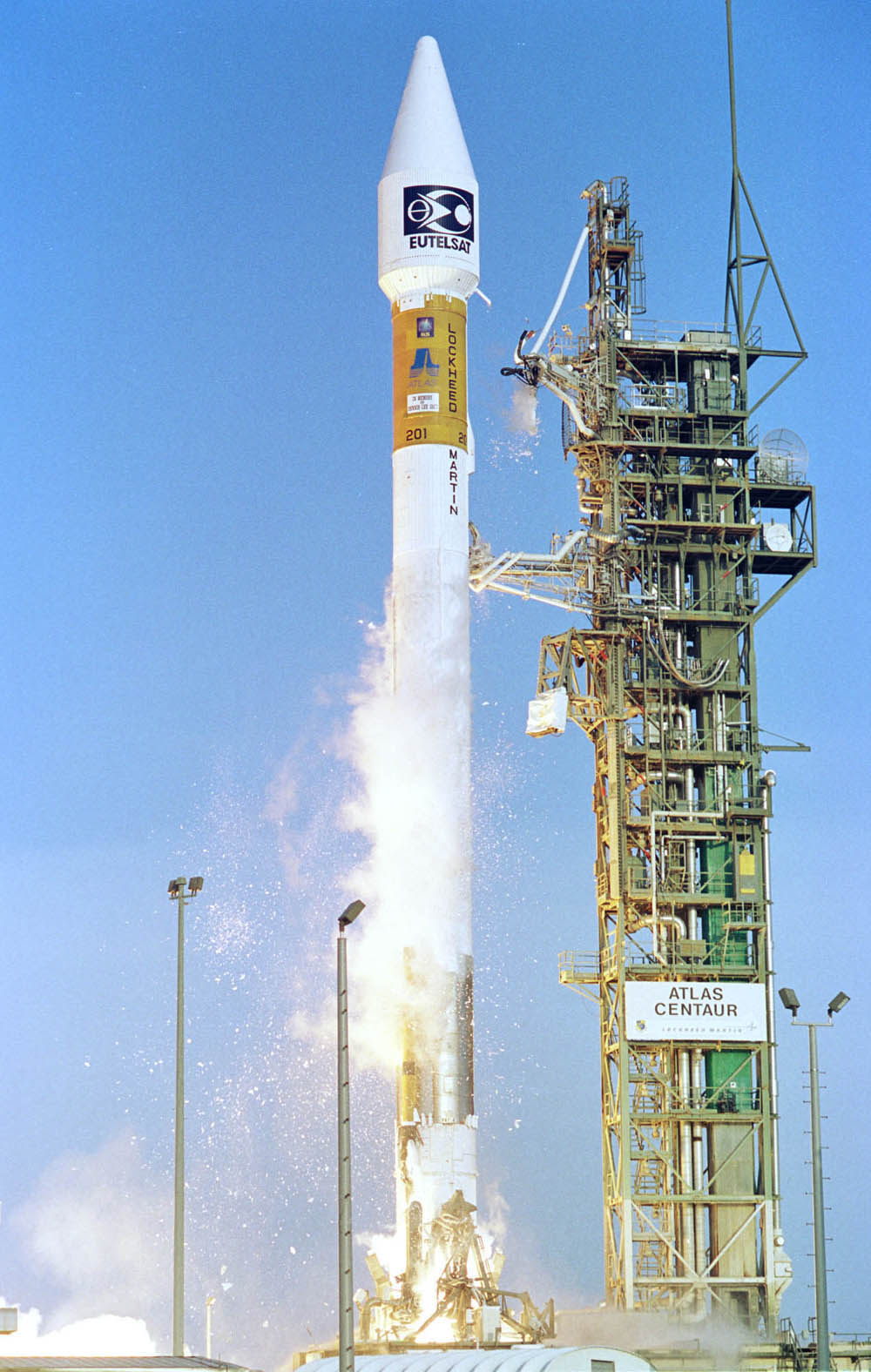
About the Atlas IIIA
Atlas IIIA
The Atlas IIIA is an American expendable orbital launch vehicle developed and operated by Lockheed Martin, representing a significant transitional step in the long-running Atlas rocket family. Bridging the older Atlas II series and the more advanced Atlas V, the Atlas III line introduced a fundamentally redesigned first stage propulsion system that set the direction for subsequent American medium-to-heavy lift vehicles.
Origins and Design
The Atlas IIIA emerged from Lockheed Martin's effort to modernize the Atlas architecture in the late 1990s. Its most notable change from earlier Atlas variants was the adoption of the Russian RD-180 engine on the first stage — a high-performance two-thrust-chamber kerolox engine licensed from NPO Energomash. This replaced the legacy MA-series engine cluster that had defined Atlas rockets for decades, including the distinctive "stage-and-a-half" booster arrangement. The Atlas IIIA retained a single Centaur upper stage powered by a single RL-10 engine, a configuration that distinguished it from the later Atlas IIIB, which flew with a stretched, dual-engine Centaur. Standing 52.8 meters tall with a diameter of 3.05 meters, the vehicle presented a streamlined profile suited to the medium-to-heavy commercial launch market.
Launch Record
Our flight record documents two flights of the Atlas IIIA, both conducted successfully, giving the vehicle a perfect success rate. Operations spanned from 2000 to 2004, a relatively brief but clean operational career. The vehicle was capable of delivering up to 8,640 kg to low Earth orbit and 4,055 kg to geostationary transfer orbit, figures that made it competitive for the commercial communications satellite market that dominated the launch industry during that era.
Customers and Missions
The Atlas IIIA served a narrow but notable customer base, with Lockheed Martin standing as the top customer in our tracked data. The two recorded missions reflect the vehicle's primary commercial orientation: Eutelsat W4, a European communications satellite providing television and data services, and MBSAT, a mobile broadcasting satellite serving Japan and South Korea. Both payloads were destined for geostationary orbit, underscoring the Atlas IIIA's role as a dedicated workhorse for high-value commercial telecommunications spacecraft.
Launch Site and Operations
Atlas III launches were conducted from Cape Canaveral Air Force Station in Florida, continuing a tradition stretching back to the earliest Atlas flights of the 1950s. The Eastern Range provided the trajectory flexibility needed for the geostationary transfer orbits that the vehicle's payloads required.
Legacy
Although its operational lifespan was short and the number of flights modest, the Atlas IIIA played an important role in validating the RD-180 engine in American service — a qualification effort that proved essential for the subsequent Atlas V, which went on to become one of the most prolific and reliable launch vehicles in American history. In this sense, the Atlas IIIA was less a vehicle defined by its own flight volume and more a critical stepping stone that demonstrated new propulsion technology under real operational conditions, ensuring the long-term competitiveness of the Atlas family into the twenty-first century.