Atlas IIA
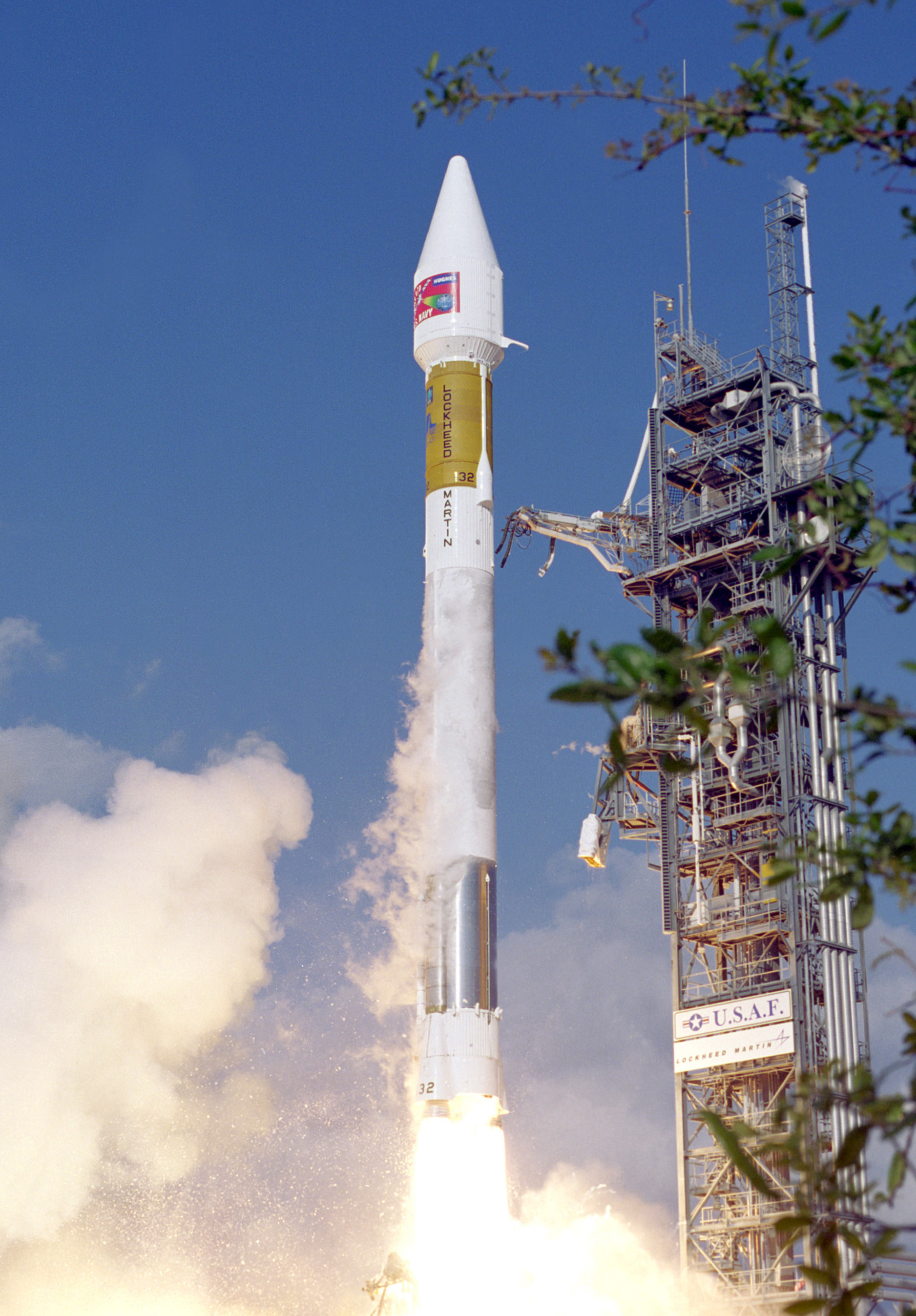
About the Atlas IIA
Atlas IIA
The Atlas IIA is an American expendable orbital launch vehicle developed and operated by Lockheed Martin as part of the long-running Atlas rocket family. A member of the Atlas II series, it was designed to provide reliable medium-lift capability for both government and commercial satellite missions, serving as a workhorse of the United States launch industry through the 1990s and into the early 2000s.
Development and Design
The Atlas IIA is an evolution of the baseline Atlas II, incorporating improved Centaur upper stage engines and enhanced performance over its predecessor. Standing 47.54 meters tall with a diameter of 3.04 meters, the vehicle maintains the distinctive architecture of the Atlas lineage, including its pressure-stabilized propellant tanks. It is capable of delivering 6,580 kg to low Earth orbit and 2,810 kg to geostationary transfer orbit, making it well-suited for the medium-class communications and government satellites that dominated its manifest. Launches were conducted from Cape Canaveral Air Force Station in Florida.
Operational History
The Atlas IIA entered service in 1992 and flew its final mission in 2002, spanning a decade of active operations. Across that period, our flight record tracks 23 flights, all of which were successful — a record that speaks to the vehicle's exceptional reliability and the maturity of the Atlas II design. This unblemished success rate made the Atlas IIA a trusted choice for high-value payloads where mission assurance was paramount.
The vehicle's customer base was dominated by Lockheed Martin and the United States Air Force, reflecting its strong position in both commercial and national security launch markets. Among its most prominent missions were multiple flights in support of critical government satellite constellations.
Notable Missions
The Atlas IIA's manifest included several high-profile missions for key national infrastructure programs. The vehicle launched multiple satellites in the TDRS (Tracking and Data Relay Satellite) series — including TDRS 8, TDRS 9, and TDRS 10 — which form the backbone of NASA's space communications network. It also orbited GOES 11 and GOES 12, geostationary weather satellites operated by NOAA that provided vital meteorological data for North America. The DSCS-3 B11 mission further highlighted the rocket's role in supporting U.S. military communications infrastructure.
Legacy
The Atlas IIA occupies a significant place in the broader story of American spaceflight. Its consistent performance helped cement the Atlas II family's reputation as one of the most dependable medium-lift vehicles of its era. The missions it supported — spanning weather monitoring, space communications, and national defense — demonstrate the breadth of capability that reliable, proven launch vehicles provide. The Atlas IIA was eventually succeeded by more advanced variants in the Atlas family, which continued evolving toward the Atlas V, still operational today under United Launch Alliance.
- Dec 05, 2002Atlas IIA | TDRS 10Success
- Mar 08, 2002Atlas IIA | TDRS 9Success
- Jul 23, 2001Atlas IIA | GOES 12Success
- Oct 20, 2000Atlas IIA | DSCS-3 B11Success
- Jun 30, 2000Atlas IIA | TDRS 8Success
- May 03, 2000Atlas IIA | GOES 11Success
- Jan 21, 2000Atlas IIA | DSCS-3 B8Success
- Nov 23, 1999Atlas IIA | UHF F/O F10Success
- Oct 20, 1998Atlas IIA | UHF F/O F9Success
- Oct 09, 1998Atlas IIA | Hot Bird 5Success
- Jan 29, 1998Atlas IIA | NROL-5Success
- Oct 25, 1997Atlas IIA | DSCS-3 B13Success
- Mar 08, 1997Atlas IIA | Tempo 2Success
- Dec 18, 1996Atlas IIA | INMARSAT III F-3Success
- Nov 21, 1996Atlas IIA | Hot Bird 2Success
- Sep 08, 1996Atlas IIA | GE 1Success
- Apr 03, 1996Atlas IIA | INMARSAT III F-1Success
- Dec 15, 1995Atlas IIA | Galaxy 3RSuccess
- Jul 31, 1995Atlas IIA | DSCS-3 B7Success
- Apr 07, 1995Atlas IIA | AMSC 1Success
- Nov 29, 1994Atlas IIA | Orion 1Success
- Aug 03, 1994Atlas IIA | DirecTV 2Success
- Jun 10, 1992Atlas IIA | INTELSAT KSuccess