Atlas G Centaur
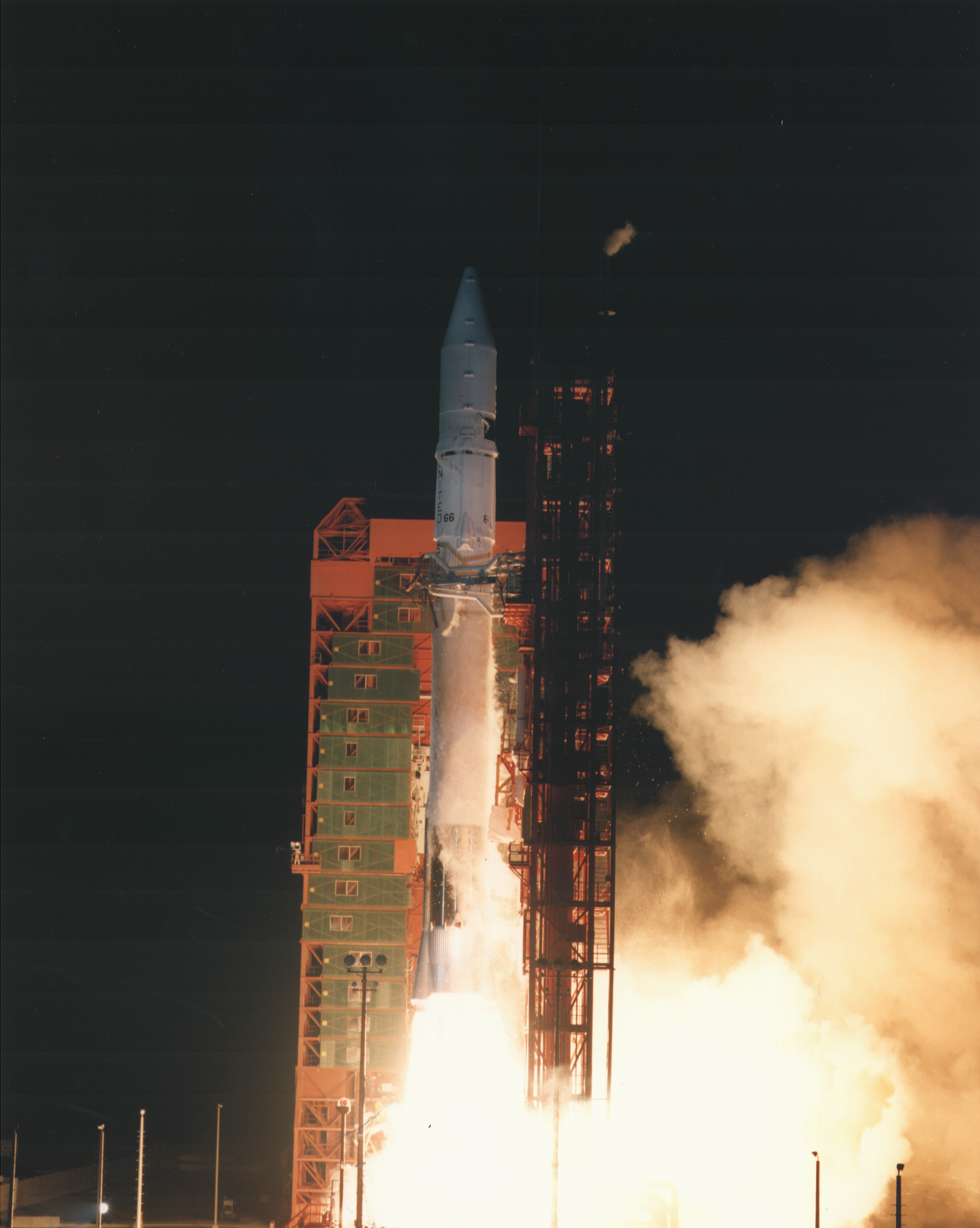
About the Atlas G Centaur
Atlas G Centaur
The Atlas G Centaur is an American expendable orbital launch vehicle developed and operated by General Dynamics as part of the long-running Atlas rocket family. A member of the Atlas-Centaur lineage, it combined an Atlas G first stage with the high-energy cryogenic Centaur upper stage, which burns liquid hydrogen and liquid oxygen to deliver payloads to geosynchronous and other high-energy orbits. The vehicle launched from Cape Canaveral Air Force Station in Florida and represented a key capability for the United States during the mid-to-late 1980s.
Design and Capability
Standing 38 meters tall with a diameter of 3.05 meters, the Atlas G Centaur followed the classic Atlas "stage-and-a-half" architecture, in which the booster engines are jettisoned during ascent while the sustainer engine continues to burn. This configuration, paired with the Centaur's high-performance upper stage, gave the vehicle the ability to lift payloads to geosynchronous transfer orbit — a trajectory well beyond the reach of most contemporary medium-lift vehicles. Its payload capacity to low Earth orbit was 3,630 kg, though its principal operational role was the delivery of heavy communications and military satellites to much higher orbits.
Operational History
The Atlas G Centaur flew between 1984 and 1989, accumulating seven tracked flights, of which six were successful and one was a failure or partial failure. This record reflects a generally reliable vehicle operating during a competitive and strategically significant era in American spaceflight.
Its most prominent customer was the United States Air Force, which used the vehicle to deploy satellites in the FLTSATCOM (Fleet Satellite Communications) series — a constellation providing secure, survivable communications for U.S. naval and military forces. Among the missions flown were FLTSATCOM F6, FLTSATCOM F7, and FLTSATCOM F8, underscoring the vehicle's importance to national defense infrastructure.
The Atlas G Centaur also served commercial customers, carrying satellites in the Intelsat 5 series — specifically Intelsat 510, Intelsat 511, and Intelsat 512 — to geosynchronous orbit on behalf of the international telecommunications consortium. These missions demonstrated the vehicle's versatility across both government and commercial mission profiles.
Legacy
The Atlas G Centaur occupied an important transitional position in the Atlas family's history. It helped sustain American launch competitiveness during a period when the Space Shuttle's commercial launch role was being reassessed following the Challenger disaster of 1986, which prompted the U.S. government to encourage a renewed reliance on expendable launch vehicles for critical payloads. The Atlas G variant was eventually succeeded by further improved Atlas configurations, but its contributions to military communications and commercial satellite deployment left a meaningful mark on the operational record of the Atlas-Centaur lineage — one of the most enduring and productive launch vehicle families in the history of spaceflight.
- Sep 25, 1989Atlas G Centaur | FLTSATCOM F8Success
- Mar 26, 1987Atlas G Centaur | FLTSATCOM F6Failure
- Dec 05, 1986Atlas G Centaur | FLTSATCOM F7Success
- Sep 28, 1985Atlas G Centaur | Intelsat 512Success
- Jun 30, 1985Atlas G Centaur | Intelsat 511Success
- Mar 22, 1985Atlas G Centaur | Intelsat 510Success
- Jun 09, 1984Atlas G Centaur | Intelsat 509Success