Astra Rocket 3
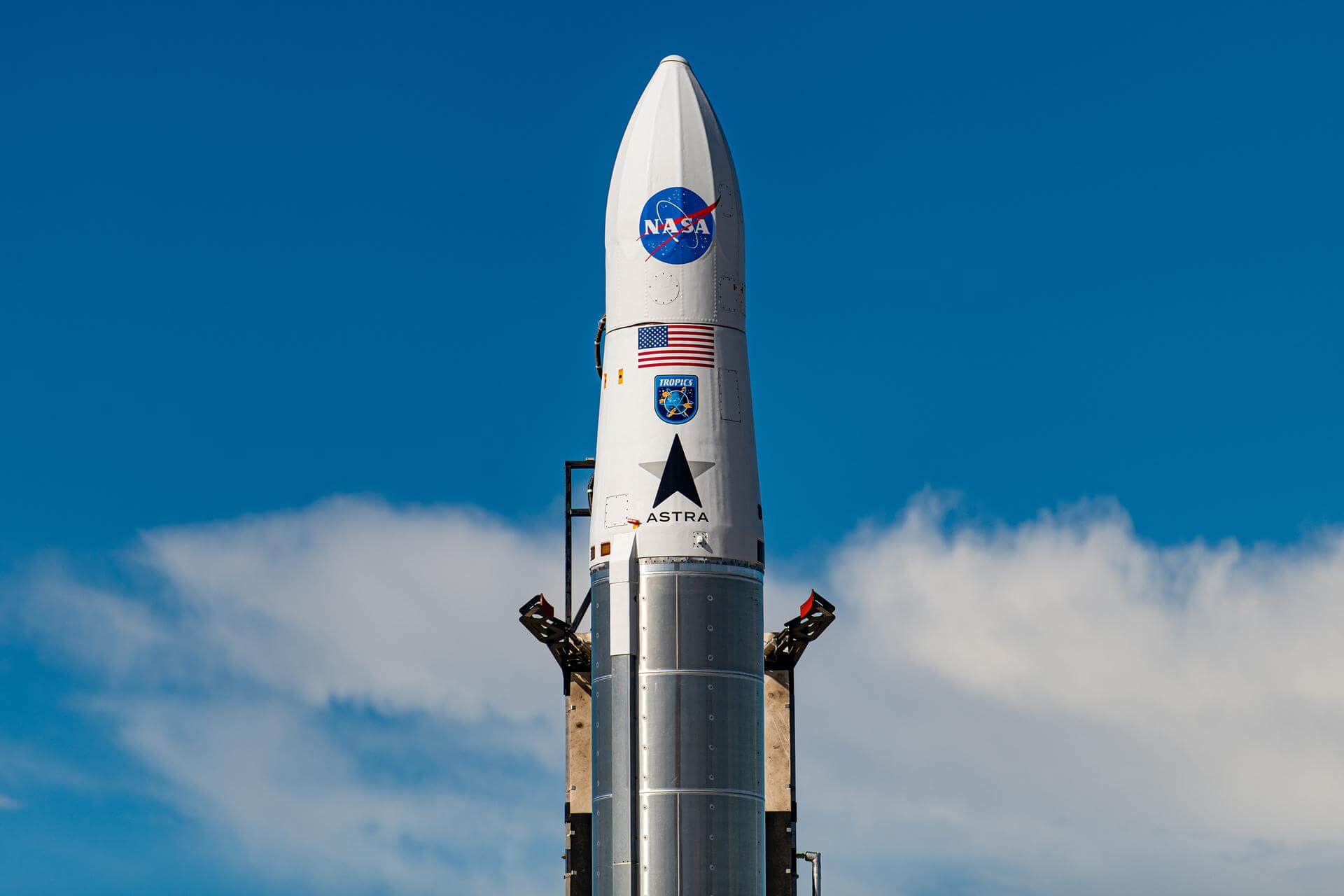
About the Astra Rocket 3
Astra Rocket 3
The Astra Rocket 3 is a small orbital launch vehicle developed and operated by Astra Space, an American launch startup headquartered in Alameda, California. Designed to deliver small payloads to low Earth orbit, the rocket represented Astra's primary attempt to establish a commercial small-satellite launch service during the early 2020s.
Design and Specifications
Rocket 3 is a notably compact vehicle by orbital launch standards, standing 11.6 meters tall with a diameter of 1.32 meters — dimensions that give it an unusually slender, almost minimalist profile compared to contemporaries in the small-launch market. It is capable of delivering up to 100 kg to low Earth orbit. Astra pursued a design philosophy emphasizing simplicity, low manufacturing cost, and rapid iteration, with the goal of producing rockets at high cadence and offering affordable rideshare and dedicated launch options to small satellite operators.
The vehicle is a two-stage liquid-propellant rocket. Astra launched Rocket 3 variants from Pacific Spaceport Complex – Alaska on Kodiak Island, taking advantage of the high-latitude launch site for polar and sun-synchronous orbit missions particularly suited to Earth observation and science payloads.
Flight History
According to tracked flight data, the Astra Rocket 3 flew seven times between 2020 and 2022, achieving two successful orbital missions while suffering five failures or partial failures. This reflect a challenging development trajectory that was unusually public, as several early test flights were streamed live and resulted in visually dramatic anomalies that drew significant attention within the spaceflight community.
Early flights under the Rocket 3.2 designation, including Flight 2, were openly experimental in nature, with Astra treating the launch campaign as an iterative hardware test program. Later missions carried real government and commercial payloads, marking the vehicle's transition toward operational service.
Notable Missions
Among the most significant missions flown on Rocket 3 were several contracted with U.S. government customers. The STP-27AD1 and STP-27AD2 missions were flown for the U.S. Space Force's Space Test Program. ELaNa 41 was a NASA Educational Launch of Nanosatellites mission, reflecting interest from the science and academic community in low-cost dedicated launch. The Spaceflight Astra-1 mission represented a commercial rideshare contract with Spaceflight Inc.
The final tracked mission, TROPICS-1, was flown for NASA as part of the Time-Resolved Observations of Precipitation structure and storm Intensity with a Constellation of Smallsats program — an Earth science constellation intended to study tropical storm systems. That mission ended in failure, leaving the TROPICS satellites undelivered.
Legacy
The Astra Rocket 3's operational period was brief, spanning only 2020 to 2022, and its reliability record ultimately proved difficult to overcome commercially. Astra Space announced a pivot away from the Rocket 3 architecture in mid-2022, choosing to focus development resources on a larger follow-on vehicle. Despite its limited success rate, Rocket 3 occupies a notable place in the history of commercial small-launch, representing one of the more aggressive public attempts to apply a rapid, iterative "fail fast" development philosophy to orbital rocketry.
- Jun 12, 2022Astra Rocket 3 | TROPICS-1Failure
- Mar 15, 2022Astra Rocket 3 | Spaceflight Astra-1Success
- Feb 10, 2022Astra Rocket 3 | ELaNa 41Failure
- Nov 20, 2021Astra Rocket 3 | STP-27AD2Success
- Aug 28, 2021Astra Rocket 3 | STP-27AD1Failure
- Dec 15, 2020Astra Rocket 3.2 | Flight 2Failure
- Sep 12, 2020Astra Rocket 3.1 | Maiden FlightFailure