Ariane 5 G
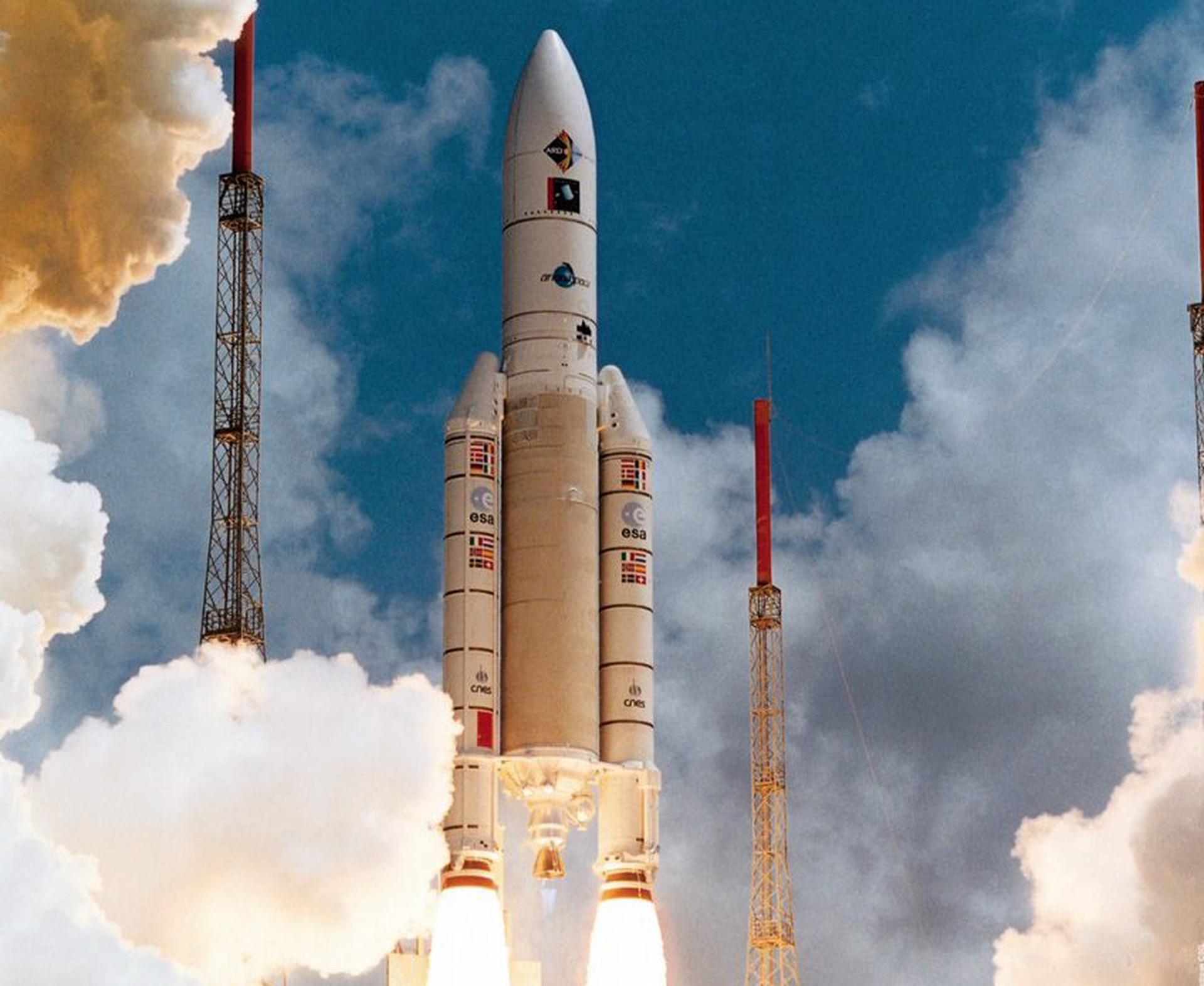
About the Ariane 5 G
Ariane 5 G+
The Ariane 5 G+ is a European expendable launch vehicle operated by Arianespace and manufactured under the direction of ArianeGroup (formerly Astrium and EADS), representing an incremental upgrade within the broader Ariane 5 family. Developed by the European Space Agency and its industrial partners, the vehicle launches from the Guiana Space Centre in Kourou, French Guiana, a site chosen for its proximity to the equator and its advantages for reaching geostationary transfer orbit.
Design and Capabilities
Standing 55 metres tall with a core diameter of 5.4 metres, the Ariane 5 G+ follows the same fundamental architecture as the baseline Ariane 5 G, pairing a cryogenic main stage burning liquid hydrogen and liquid oxygen with two solid rocket boosters. The G+ designation reflects targeted improvements over the original G variant, most notably an upgraded storable-propellant upper stage that extended performance to geostationary transfer orbit. With a rated GTO payload capacity of 7,100 kg, the G+ offered a modest but meaningful step up from its predecessor, keeping Arianespace competitive in the commercial heavy-lift market during the mid-2000s.
Flight History
Our records capture three flights of the Ariane 5 G+, all conducted during 2004 — a single, concentrated campaign that achieved a perfect success rate. Though brief, this operational window was notable for the diversity and significance of its payloads.
The variant's first tracked mission carried the Rosetta spacecraft, the European Space Agency's ambitious comet-chasing probe that would go on to become one of the most celebrated science missions in spaceflight history, ultimately rendezvousing with Comet 67P/Churyumov–Gerasimenko a decade later. A second flight lofted Anik F2, a large commercial communications satellite for Canadian operator Telesat, demonstrating the vehicle's commercial viability. The third mission was particularly notable for its complexity, delivering Helios 2A — a French military reconnaissance satellite — alongside a cluster of smaller payloads including the Essaim 1, 2, 3, and 4 microsatellites, the PARASOL Earth-observation microsatellite, and Nanosat 01, illustrating the vehicle's ability to support multi-passenger rideshare missions for institutional customers.
Role and Context
The Ariane 5 G+ served as a transitional step between the original Ariane 5 G and the substantially more capable Ariane 5 ECA variant, which introduced an upgraded cryogenic upper stage and pushed GTO performance considerably higher. While the G+ flew only briefly, its three missions in 2004 covered a broad spectrum of the launch industry's demands — deep-space science, commercial telecommunications, and defense — underscoring the versatility that made the Ariane 5 family a dominant force in commercial launch services throughout the 2000s and 2010s.
Arianespace remained the top customer for this variant, reflecting the vehicle's role as part of a coordinated European institutional and commercial launch strategy rather than a vehicle marketed widely to independent third-party operators. Its short but flawless record makes the Ariane 5 G+ a small but historically meaningful chapter in the evolution of European access to space.
- Sep 27, 2003Ariane 5 G | INSAT-3E, eBird 1, SMART-1Success
- Jun 11, 2003Ariane 5 G | Optus and Defence C1 & BSAT-2cSuccess
- Apr 09, 2003Ariane 5 G | INSAT-3A & Galaxy 12Success
- Aug 28, 2002Ariane 5 G | Atlantic Bird 1 & Meteosat 8Success
- Jul 05, 2002Ariane 5 G | Stellat 5 & N-Star CSuccess
- Mar 01, 2002Ariane 5 G | EnvisatSuccess
- Jul 12, 2001Ariane 5 G | Artemis & BSAT-2bPartial Failure
- Mar 08, 2001Ariane 5 G | Eutelsat 28A & BSAT-2aSuccess
- Dec 20, 2000Ariane 5 G | Astra 2D & GE-8, LDREXSuccess
- Nov 16, 2000Ariane 5 G | PAS-1R, Amsat P3D, STRV 1C, STRV 1DSuccess
- Sep 14, 2000Ariane 5 G | Astra 2B & GE-7Success
- Mar 21, 2000Ariane 5 G | INSAT-3B & AsiaStarSuccess
- Dec 10, 1999Ariane 5 G | XMM-NewtonSuccess
- Oct 21, 1998Ariane 5 G | MaqSat 3 & ARDSuccess
- Oct 30, 1997Ariane 5 G | MaqSat-H, TEAMSAT, MaqSat-B, YESFailure
- Jun 04, 1996Ariane 5 G | ClusterFailure