Apollo LM Ascent Stage
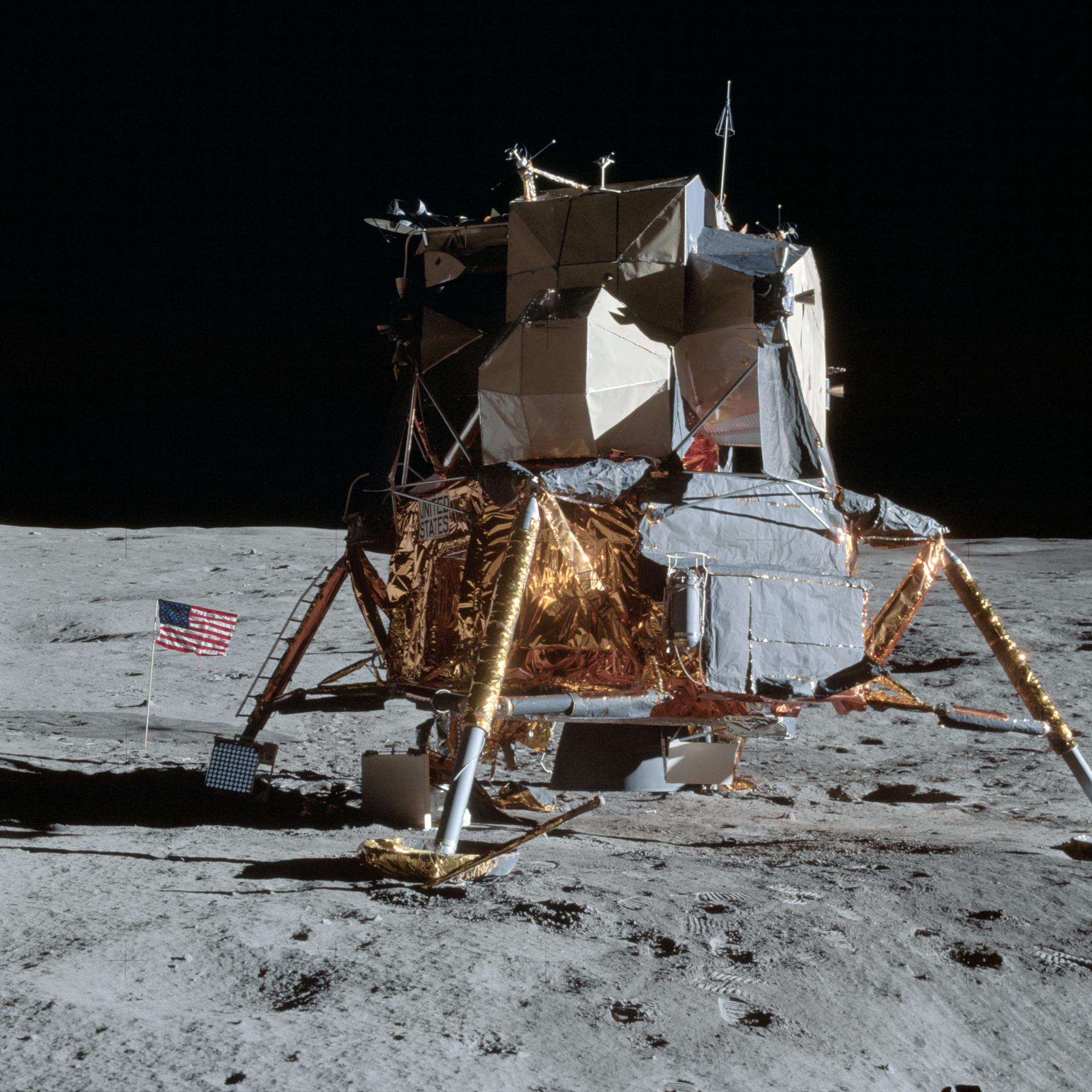
About the Apollo LM Ascent Stage
Apollo LM Ascent Stage
The Apollo Lunar Module Ascent Stage is the upper portion of NASA's Apollo Lunar Module (LM), designed to lift two astronauts from the surface of the Moon and deliver them into lunar orbit for rendezvous with the waiting Command and Service Module. Operated exclusively by the National Aeronautics and Space Administration (NASA), it represents one of the most specialized and consequential launch vehicles in the history of spaceflight — a rocket built to perform a single, irreplaceable burn in one of the most demanding environments ever attempted.
Design and Function
The ascent stage is a compact, purpose-built vehicle with a height of 2.832 meters and a diameter of 4.29 meters. Its relatively wide, squat profile reflects its unique engineering priorities: maximum structural efficiency for lunar surface operations rather than aerodynamic performance, since it operates entirely in the vacuum of space. The stage uses a single, pressure-fed engine burning hypergolic propellants — fuels that ignite on contact with each other, eliminating the need for an ignition system and maximizing reliability in an environment where there could be no second attempt.
The ascent stage sits atop the descent stage, which serves as its launch platform. At liftoff from the lunar surface, the ascent stage separates from the descent stage and fires its engine to achieve lunar orbit, carrying the crew and their collected samples. Once the crew transferred to the Command Module, the ascent stage was typically jettisoned, with some later examples deliberately crashed into the Moon to generate seismic data.
Operational History
In the database tracked here, the Apollo LM Ascent Stage recorded 6 flights between 1969 and 1972, all of which were successful. Every mission in this record returned its crew safely to lunar orbit, representing a perfect operational record under extraordinarily high-stakes conditions.
The six missions covered are among the most celebrated in human spaceflight history. Apollo 11 (1969) marked the first crewed lunar landing and the first operational use of the ascent stage, carrying Neil Armstrong and Buzz Aldrin back to orbit. Subsequent missions — Apollo 12, 14, 15, 16, and 17 — each demonstrated the system's reliability across a range of landing sites, from the flat mare plains of Oceanus Procellarum to the rugged highland terrain of the Taurus-Littrow valley.
Legacy
The Apollo LM Ascent Stage holds a unique place in the history of launch vehicles. It is the only crewed vehicle to have launched human beings from the surface of another world. Its 100% mission success rate across all tracked flights, achieved in an era of comparatively early spaceflight technology, stands as a testament to the engineering discipline and testing rigor of the Apollo program's contractors, most notably Grumman Aircraft Engineering Corporation, which built the Lunar Module.
The program concluded with Apollo 17 in December 1972, and no crewed vehicle has launched from an extraterrestrial surface since. The ascent stage remains a benchmark against which future lunar ascent systems continue to be measured.