Antares 230+
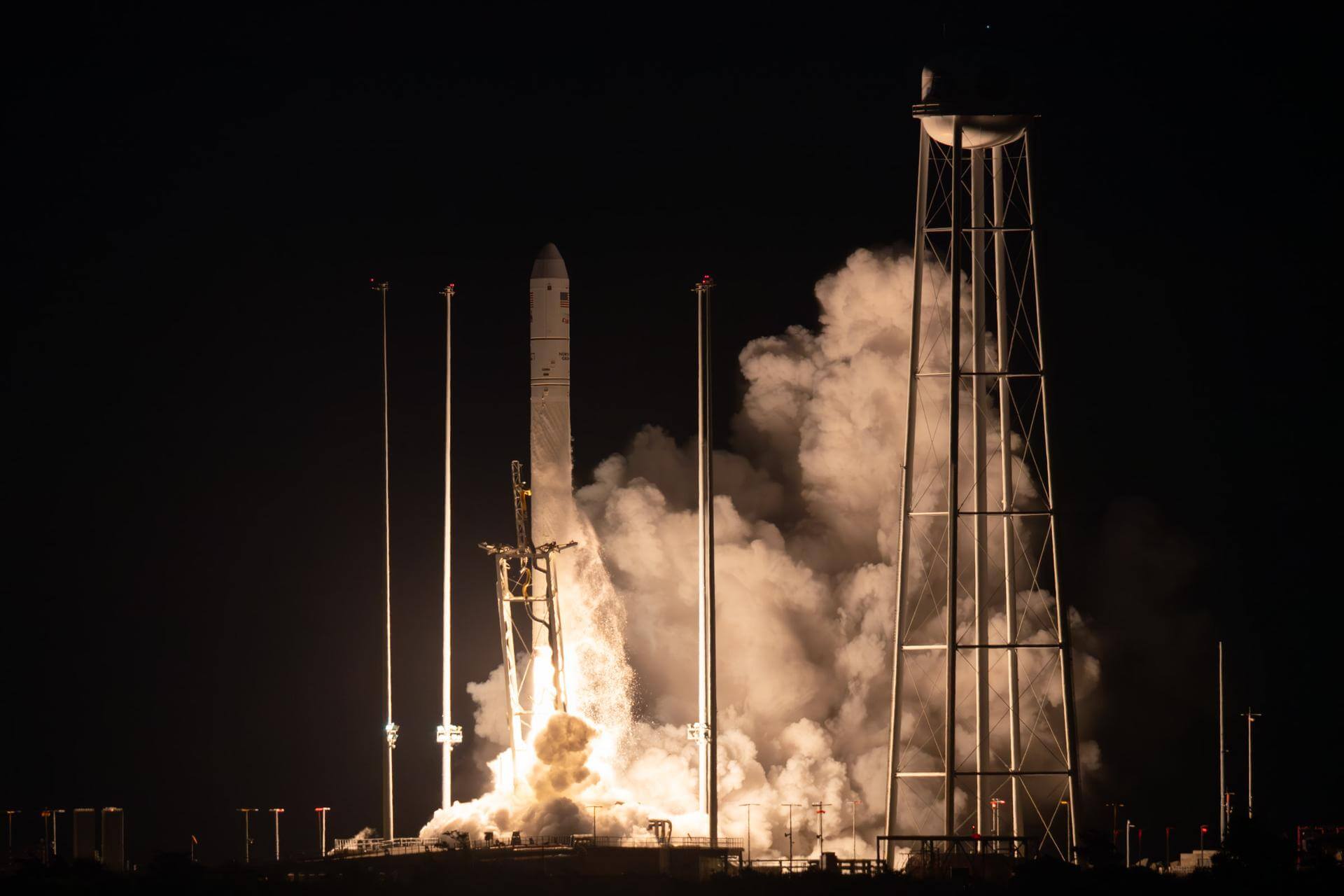
About the Antares 230+
Antares 230
The Antares 230 is an American orbital launch vehicle developed and operated by Orbital ATK (later redesignated Northrop Grumman Space Systems following a 2018 corporate merger). It serves as the primary delivery system for the Cygnus cargo spacecraft, which carries supplies, equipment, and science payloads to the International Space Station (ISS) under NASA's Commercial Resupply Services (CRS) contracts. The vehicle launches from Launch Pad 0A at the Mid-Atlantic Regional Spaceport (MARS) on Wallops Island, Virginia.
Background and Configuration
The Antares 230 is a variant of the broader Antares rocket family, distinguished by its upgraded first-stage propulsion. The "230" designation reflects a first stage powered by two RD-181 engines — high-performance kerosene/liquid oxygen engines of Russian origin that replaced the earlier AJ26 engines used on previous Antares variants after a launch failure in 2014. This change substantially improved the vehicle's reliability and performance margins. Standing 42.5 meters tall with a diameter of 3.9 meters, the Antares 230 is a medium-class vehicle capable of delivering up to 7,800 kilograms to low Earth orbit.
Operational History
The Antares 230 flew its first mission in 2016 and remained active through 2019, accumulating five flights across that period — all of which were successful. This unblemished record underscores the maturity of the upgraded configuration and reflects the rigorous quality standards maintained by Orbital ATK and its successor, Northrop Grumman Space Systems, both of which appear as the vehicle's top customers in the flight record.
Every tracked mission carried a Cygnus resupply spacecraft to the ISS, with each vehicle named in honor of a notable figure from spaceflight history. Missions included the CRS OA-5 flight carrying the *S.S. Alan Poindexter*, followed by CRS OA-8 (*S.S. Gene Cernan*), CRS OA-9 (*S.S. J.R. Thompson*), CRS NG-10 (*S.S. John Young*), and the final tracked flight, CRS NG-11, carrying the *S.S. Roger Chaffee*. The transition in mission numbering from "OA" to "NG" reflects the corporate rebranding that occurred during this period.
Role and Significance
The Antares 230 played a critical logistical role in sustaining continuous human presence aboard the ISS during the mid-to-late 2010s. As one of only a handful of American vehicles certified for NASA cargo delivery at the time, it helped reduce U.S. dependence on foreign resupply capabilities. The consistent success of its five missions demonstrated that a commercially operated, medium-lift vehicle could reliably serve national space station logistics requirements.
Its operational period also coincided with a pivotal transition in the American commercial launch industry, as NASA's CRS program matured and new competitors began to emerge. The Antares platform subsequently evolved into later variants to maintain competitiveness and continue Cygnus deliveries beyond the 230 configuration's tracked service window.
- Aug 02, 2023Antares 230+ | Cygnus CRS-2 NG-19 (S.S. Laurel Clark)Success
- Nov 07, 2022Antares 230+ | Cygnus CRS-2 NG-18 (S.S. Sally Ride)Success
- Feb 19, 2022Antares 230+ | Cygnus CRS-2 NG-17 (S.S. Piers Sellers)Success
- Aug 10, 2021Antares 230+ | Cygnus CRS-2 NG-16 (S.S. Ellison Onizuka)Success
- Feb 20, 2021Antares 230+ | Cygnus CRS-2 NG-15 (S.S. Katherine Johnson)Success
- Oct 03, 2020Antares 230+ | Cygnus CRS-2 NG-14 (S.S. Kalpana Chawla)Success
- Feb 15, 2020Antares 230+ | Cygnus CRS-2 NG-13 (S.S. Robert H. Lawrence.)Success
- Nov 02, 2019Antares 230+ | Cygnus CRS-2 NG-12 (S.S. Alan Bean)Success