Antares 120
About the Antares 120
Antares 120
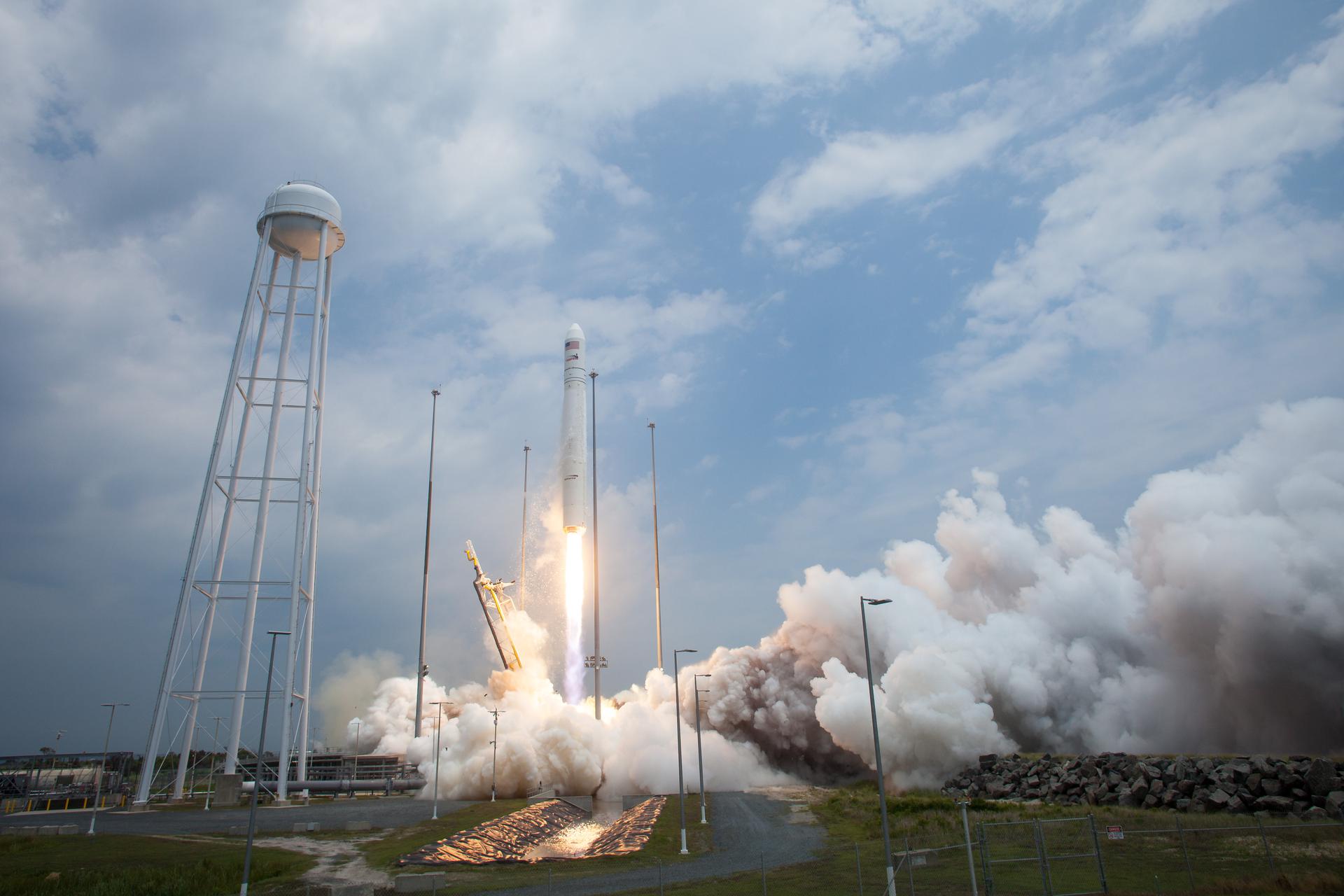
The Antares 120 is an American orbital launch vehicle developed and operated by Orbital Sciences Corporation, serving as one of the early configurations in the Antares rocket family. Designed primarily to support NASA's Commercial Resupply Services (CRS) program, the vehicle was built to deliver Orbital's Cygnus cargo spacecraft to the International Space Station, marking a significant milestone in the era of commercially operated cargo logistics.
Vehicle Overview
Standing 40.5 meters tall with a diameter of 3.9 meters, the Antares 120 is a medium-class launch vehicle capable of delivering 4,600 kg to low Earth orbit. The "120" designation reflects its first-stage configuration, which used a pair of Aerojet AJ26 engines — refurbished Soviet-era NK-33 powerplants — paired with a Castor 30B upper stage. The vehicle launched from Pad 0A at the Mid-Atlantic Regional Spaceport (MARS) on Wallops Island, Virginia, giving the United States an additional domestic launch site for cargo missions.
Flight History
According to our records, the Antares 120 flew twice in 2014, achieving two consecutive successes. Both missions were conducted on behalf of Orbital Sciences Corporation under NASA's CRS contract, and both carried Cygnus pressurized cargo spacecraft to the International Space Station.
The first tracked mission, Cygnus CRS Orb-1, delivered the *S.S. C. Gordon Fullerton* — named in honor of astronaut and research pilot C. Gordon Fullerton — to the station. This mission represented Orbital Sciences' first operational cargo delivery under the CRS agreement, following an earlier demonstration flight.
The second mission, Cygnus CRS Orb-2, launched the *S.S. Janice Voss*, honoring astronaut Janice Voss. The tradition of naming each Cygnus spacecraft after a pioneering figure in spaceflight became a hallmark of the program, lending each mission a commemorative dimension beyond its logistical role.
Significance and Context
The Antares 120 configuration occupied a brief but meaningful window in the vehicle's operational history. Its two successful flights in 2014 demonstrated that Orbital Sciences could reliably execute ISS resupply missions, helping to validate the broader commercial cargo model that NASA had invested in through its COTS and CRS programs. Alongside SpaceX's Falcon 9 and Dragon spacecraft, the Antares/Cygnus pairing established that multiple commercial providers could share the burden of station logistics.
The Antares 120 configuration was eventually succeeded by updated variants as Orbital Sciences continued to develop and refine the vehicle family. Tragically, the program suffered a significant setback later in 2014 when a subsequent Antares configuration was lost in a launch accident, though this occurred outside the operational window of the 120 variant specifically.
Legacy
Despite its short operational life, the Antares 120 compiled a perfect record during its active period, contributing materially to the sustained operation of the International Space Station and reinforcing Orbital Sciences' credentials as a serious player in the commercial launch market.