Antares 110
About the Antares 110
Antares 110
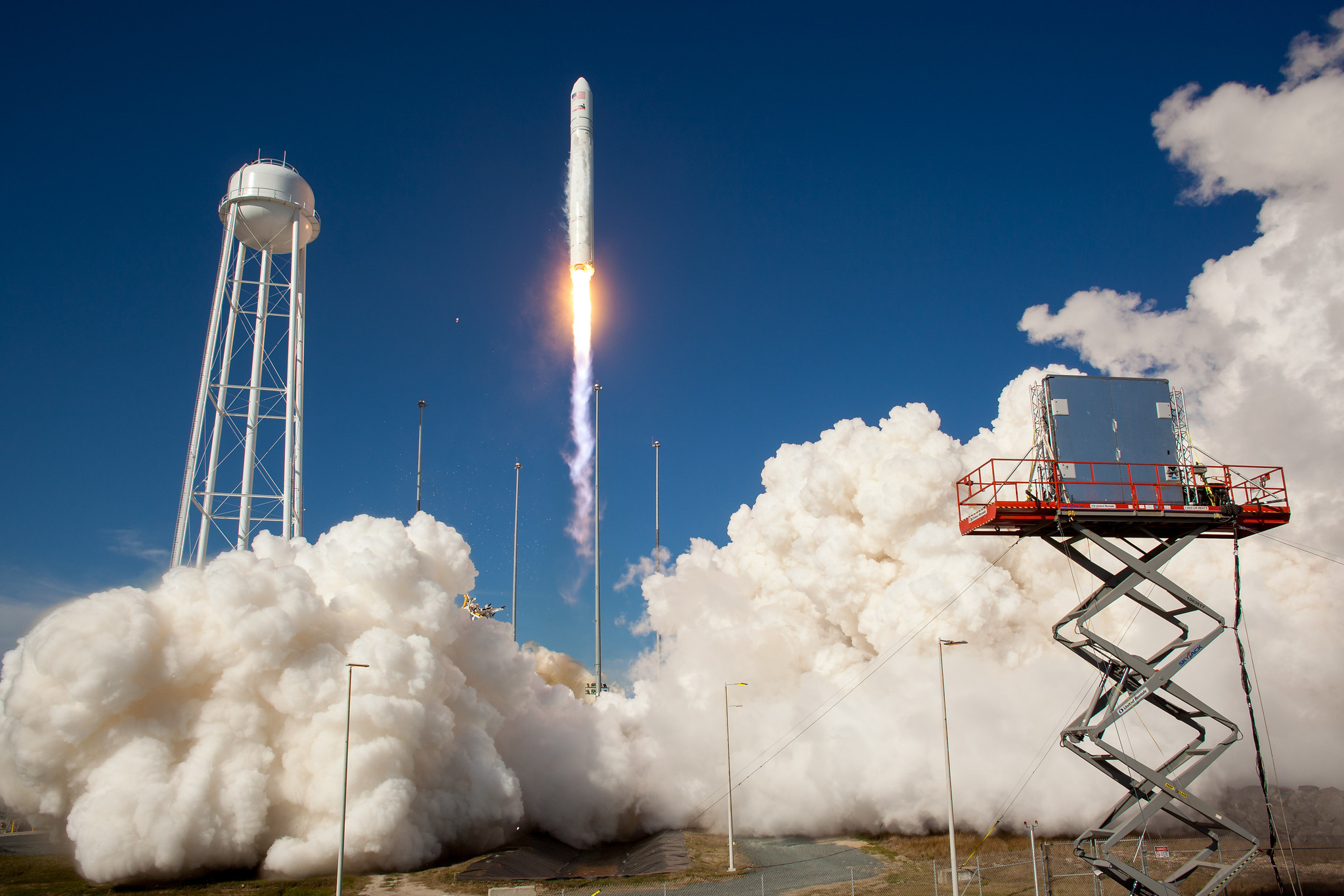
The Antares 110 is an orbital launch vehicle developed and operated by Orbital Sciences Corporation, a Virginia-based aerospace company that would later become part of Northrop Grumman. It represents the initial configuration of the Antares rocket family, a medium-class launch system designed primarily to support NASA's Commercial Resupply Services (CRS) program and deliver cargo to the International Space Station aboard Orbital's Cygnus spacecraft.
Overview and Design
Standing 40.5 meters tall with a diameter of 3.9 meters, the Antares 110 is a two-stage vehicle whose first stage is powered by a pair of AJ26 engines — modified versions of the Soviet-era NK-33 engine — burning liquid oxygen and kerosene (RP-1). The rocket is capable of delivering up to 4,450 kilograms to low Earth orbit, placing it solidly in the medium-lift category and making it well suited to the logistics demands of ISS resupply missions. The "110" designation reflects the vehicle's first-generation stage configuration within the broader Antares family.
Antares launches from Pad 0A at the Mid-Atlantic Regional Spaceport (MARS) on Wallops Island, Virginia, a facility operated by the Virginia Commercial Space Flight Authority. The site's location on the US East Coast makes it particularly practical for ISS-bound missions, which typically require orbital inclinations achievable from that latitude.
Flight History
The Antares 110 flew exclusively during 2013, completing two successful launches with no failures or partial failures recorded. Both missions were conducted on behalf of Orbital Sciences Corporation itself, reflecting the vehicle's role in demonstrating and maturing Orbital's launch and cargo delivery capabilities under the NASA CRS contract.
The first tracked mission, Cygnus Mass Simulator, served as an early test flight to validate the Antares rocket's performance and systems before committing a fully operational Cygnus spacecraft to orbit. This kind of pathfinder mission is standard practice when qualifying a new vehicle for crewed-station logistics duties.
The second mission, Cygnus Orb-1, carried the operational Cygnus cargo spacecraft named S.S. G. David Low — honoring the NASA astronaut and spaceflight advocate — on its first fully successful resupply mission to the ISS. The Orb-1 mission represented a significant milestone for Orbital Sciences, demonstrating end-to-end cargo delivery capability and validating the commercial resupply model that NASA had invested in through its COTS and CRS programs.
Legacy and Context
The Antares 110's brief but clean operational record — two flights, two successes — gave Orbital Sciences the foundation it needed to continue developing and refining the Antares family. Subsequent configurations introduced upgraded engines and improved performance, and the Antares line went on to become a reliable workhorse for ISS resupply despite later setbacks with different vehicle variants.
Within the broader history of American commercial spaceflight, the Antares 110 holds a meaningful place as one of the early rockets to carry NASA-funded cargo under the commercial resupply model, helping to validate the agency's shift toward purchasing launch services from private industry rather than developing government-owned systems.