Angara 1.2
About the Angara 1.2
Angara 1.2
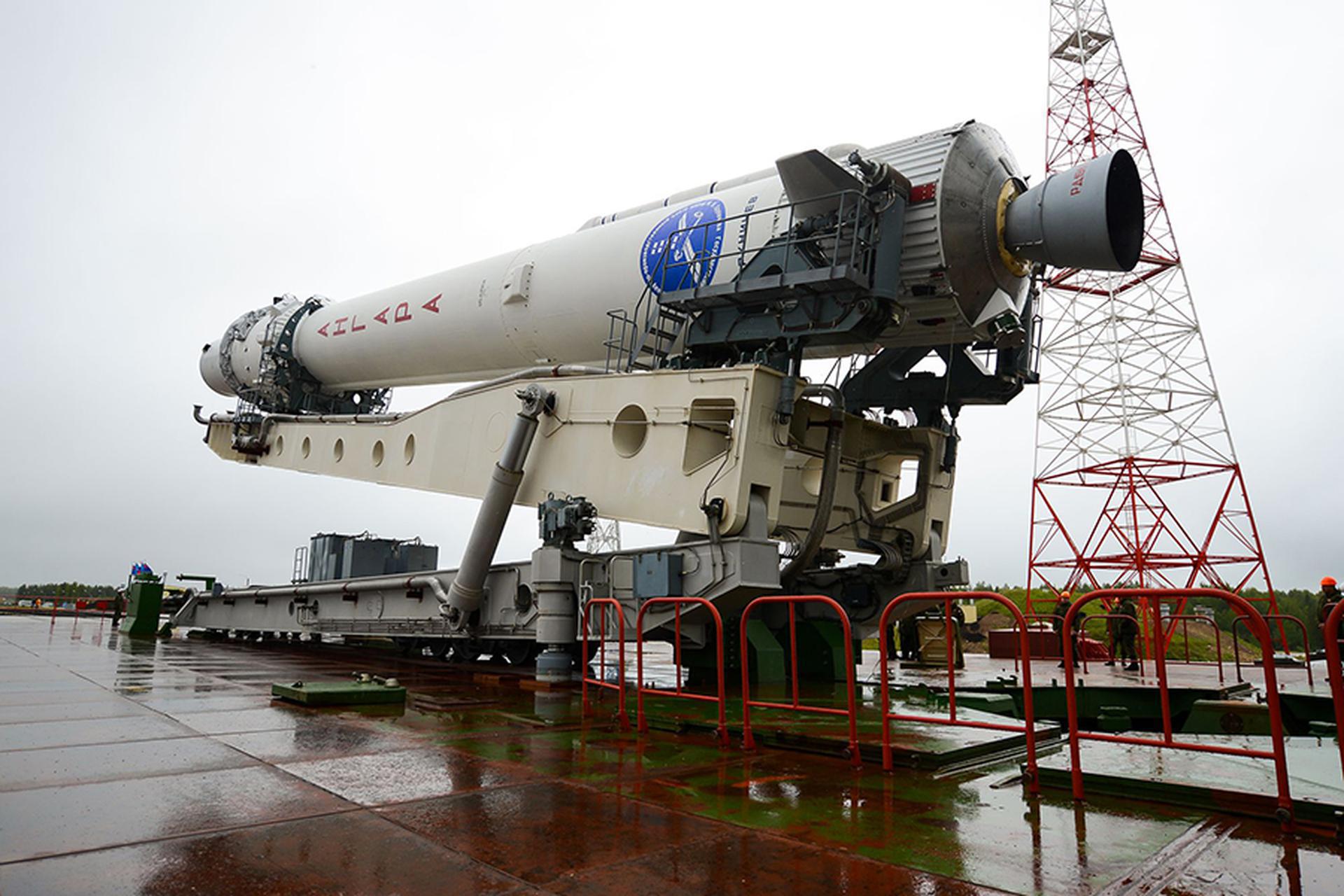
The Angara 1.2 is a Russian light-lift orbital launch vehicle developed by the Khrunichev State Research and Production Space Center and operated under the direction of the Russian Space Forces. It represents the smallest operational member of the Angara rocket family, a modular launch vehicle lineage designed to reduce Russia's dependence on launch infrastructure located outside its borders following the dissolution of the Soviet Union.
Design and Capability
Standing 41.5 metres tall with a core diameter of 2.9 metres, the Angara 1.2 is built around a single Universal Rocket Module (URM-1), the common first-stage building block shared across the broader Angara family. This modular philosophy allows components to be scaled up or combined for heavier-lift variants, while the 1.2 configuration remains optimized for lighter payloads. The vehicle is capable of delivering up to 3,700 kg to low Earth orbit, placing it in the light-launch category suited for small satellites and compact military payloads.
The Angara family burns a kerosene and liquid oxygen propellant combination, offering environmental advantages over the highly toxic nitrogen tetroxide and UDMH hypergolic fuels used by the Soviet-era Proton rocket it was partially intended to succeed.
Launch History and Operations
According to our flight record, the Angara 1.2 has conducted 7 tracked flights between 2022 and 2026, all of which were successful. This represents a strong reliability record for the vehicle during its active operational period. All flights in our record were conducted on behalf of the Russian Space Forces, reflecting the vehicle's primary role as a dedicated launcher for Russian government and military space assets.
Missions have included the deployment of Rodnik communications satellites — flying under Kosmos designations — as well as a variety of other payloads assigned Kosmos numbers, a longstanding Russian convention for military and government spacecraft whose specific functions are not publicly disclosed. Notable missions in our record include the launch of Kosmos 2591 through 2594 as a cluster, the deployment of two separate Rodnik triplet constellations (Kosmos 2585–2587 and Kosmos 2597–2599), and the earlier EMKA-3 mission carrying Kosmos 2560, believed to be a small reconnaissance satellite.
Launch Site
Angara 1.2 launches take place from Plesetsk Cosmodrome in northwestern Russia, a facility long associated with Russian military space launches. Plesetsk's location on Russian sovereign territory was a key strategic motivation for developing the Angara family, as the previous-generation Zenit and some other vehicles relied on the Baikonur Cosmodrome in Kazakhstan, leased from a foreign nation.
Context and Significance
The Angara 1.2 occupies an important niche in Russia's launch portfolio, providing a domestic, reliable option for placing smaller military payloads into low Earth orbit. Its consistent operational success across all tracked flights demonstrates the maturity the vehicle has achieved, and its modular lineage ties it to Russia's broader long-term ambitions in launch vehicle development. The preponderance of classified Kosmos-designated payloads in its flight manifest underscores its close alignment with Russian national security space priorities.
- Apr 23, 2026Angara 1.2 | Kosmos (Unknown Payload)Success
- Nov 25, 2025Angara 1.2 | 3 x Rodnik (Kosmos 2597, 2598, 2599)Success
- Aug 21, 2025Angara 1.2 | Kosmos 2591-2594Success
- Mar 16, 2025Angara 1.2 | 3 x Rodnik (Kosmos 2585, 2586, 2587)Success
- Sep 17, 2024Angara 1.2 | Kosmos 2577 & 2578Success
- Oct 15, 2022Angara 1.2 | EMKA-3 (Kosmos 2560)Success
- Apr 29, 2022Angara 1.2 | Kosmos 2555 (MKA-R)Success