SES-11 (ECHOSTAR 105)
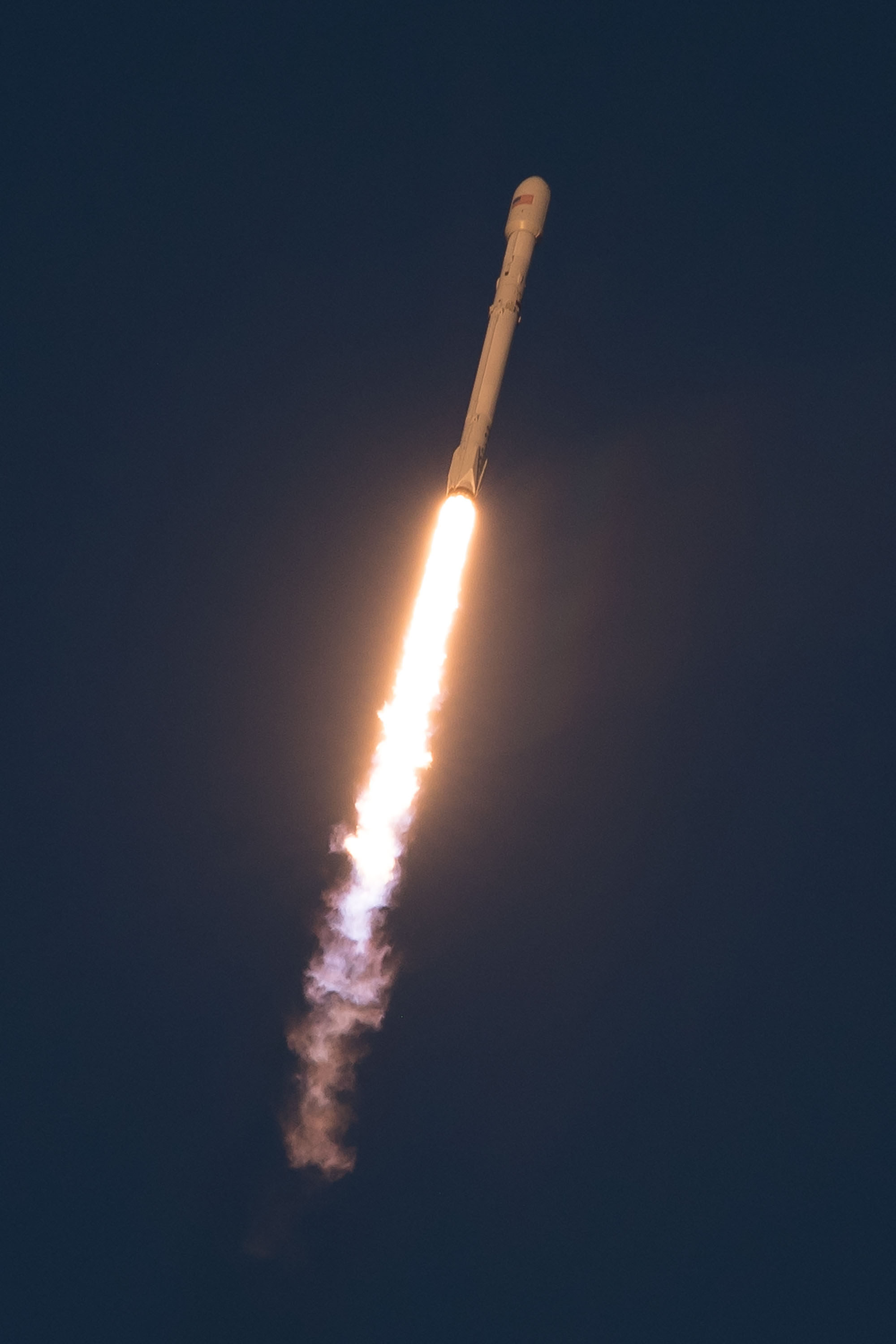
About SES-11 (ECHOSTAR 105)
SES-11, also cataloged under the combined designation EchoStar 105/SES-11, is a geostationary communications satellite jointly operated by the European satellite fleet operator SES S.A. and the American broadcast and communications company EchoStar. Manufactured by Airbus Defence and Space, the spacecraft was launched in October 2017 and remains operational in geostationary orbit today. With a launch mass of approximately 5,200 kg, it represents a substantial commercial communications asset designed for a service life of at least fifteen years, placing its nominal operational horizon well into the late 2030s.
Mission and Purpose
SES-11 / EchoStar 105 was conceived as a joint venture between two major players in the commercial satellite communications industry. SES S.A., headquartered in Luxembourg, operates one of the world's largest fleets of geostationary satellites, providing broadcast, broadband, and data services across multiple orbital slots. EchoStar, a U.S.-based company closely affiliated with the DISH Network group, has long maintained a portfolio of satellites serving direct-to-home television and enterprise communications markets, particularly across North America.
The specific mission parameters recorded in the public satellite catalog list the mission type as unknown, meaning the precise payload configuration and service breakdown between the two operators have not been formally itemized in open tracking databases. What is broadly understood from the circumstances of the satellite's development and deployment is that the spacecraft carries C-band and Ku-band transponders, as is typical for satellites of its class serving the North American and Atlantic corridor markets. The satellite is positioned to serve both legacy broadcasting customers and broadband connectivity users, though the authoritative breakdown of those services is not publicly confirmed in catalog records.
The partnership structure itself is notable: SES and EchoStar entered a co-investment arrangement in which the satellite was jointly procured and operates at an orbital position that had strategic value for both companies' existing customer commitments. This kind of co-ownership and shared payload architecture is a commercially efficient approach that allows both operators to optimize spectrum and capacity without duplicating infrastructure.
Orbit and Tracking
SES-11 / EchoStar 105 occupies a position in the geostationary belt, the ring of orbital slots approximately 35,786 kilometers above the equator where a satellite's orbital period matches the Earth's rotation, causing it to appear stationary relative to a fixed point on the ground. This characteristic makes geostationary satellites uniquely suited to continuous, wide-area communications services, since ground-based antennas can be fixed in a single direction without requiring active tracking.
In the LowEarth tracking catalog, the satellite is assigned NORAD catalog ID 42967 and carries the International Designator (COSPAR ID) 2017-063A, indicating it was the first tracked object from the sixty-third orbital launch of 2017. Current orbital elements confirm its near-circular geostationary configuration: the apogee stands at 35,806 km and the perigee at 35,784 km, a difference of only 22 km, reflecting an exceptionally low eccentricity consistent with a well-maintained station-keeping regime. Its orbital inclination is recorded at 0.0°, confirming that the satellite rides directly above the equatorial plane with no measurable tilt — a prerequisite for maintaining a stable geostationary position.
The orbital period of 1,436.2 minutes — just under 23 hours and 57 minutes — closely matches Earth's sidereal rotation period, which is the technical basis for the satellite's apparent stationarity as seen from the ground. Small deviations from exactly one sidereal day are gradually corrected by periodic thruster firings, a routine process called station-keeping that all active geostationary satellites undergo to remain within their allocated longitude window.
SES-11 was launched on October 10, 2017, at 20:00 Eastern Daylight Time, which corresponds to 00:00 UTC on October 11, 2017. The satellite has remained continuously in orbit since that date, with no decay or reentry event recorded. Its object type is classified as PAYLOAD in the catalog, distinguishing it from the rocket bodies and debris objects that were also associated with its launch event.
Design and Operators
The spacecraft was designed and built by Airbus Defence and Space, the space systems division of the multinational Airbus Group. Airbus Defence and Space is one of Europe's premier satellite manufacturers, with a long heritage producing large geostationary communications platforms for commercial and governmental customers worldwide. Their product lines have typically been associated with high-reliability, long-duration missions, and the fifteen-year-plus design life attributed to SES-11 / EchoStar 105 is consistent with the performance expectations for this tier of spacecraft.
At 5,200 kg, SES-11 falls into the heavy class of commercial geostationary satellites. Satellites of this mass range typically carry large solar arrays and substantial propellant reserves, the latter being a key driver of overall launch mass in geostationary missions where the spacecraft must perform its own orbit-raising maneuver from the transfer orbit provided by the launch vehicle into its final circular geostationary slot. The propellant consumed during this apogee-raising sequence accounts for a significant fraction of total launch mass, with the dry mass of the satellite's bus and payload being considerably lower.
The primary operator for catalog and regulatory purposes is listed as SES S.A., a Luxembourg-based company that holds a major position in the global satellite communications market through its fleet of GEO and MEO satellites. SES's involvement in SES-11 reflects its broader strategy of maintaining capacity across prime orbital locations to serve broadcasting and enterprise customers in North America and beyond. EchoStar's co-operation on this asset likewise reflects that company's need for additional capacity at a location compatible with its existing orbital infrastructure and customer base.
The owner country is recorded as SES in catalog entries, a designation that reflects SES S.A.'s role as the primary responsible party for the satellite under international telecommunications regulatory frameworks, specifically as administered through the International Telecommunication Union's satellite coordination procedures.
Current Status and Significance
As of the current date, SES-11 / EchoStar 105 remains in orbit with no reentry date recorded, consistent with an active or post-operational spacecraft still residing in the geostationary belt. Satellites in geostationary orbit are not subject to orbital decay on any human-relevant timescale — at those altitudes, atmospheric drag is essentially negligible, and without active intervention, a satellite would remain in a near-geostationary trajectory for thousands of years. For this reason, end-of-life procedures for geostationary satellites typically involve boosting the spacecraft into a slightly higher "graveyard orbit," which clears the congested geostationary belt of decommissioned hardware in accordance with international guidelines. Whether SES-11 remains operationally active or has been transitioned to an end-of-life configuration is not definitively recorded in the public catalog, though the fifteen-year design life suggests that operational service would nominally extend to approximately 2032.
In the broader context of commercial satellite communications, SES-11 / EchoStar 105 represents the kind of heavyweight GEO platform that defined the commercial satellite industry through the 2000s and 2010s: large, multi-transponder spacecraft built to serve broadcast and broadband markets from fixed orbital slots, with substantial design lives justified by the high cost of procurement and launch. The satellite's co-ownership model between SES and EchoStar also illustrates a financial and operational trend in the industry, where the capital intensity of geostationary satellite development has encouraged joint ventures and capacity-sharing arrangements rather than fully independent procurement.
From a tracking perspective, the satellite's stable geostationary position and near-zero inclination mean that it does not drift significantly in longitude or latitude over time in the way that inclined or decommissioned geostationary satellites do. Its orbital elements change slowly and predictably, making it one of the more stable entries in the tracking catalog for its region of the geostationary arc.
Observing SES-11
Geostationary satellites like SES-11 are technically observable with modest optical equipment under the right conditions, but they present a distinct challenge compared to low-Earth-orbit objects. At an altitude of approximately 35,800 km, the satellite appears essentially stationary against the star field rather than traversing the sky, which makes it harder to distinguish from background stars. It will appear as a faint, unmoving point of light near the celestial equator, visible only when it is illuminated by sunlight while the observer is in darkness — typically within a few hours of local sunset or sunrise. Because geostationary satellites do not cross the sky, they cannot be observed using the same transit-timing techniques used for LEO satellites; instead, observers typically locate them by their fixed position at the known orbital longitude and watch for occasional glints or flares caused by reflections off the satellite's solar panels or body. The satellite's substantial size and reflective surfaces give it some potential for brief brightening events, though these are not predictable in the same systematic way as flares from certain LEO satellites.
Altitude history
Apogee and perigee for SES-11 (ECHOSTAR 105) across 148 days of archived orbital elements (150 element sets, one per day).
Derived from our own archive of CelesTrak orbital elements, sampled every 3 hours. Short windows show drag and station-keeping; they are not a reentry prediction.
Related satellites
Sources & further reading
Embed this satellite on your site
Free for editorial use. Attribution back to LowEarth is required.
<iframe src="https://lowearth.app/embed/42967" width="640" height="400" frameborder="0" allow="fullscreen"></iframe>